
Last updated November 15, 2026
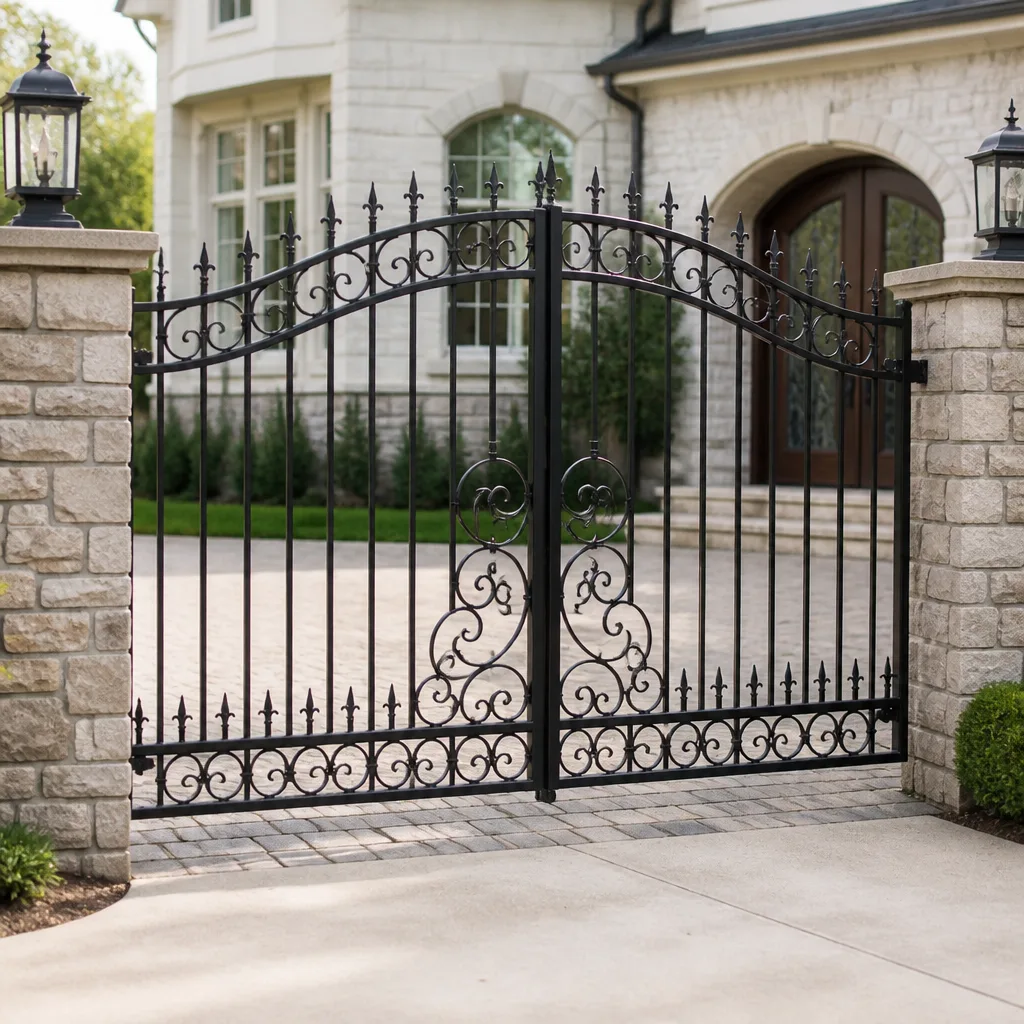 Wrought iron
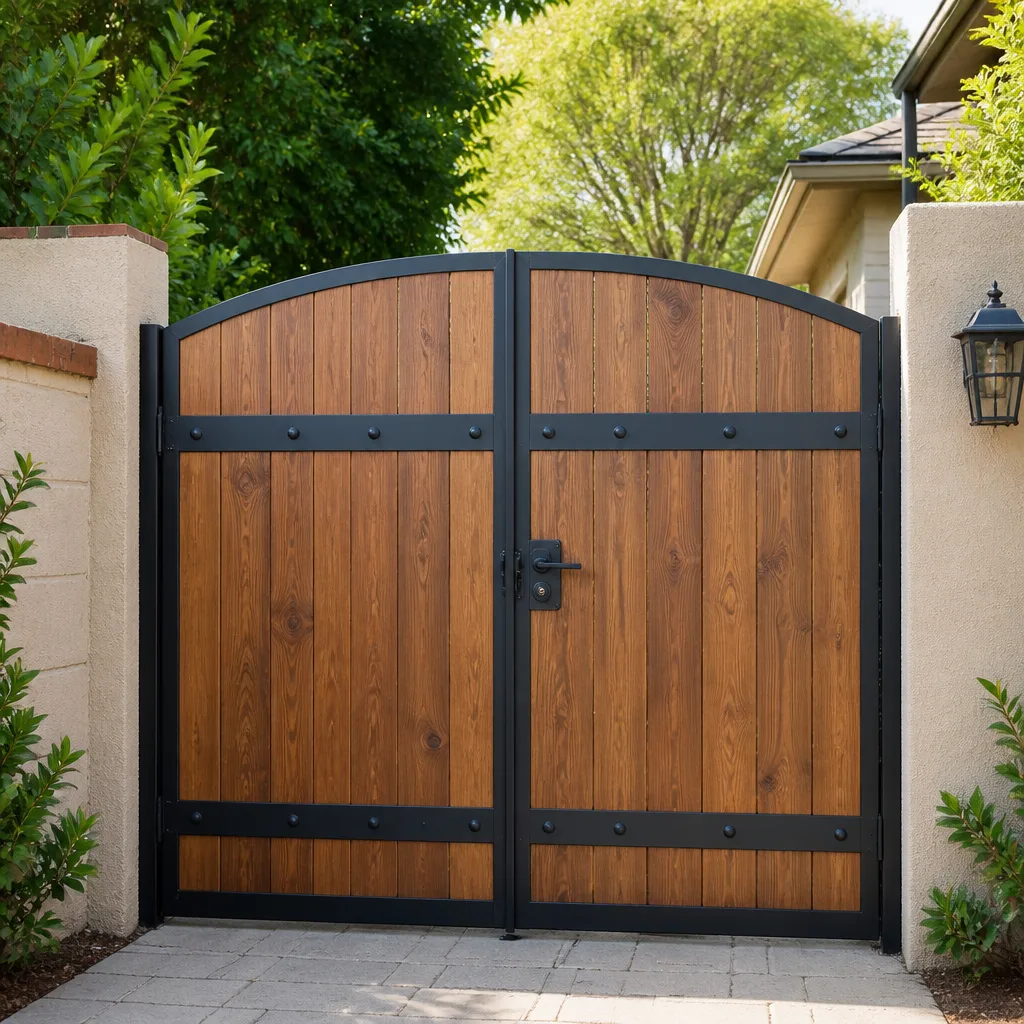 Wood & steel frame
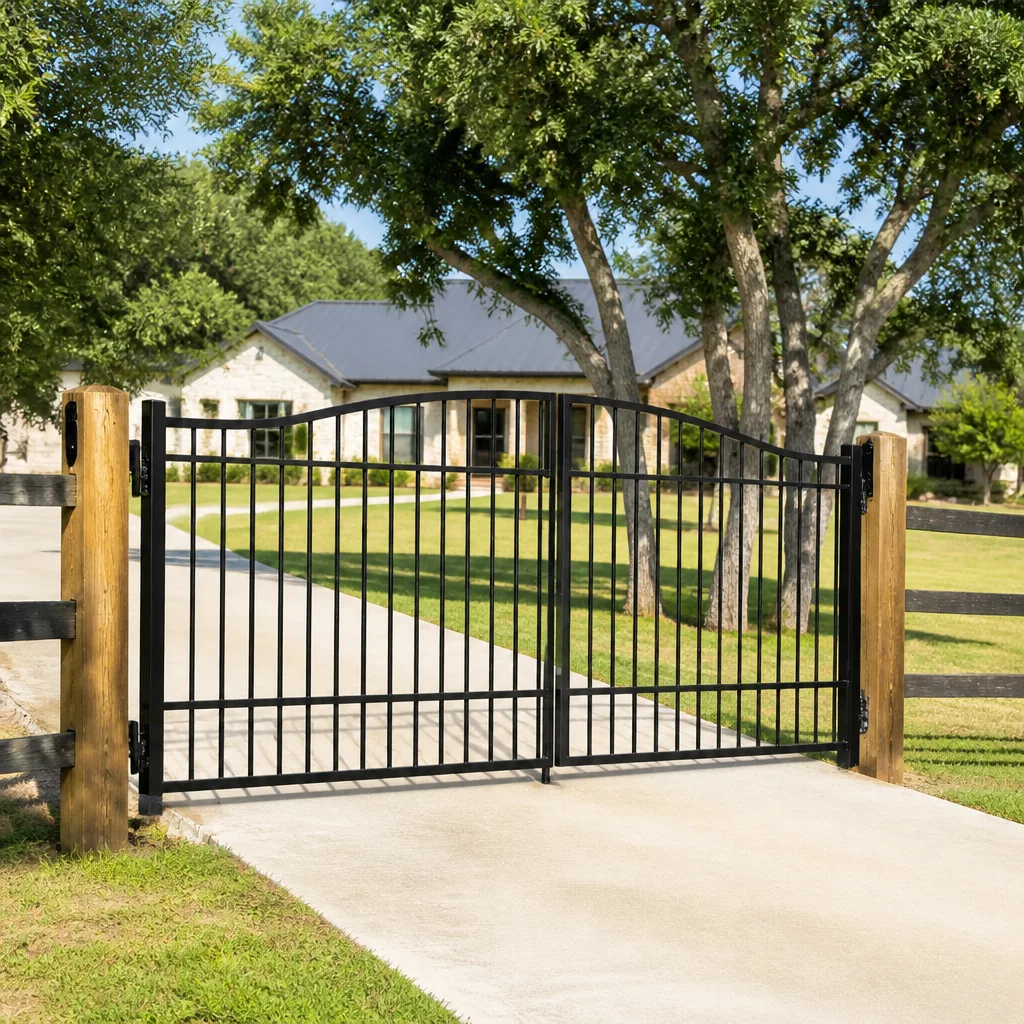 Farm & ranch
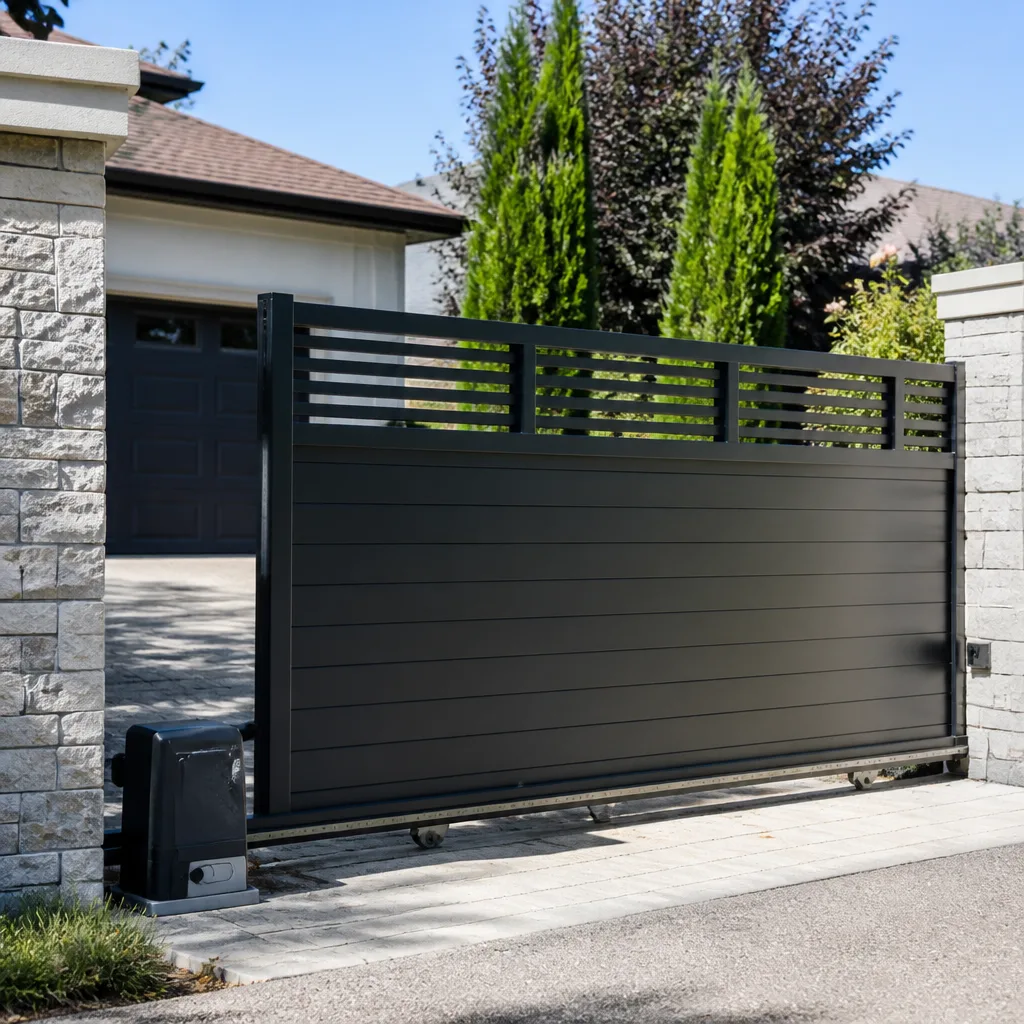 Sliding driveway gates
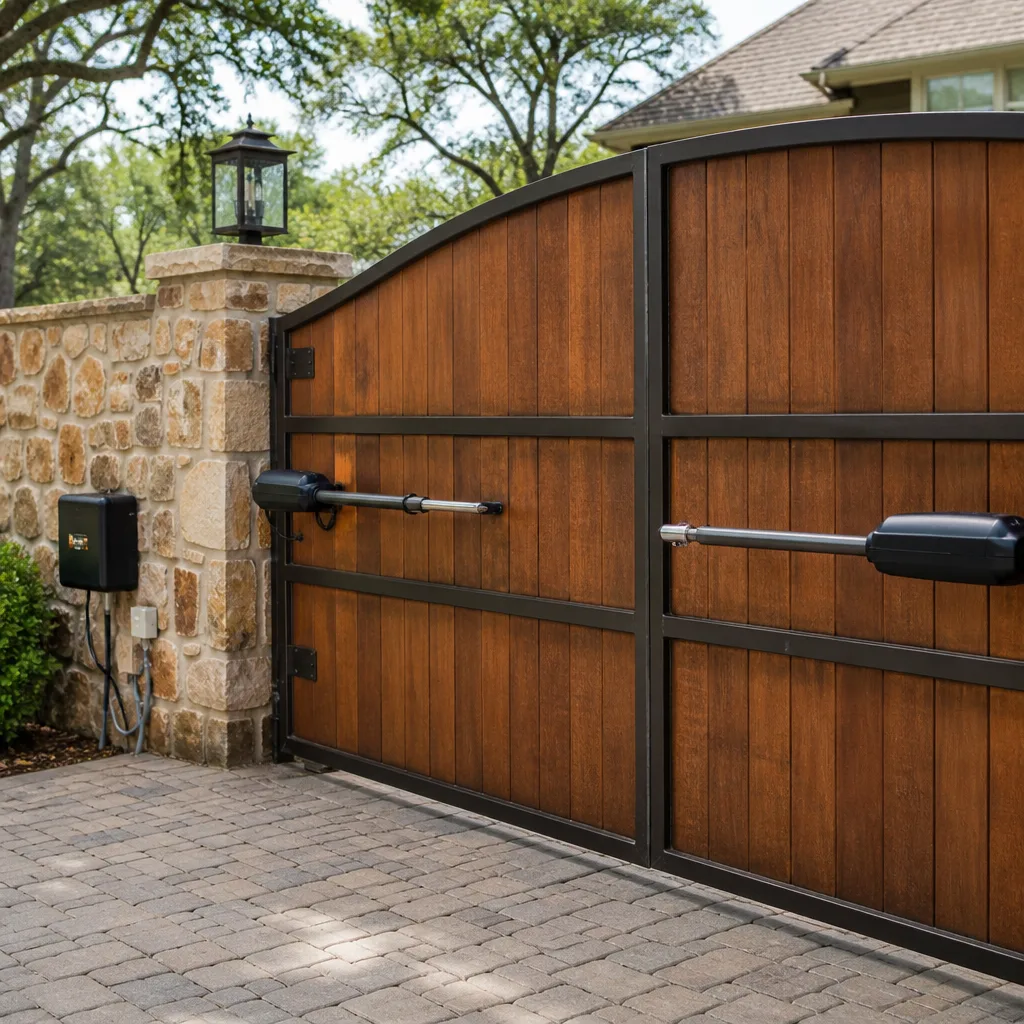 LiftMaster operators
Free on-site gate assessment - hinges, posts, and your LiftMaster or Nice gate operator checked before anything is quoted
The assessment is free and the quote is the invoice.
Get your free estimateGate Repair Cost Breakdown: The Round Rock Homeowner’s Reference for 2026
The most common overcharge in gate repair usually isn’t hiding in the parts list. It’s in the diagnostic fee – a charge some shops collect upfront and then bill again as labor once the repair starts, so you pay twice for the same hour of troubleshooting. We’ve watched homeowners in Round Rock compare three quotes, pick the middle one, and still end up confused about why two invoices for the same broken operator landed a hundred dollars apart. This guide fixes that. We’re going to walk through what each line on a gate repair invoice should represent in 2026, how brand tier changes the math, and when repair stops making sense and replacement starts.
Quick Answer
Gate repair in Round Rock in 2026 typically runs about $150 to $400 for common mechanical fixes like hinges, rollers, and track adjustment, while operator and control board work tends to land between $350 and $1,400 depending on brand tier. Diagnostic fees should be disclosed upfront and either applied to the repair total or clearly separated from labor. The written estimate sets the final price before any work begins, and estimates from us are free.
Styles & brands we work with
- Wrought iron
- Wood & steel frame
- Farm & ranch
- Sliding driveway gates
- LiftMaster operators
Table of Contents
- What Actually Drives a Gate Repair Ticket
- 2026 Price Ranges by Repair Category
- What a Legitimate Service Call Fee Should Cover
- Parts Markup: Normal Trade Practice vs. Unreasonable Margin
- How Brand Choice Changes Your Long-Term Cost
- The Repair-or-Replace Formula We Use
- How to Read a Gate Quote Line by Line
- Choosing a Gate Specialist in Round Rock
What Actually Drives a Gate Repair Ticket
A gate repair estimate isn’t a single price – it’s a stack of four cost drivers that move independently. Understanding them is the difference between spotting a fair quote and accepting a padded one.
1. The mechanical load. Swinging gates, sliding gates, and cantilever gates carry very different stress on hinges, rollers, and tracks. A sliding gate with a worn bottom roller and a sagging track costs more in labor than a swinging gate with a single failed hinge pin, even though both look like “the gate won’t close.”
2. The operator and control electronics. Manual gates rarely need anything beyond mechanical work. Automated gates pull in a second cost layer: motors, control boards, safety sensors, and access hardware. Electric gate repair is its own specialty for exactly this reason – motor and board diagnostics don’t follow the same rules as hinge swaps.
3. Access to the work. A gate with clear swing clearance and an accessible operator housing is quick to service. A gate hemmed in by landscaping, set into a masonry pillar, or buried under decorative stone can add 30 to 60 minutes of labor just to reach the failing component.
4. Parts tier. A residential Ghost Controls operator and a commercial DoorKing unit use entirely different parts ecosystems, and the replacement cost difference between them runs into the hundreds of dollars before labor is even on the table.
In our experience across Round Rock, most single-item repairs land in the two-to-four-hour range once the technician is on site. The ticket grows when a failed part has taken out a downstream component – a seized motor that burns up a control board, for example – and the estimate has to cover both replacements plus the reprogramming that follows.
2026 Price Ranges by Repair Category
Here’s the breakdown most quotes won’t show you. These are typical ranges for single-item repairs in the Round Rock market, and they’re the numbers we build estimates from. Parts, labor, and any testing time are factored in. Every figure is an estimate – the written quote you receive after a site visit sets the final price.
Mechanical Repairs
| Repair Category | Typical Range | What’s Included |
|---|---|---|
| Hinge replacement (swing gate, per hinge) | $150 – $275 | Hinge, removal, alignment, test cycle |
| Roller and track service (sliding gate) | $180 – $350 | Roller replacement, track cleaning, adjustment |
| Post repair or reset | $250 – $600 | Concrete work, re-set post, re-hang gate |
| Latch and strike adjustment | $120 – $220 | Latch hardware, realignment, cycle test |
| Gate sag correction (minor) | $200 – $400 | Hinge torque, brace adjustment, re-level |
Electric and Control Work
| Repair Category | Typical Range | What’s Included |
|---|---|---|
| Control board swap | $350 – $700 | Board, removal, rewire, program |
| Safety sensor replacement (pair) | $200 – $400 | Photocells or loop sensor, alignment, test |
| Access control reprogramming | $180 – $350 | Keypad, remote, or entry code re-set |
| Motor / operator replacement (entry-level brand) | $550 – $900 | Unit, mounting, wiring, programming |
| Motor / operator replacement (mid-range brand) | $800 – $1,300 | Unit, mounting, wiring, programming |
| Motor / operator replacement (commercial-grade brand) | $1,100 – $1,800 | Unit, mounting, wiring, load test |
The spread inside each row isn’t padding. It reflects how much of the surrounding system needs to come apart to reach the failed part. A ready-to-open operator housing is a 90-minute job; one sealed behind a decorative panel with a seized bolt can double that before the new part is even out of the box.
For a deeper dive into what electric gate repair specifically covers – motors, control boards, sensors, and access hardware – see our page on electric gate repair. That’s the layer with the widest cost swing between quotes, and where itemization matters most.
What a Legitimate Service Call Fee Should Cover
A service call fee is legitimate when it pays for the truck roll and the first 30 minutes of diagnostic time, and when it’s not then re-billed as a separate labor line once the repair starts. That’s the single most common double-charge in this trade, and the fix is simply asking how the fee is applied before you book.
Here’s what a clean service call structure looks like:
- What the fee should cover: travel to the property, initial inspection, component testing, and a written diagnosis.
- What it should not cover: the same hours billed again as labor on the final invoice.
- What to ask when you call: “Does the diagnostic fee get applied to the repair total if I move forward today?” A shop that answers clearly has already built this into its quoting practice. A shop that dodges the question hasn’t.
- What a fair invoice shows: the diagnostic fee, then either a credit against that fee or a labor line that starts after the diagnosis, not before.
We don’t charge a separate service call fee. Our estimates are free, and the price for the job is set by the written estimate before any work starts. That’s not a marketing line – it’s the cleanest way to avoid the double-billing problem entirely, since there’s no diagnostic fee to argue over after the fact.
When you’re comparing quotes, put the diagnostic line side by side with the labor line and check whether they overlap. Two hours of diagnostic time followed by three hours of labor on a job that took four hours total is a clue that something’s being counted twice.
Parts Markup: Normal Trade Practice vs. Unreasonable Margin
Parts markup in the gate trade runs on the same rhythm as any service trade: a modest margin on top of wholesale covers sourcing, warranty handling, and the cost of carrying inventory you can’t always see. The problem isn’t markup itself – it’s when the parts line grows to hide margin that should be visible on labor.
Here’s how to spot the difference without becoming a parts expert:
- Normal markup: the parts line on a quote lands within a reasonable band of what you’d pay to source the component yourself from a supply house or manufacturer. You don’t have to hunt the exact number – a quick search on the brand and model is usually enough to spot a red flag.
- Unreasonable margin: the parts line is 2.5x or more than retail, and the labor line has been trimmed to make the total look reasonable. That’s how a padded quote hides itself.
- The tell: when a quote is broken into parts + labor, both lines look fair at a glance. When a quote is a single lump sum with no itemization, you can’t tell what you’re paying for – and that’s exactly the format some shops prefer.
A fair quote will show:
- The part being replaced, by name and brand
- Whether it’s OEM or aftermarket
- The labor hours the job is projected to take
- The total, in writing, before work begins
You don’t need to know what a control board costs wholesale. You just need a quote detailed enough that you could show it to a friend in the trade and get a straight answer. If a shop won’t itemize, that’s the answer.
How Brand Choice Changes Your Long-Term Cost
Brand isn’t a status label in gate repair – it’s a parts ecosystem, and the ecosystem is what determines what your repair costs five years from now. A LiftMaster LA500 operator replacement lands in a different cost band than a DoorKing or an Elite unit, not because the labor is different, but because the components inside are priced differently and the aftermarket is different sizes.
The Three Tiers, and What They Cost You Over Time
- Entry-level residential tier (Ghost Controls, Mighty Mule): lowest upfront cost, most commonly available parts, and repair work stays in the modest range. These serve a single residential driveway well and are the easiest tier to keep running. The trade-off is a shorter service life than commercial-grade gear, so the years of service you get per dollar are the real comparison – not the sticker price.
- Mid-range tier (LiftMaster, Linear, Viking): the workhorse band. Parts are stocked widely, technicians are familiar with the boards, and the repair-to-replace math stays reasonable much further into the system’s life. Most residential driveway gates in America sit in this tier, and it’s where repair usually makes the most financial sense.
- Commercial-grade tier (FAAC, BFT, DoorKing, Elite): higher upfront and higher parts cost, but the components are designed to be serviced rather than replaced, which flattens long-term cost. A DoorKing control board swap costs more than a residential board swap, but the operator behind it lasts longer and the parts tend to stay available for years rather than being discontinued.
This is why we work across nine brands instead of building the business around one manufacturer. A single-brand shop has a reason to nudge you toward the brand it sells. A brand-agnostic shop recommends what’s right for the gate in front of it – including telling you when your existing system is worth repairing and when it isn’t.
If your gate is beyond saving, we handle new gate installation under the same roof, so you’re not handed off to a different contractor mid-project. Installation is measured and scheduled – not the same-day track as repair – because the operator has to be chosen, ordered, and matched to the gate’s load before the install day.
The Repair-or-Replace Formula We Use
Skip the vague “if the repair costs more than half the replacement value” rule. It doesn’t hold up in practice, because it ignores the age of the system, the parts availability, and how much of the cost is a one-time hit versus a recurring one. Here’s the formula that actually works:
Repair justification score = (repair cost ÷ replacement cost) × (remaining useful life ÷ expected new system life)
If that score lands below 0.5, repair usually wins. Above 0.75, replacement usually makes more financial sense. In between, it’s a judgment call that comes down to parts availability and how much of the system is already failing.
Worked Example
A mid-range operator at the end of its expected service life needs a control board and a motor. The repair quote is roughly 65% of a full replacement. The system is already 80% through its expected life. Using the formula: (0.65 × 0.2) = 0.13 – well below 0.5. But wait, that’s the wrong way to read it. The remaining life is 20%, not 80%, so the score is low because you’d be investing in a system with very little life left. In practice, that’s when we recommend replacement.
Flip the scenario: a newer operator with a failed control board only, and 70% of its life remaining. Repair cost is 25% of replacement: (0.25 × 0.7) = 0.175. That’s a clear repair.
The formula does one thing well: it stops you from sinking new money into an old system because the ticket looked small in isolation. It also stops you from replacing a healthy system over one failed component. When you get a written estimate from us, we’ll give you both numbers – repair and replace – with the reasoning behind each.
How to Read a Gate Quote Line by Line
A gate repair quote should read like a short story: what failed, what fixes it, what it costs, and how long it takes. If it doesn’t have all four, it’s not a quote – it’s a number.
- The diagnosis line. Names the specific component that failed and the symptom it produces. Example: “Operator motor seized; control board shows fault code for stall.” A generic “gate broken” line means the technician didn’t test.
- The parts line. Lists the part by name and brand, and states whether it’s OEM or aftermarket. If your gate uses a DoorKing or Elite operator, the parts line should reflect that specific ecosystem – not a generic “operator motor.”
- The labor line. Shows hours, not just a total. If it’s a single hour for a control board swap plus programming, ask whether programming time is included in that hour or billed separately.
- The diagnostic fee line (if any). Either credited against the repair total or clearly separated from labor. If both a diagnostic fee and a labor line appear, verify they don’t cover the same time window.
- The written total. The number you agree to before any work begins. If the technician can’t produce this number before opening the operator housing, the estimate isn’t written.
For a broader look at the repair side of the trade – what we cover and how we approach diagnosis – our main gate repair page lays out the process. The quote structure above is the same structure you’ll see on that work.
Choosing a Gate Specialist in Round Rock
The price on the invoice matters less than the price on the diagnosis. A specialist who tests the gate properly before quoting will catch a secondary failure that a generalist misses – and that’s the difference between a repaired gate and a return visit.
What separates a gate specialist from a generalist in the Round Rock market:
- Single-trade focus. A company that only works on gates, electric systems, and installation. Not a handyman who’ll also trim your hedges. Every technician lives in this specialty rather than splitting attention across unrelated trades.
- Brand breadth. Familiarity with the entry-level residential systems (Ghost Controls, Mighty Mule) through the commercial-grade operators (FAAC, BFT, DoorKing, Elite) – because a shop that only knows one tier can’t honestly recommend what’s right for yours.
- Electric gate expertise as a named service. Motors, control boards, safety edges, access wiring. If “electric” only shows up as a bullet on a general services page, the shop doesn’t do it as a specialty.
- Both repair and installation. If a gate is genuinely beyond saving, you should hear that from the same technician who diagnosed it – not get handed off to a second contractor.
- Written estimate before work. Not a verbal number, not a range that gets renegotiated once the housing is open.
We’re a dedicated gate trade – not a garage door company that also touches gates. Our technicians have up to 11 years of experience in this specialty, and every job runs through the same pattern: diagnose, itemize, quote in writing, then work. Round Rock homeowners get the same written-estimate process whether it’s a single hinge or a full operator replacement.
Common Mistakes to Avoid
- Accepting a lump-sum quote with no itemization. If a quote has one number and no breakdown, you can’t check whether the parts line is padded or the labor line is thin. Insist on the split.
- Paying a diagnostic fee twice. Watch for quotes that list a diagnostic fee and then a labor line starting at hour zero. That’s the double-charge, and it’s negotiable if you catch it before booking.
- Choosing the cheapest quote without comparing line items. A quote that’s $200 lower on the total but $150 higher on parts means the labor is underquoted and likely to grow. Compare line by line, not total to total.
- Replacing an operator before testing the control board. A failed board can look like a dead motor, and vice versa. A proper diagnosis tests both before recommending replacement. In Round Rock’s mild winters, we don’t see the freeze-related failures common in colder markets, but we do see heat-stressed control boards in the warm months – so board testing matters here.
- Assuming a same-day repair on a new installation. Repair work can often be scheduled fast; a new operator installation is measured, ordered, and scheduled because the unit has to match the gate’s load. Promising same-day installation is a red flag, not a selling point.
- Hiring a shop that only carries one brand. If a technician recommends a specific brand on every job, ask whether they also service the competing brands. A single-brand shop can’t give you an honest repair-or-replace comparison.
- Skipping the safety test after any repair. Safety sensors and safety edges have to be tested after any board swap, motor replacement, or hinge work on an automated gate. If a technician leaves without running a full open-close-reverse cycle, the job isn’t done.
One safety caveat worth stating plainly: gate operators run on line voltage and their control boards hold a charge after the breaker is off. Troubleshooting an operator’s wiring or a control board isn’t a homeowner task, even with a multimeter and a YouTube video. The dangerous parts on a gate are the operator’s wiring and power, the heavy panels that can crush, and slide gates that come off the track. Those are the parts a trained technician should handle.
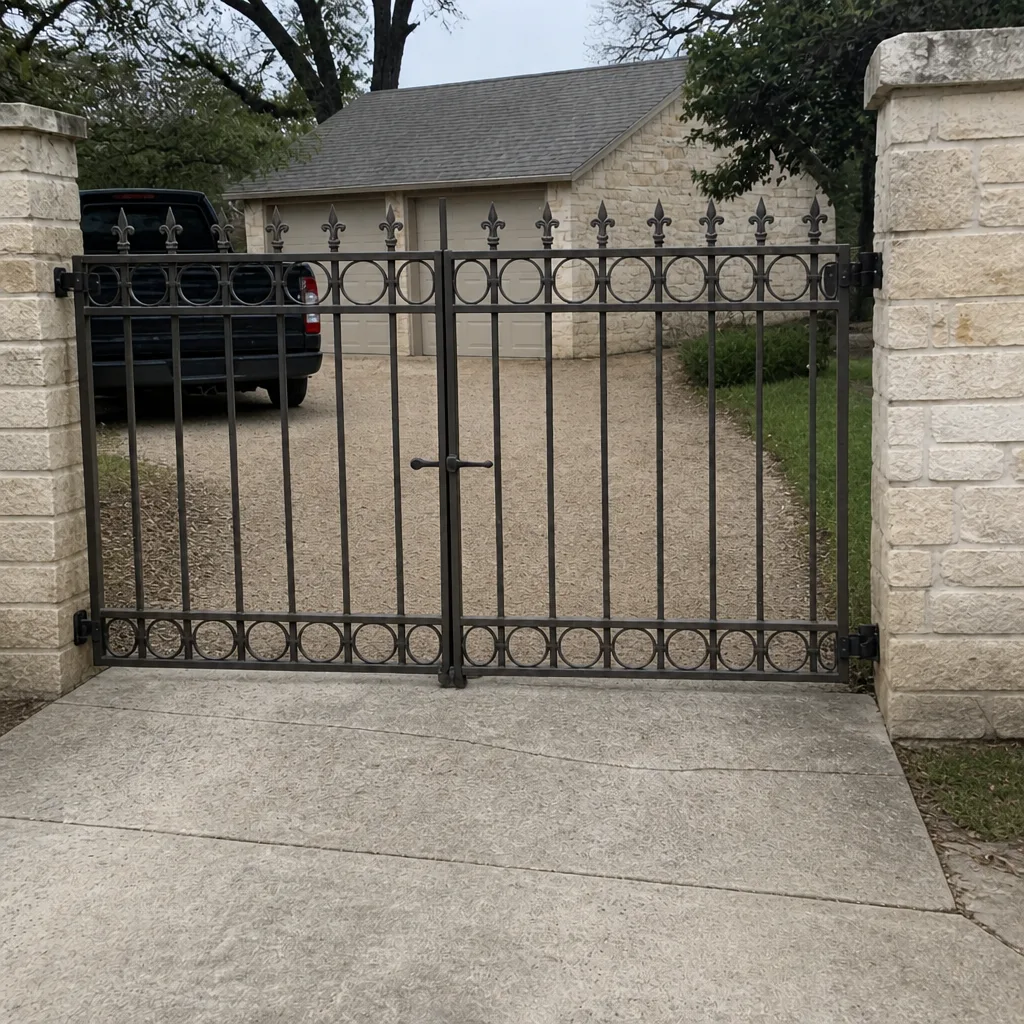
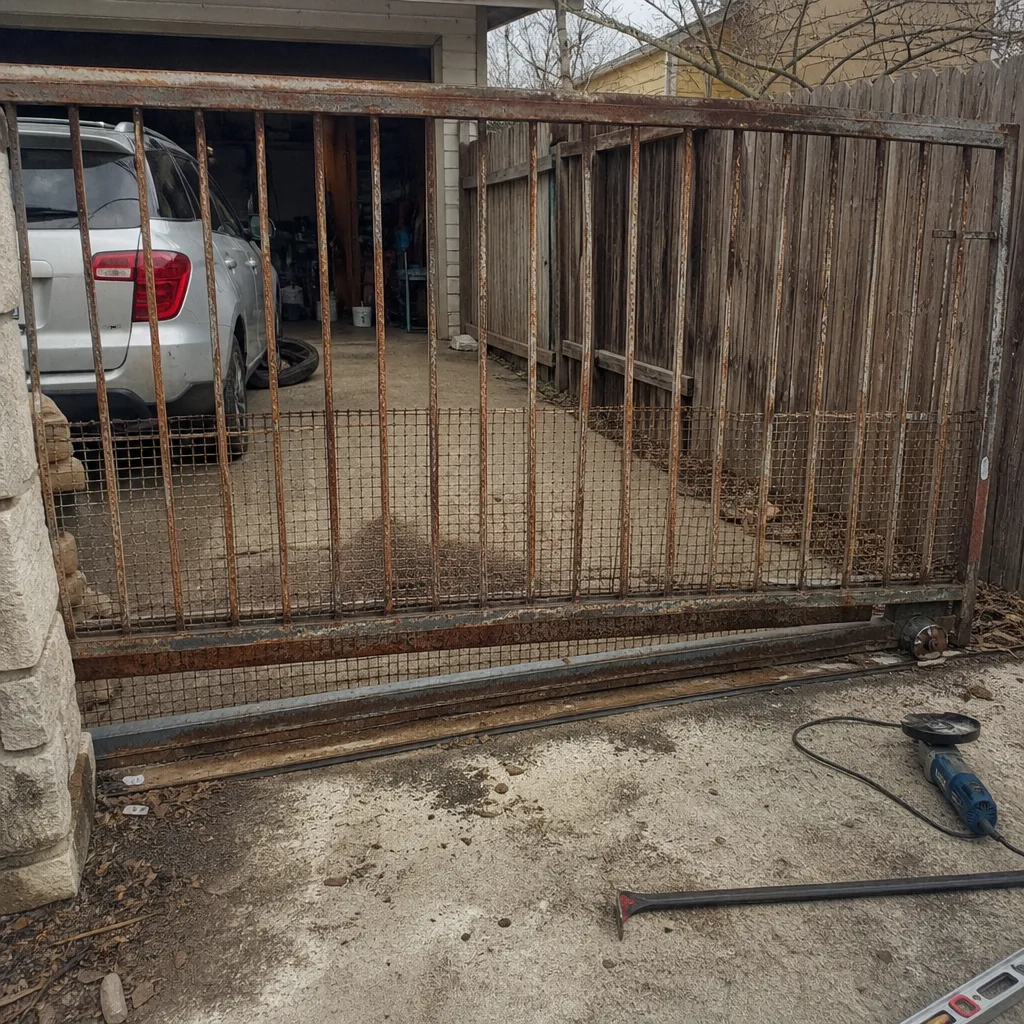
See the difference
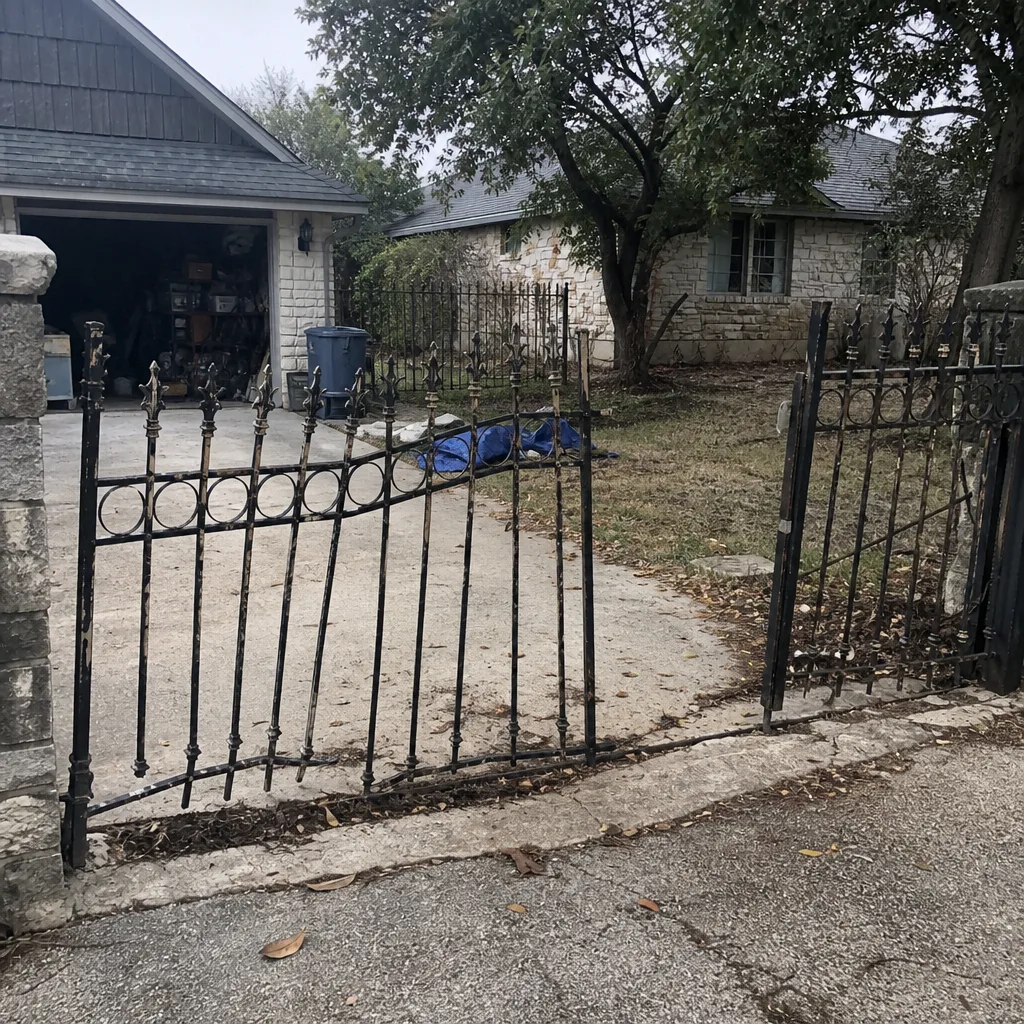 Before
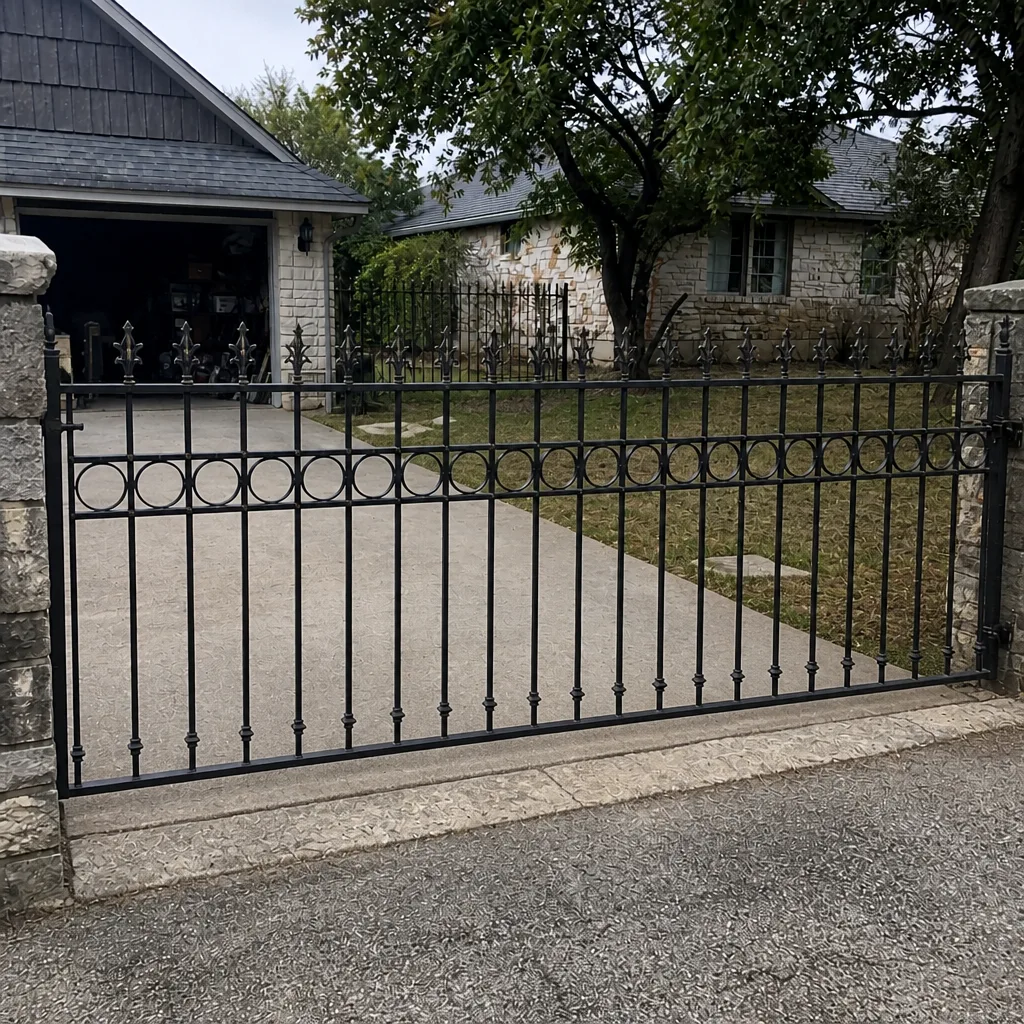 After
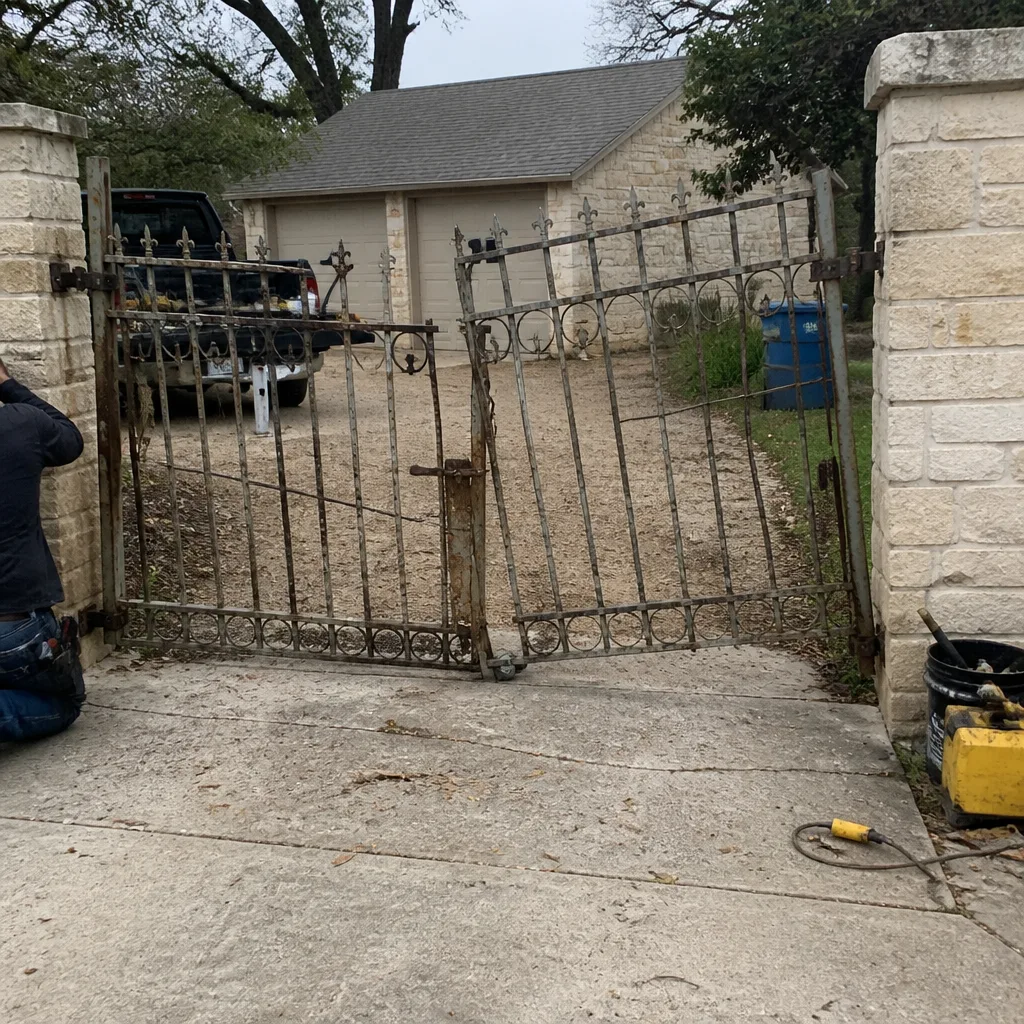 Before
 After
 Before
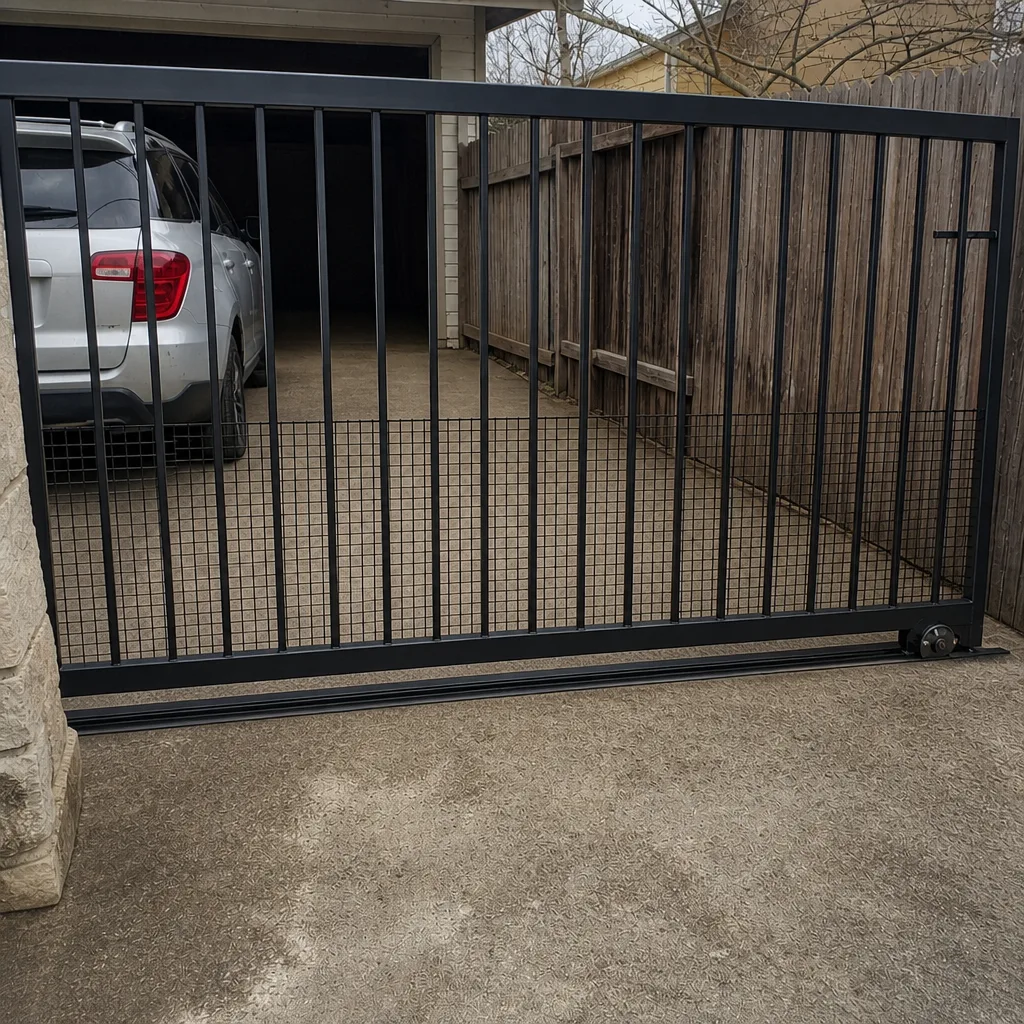 After
When to Call a Professional
Call a professional when the gate won’t hold a position, when the operator cycles without moving the gate, when the safety sensor stops reading, or when a hinge or post has shifted enough that the gate is dragging. Call immediately if a sliding gate has come off its track or a panel is sagging on a hinge – both are crushing risks, not just convenience problems. Call before you order a replacement operator on your own; a technician can tell you in one visit whether the board is the problem or the motor, and that single diagnosis often saves the cost of the wrong part. Gate Repair Round Rock offers free estimates in Round Rock – call (888) 853-0490. We answer 24/7. Fast dispatch from 7am to 7pm, Sunday through Friday. The written estimate sets the final price before any work starts.
Frequently Asked Questions
Most single-item mechanical repairs run $150 to $400, while operator and control board work typically lands between $350 and $1,800 depending on brand tier. The written estimate you receive after the site visit sets the final price. Call (888) 853-0490 for an exact quote – estimates are free.
The gap usually comes from brand tier, access to the failing component, or whether the quote includes diagnostic time as a separate line. A DoorKing operator replacement and a Mighty Mule operator replacement are different jobs with different parts costs. Ask both shops to itemize parts and labor side by side. Call (888) 853-0490 and we’ll walk through an itemized estimate with you.
We don’t charge a separate service call fee – our estimates are free and the written quote sets the price. If you’re comparing shops that do charge one, ask whether the fee is applied to the repair total or billed in addition to labor. That one question explains most of the invoice surprises in this trade.
Most single-item repairs are finished in two to four hours once the technician is on site, and many can be scheduled same-day. Control board swaps and operator replacements take longer because of the programming and testing that follow. Call (888) 853-0490 to book a free estimate.
We work across nine brands – from entry-level residential units like Ghost Controls and Mighty Mule to commercial-grade systems like FAAC, BFT, DoorKing, and Elite. If you’re not sure what you have, tell us the brand on the housing when you call. Call (888) 853-0490 for a free estimate.
Use the formula: (repair cost ÷ replacement cost) × (remaining useful life ÷ expected new system life). A score below 0.5 favors repair, above 0.75 favors replacement. If your system is already most of the way through its expected life and the quote covers multiple components, replacement usually wins. Call (888) 853-0490 and we’ll give you both numbers in writing.
The Bottom Line
The gate repair price is real – but the invoice is negotiable in ways that only show up when the quote is itemized. Parts markups, diagnostic fees that get billed twice, and a single-brand shop nudging you toward an operator you don’t need are the three places the bill grows fastest. Ask for the diagnosis, the parts line, the labor line, and the written total – in that order, before work starts. If repair still makes sense after the formula runs, a specialist will tell you so. If it doesn’t, they’ll tell you that too. For a free written estimate on a fix that holds, call Gate Repair Round Rock at (888) 853-0490. We answer 24/7. Fast dispatch from 7am to 7pm, Sunday through Friday.
For a full view of the trade we cover, start at Gate Repair Round Rock.
Written by the team at Gate Repair Round Rock.