
Last updated November 15, 2026
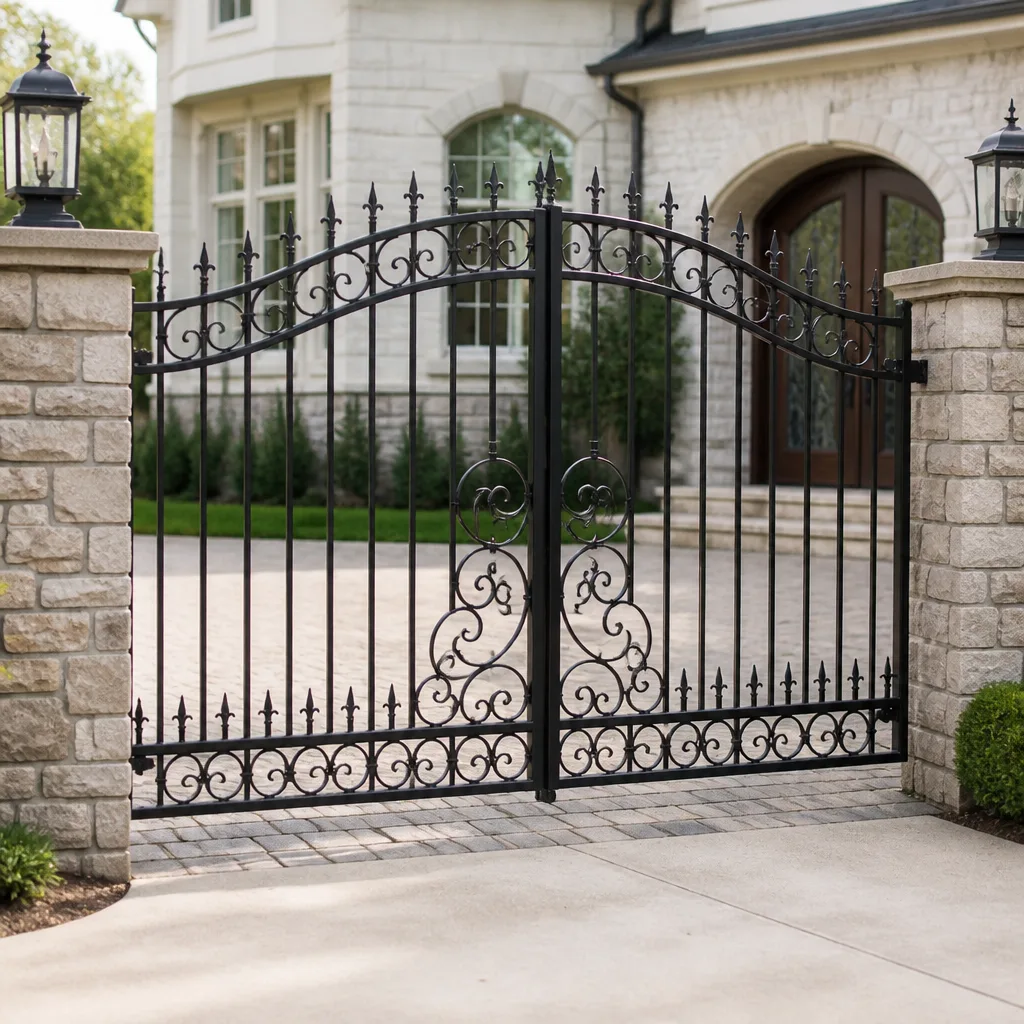 Wrought iron
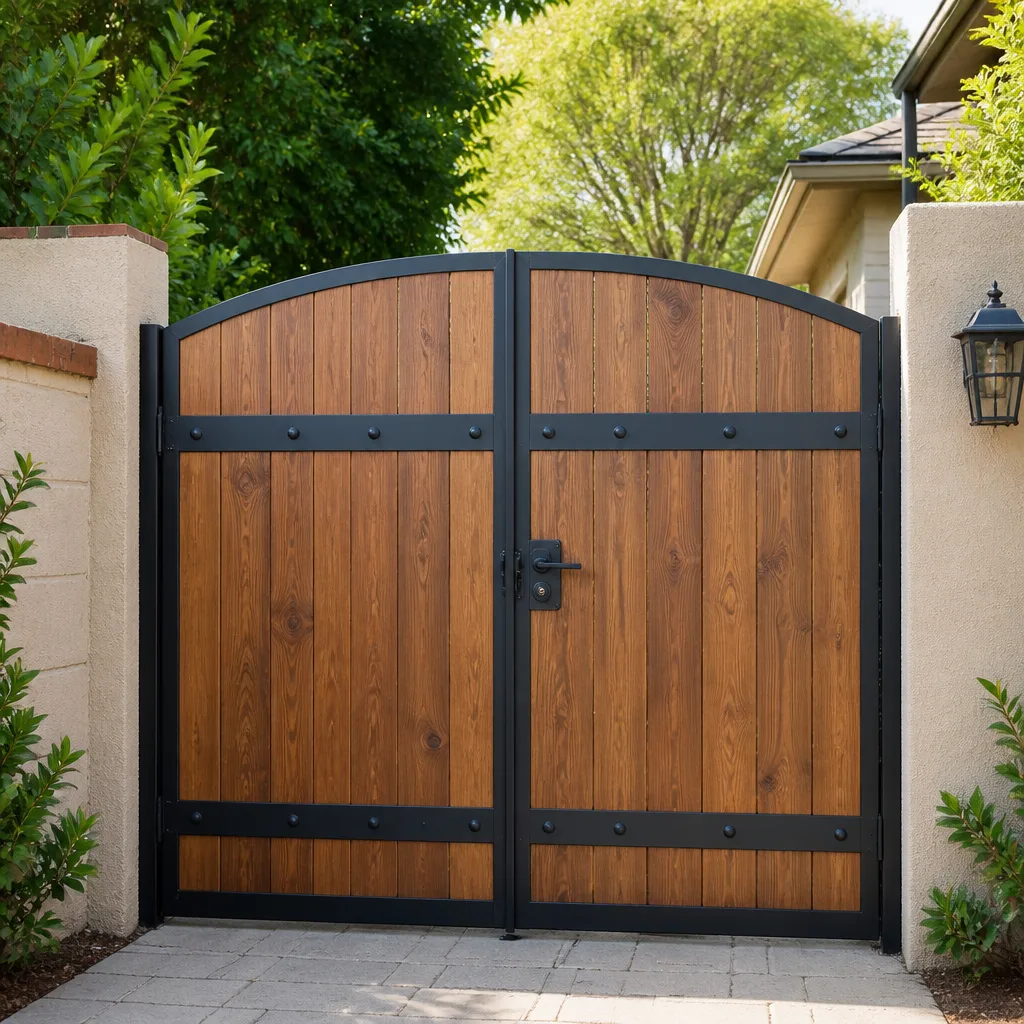 Wood & steel frame
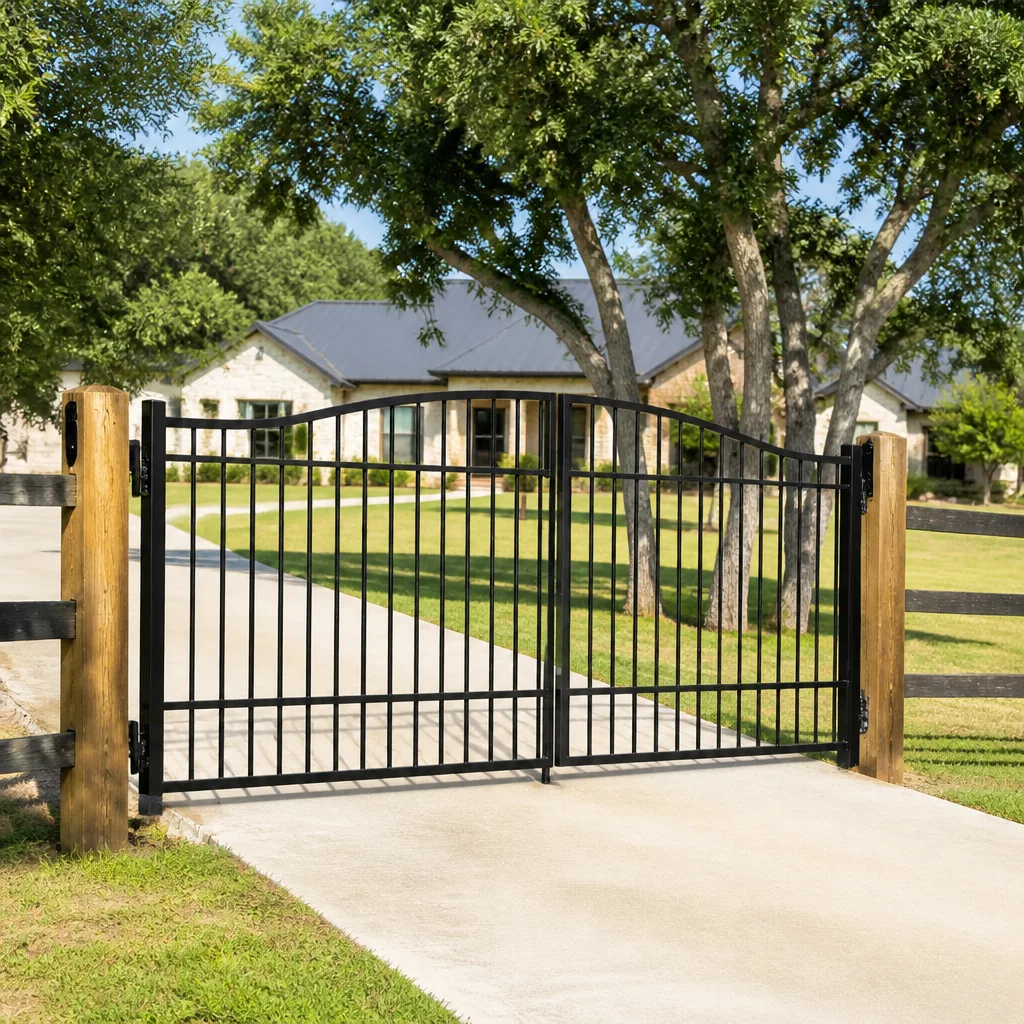 Farm & ranch
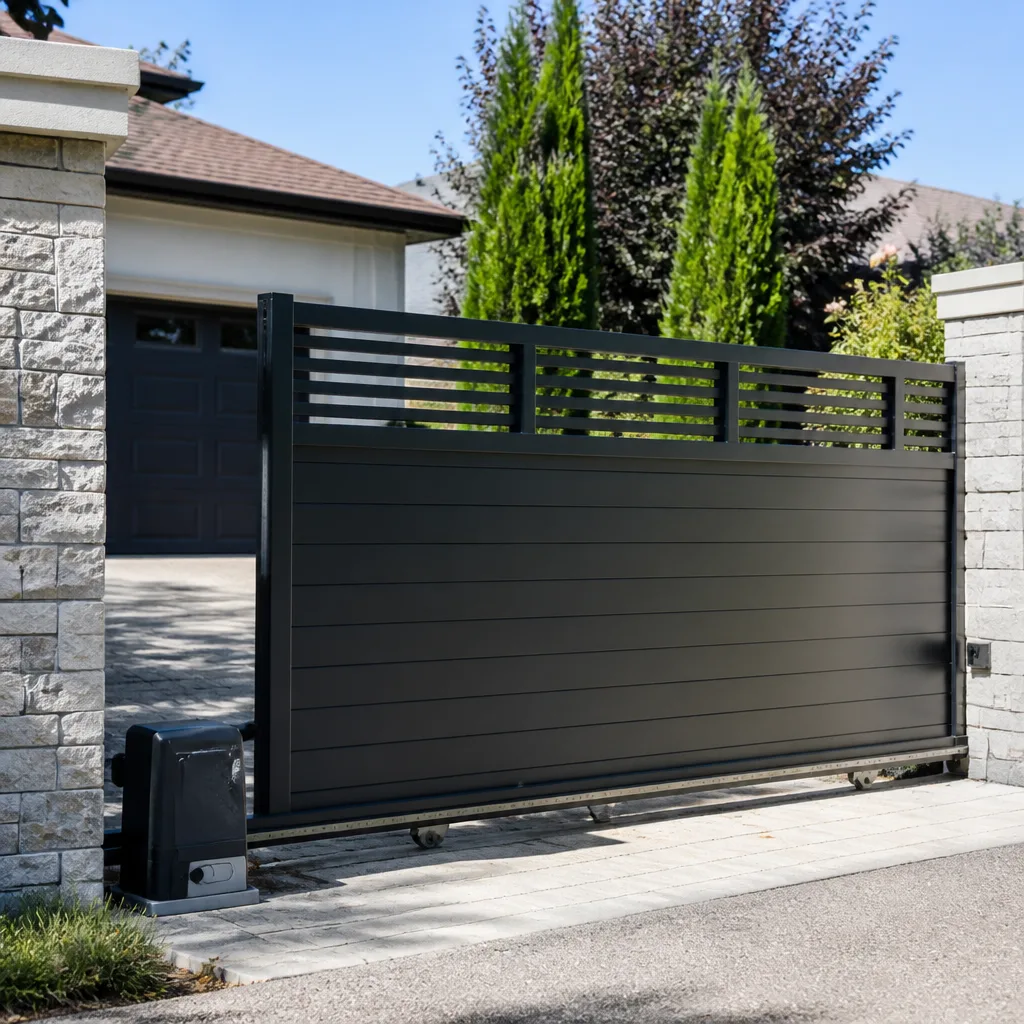 Sliding driveway gates
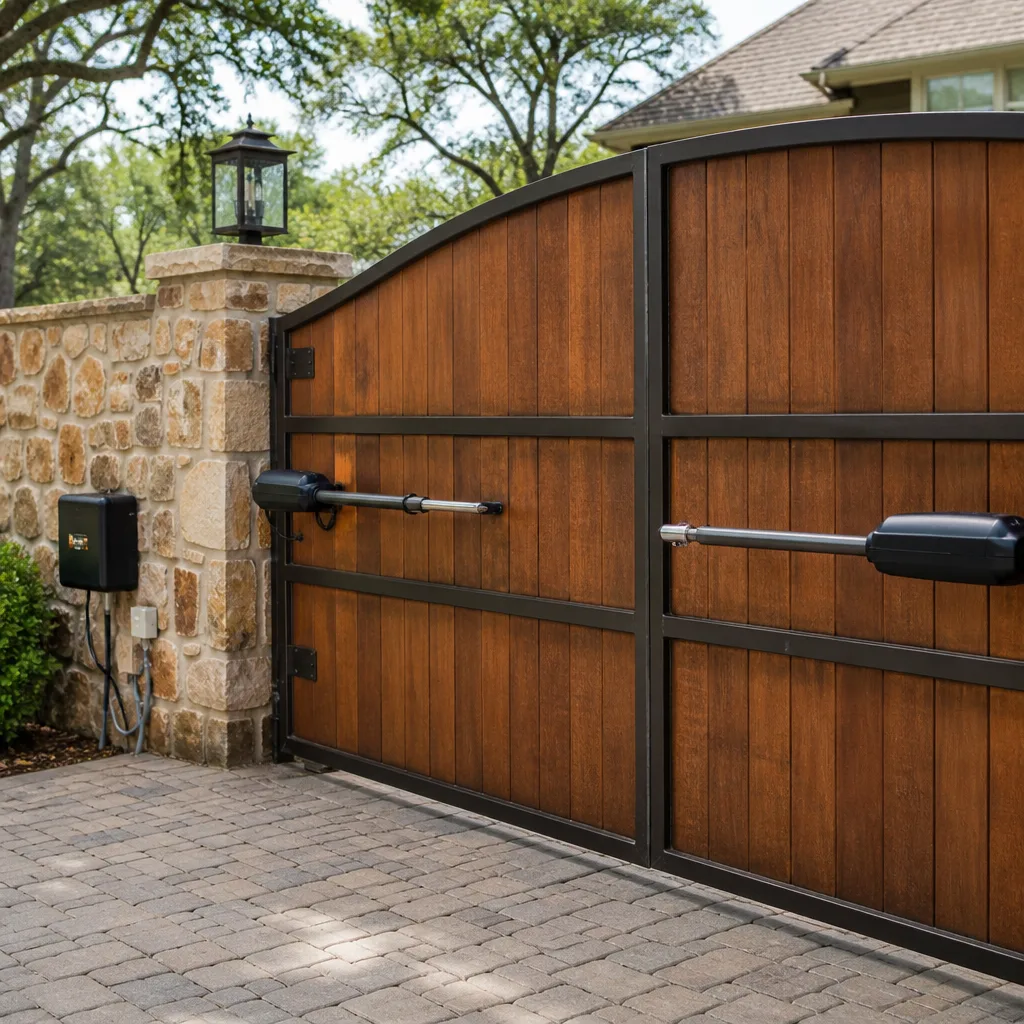 LiftMaster operators
Free on-site gate assessment - hinges, posts, and your LiftMaster or Nice gate operator checked before anything is quoted
The assessment is free and the quote is the invoice.
Get your free estimateGate Repair Troubleshooting in Round Rock: Common Problems and How to Fix Them
A gate that reverses before it closes isn’t broken. It’s usually arguing with its own obstruction sensor, and misreading that argument as a motor failure is the most expensive diagnostic mistake a homeowner can make. The same pattern repeats across almost every gate call we take: a small, identifiable cause wearing the costume of a big, expensive one. This guide breaks gate failures into the five root causes that actually drive them, so you can tell whether you’re looking at a part swap, a calibration, or electrical work that needs a trained eye. Round Rock homeowners who learn to read the symptoms before they call get faster, more accurate repair visits. Here’s how to do it.
Quick Answer
Most gate problems in Round Rock come down to one of five root causes: obstruction sensors out of alignment, limit switches that have drifted, a control board or wiring fault, a stripped gear or worn drive, or a remote and receiver that have lost their frequency match. You can safely reset limits and remotes yourself. Anything touching loop detectors, hardwired safety edges, or the control board needs a trained technician.
Styles & brands we work with
- Wrought iron
- Wood & steel frame
- Farm & ranch
- Sliding driveway gates
- LiftMaster operators
Table of Contents
- Symptom-to-Cause Matrix: What Your Gate Is Telling You
- Electrical vs. Mechanical Failure: How to Tell the Difference
- How Round Rock Conditions Accelerate Gate Failure
- What You Can Safely Reset or Adjust Yourself
- What Requires a Trained Gate Technician
- How to Document the Failure Before You Call
- Common Mistakes to Avoid
- Frequently Asked Questions
Symptom-to-Cause Matrix: What Your Gate Is Telling You
The fastest way to narrow down a gate problem is to stop thinking about the gate as a whole and start thinking about the behavior. A gate doesn’t fail silently. It fails with a specific set of symptoms, and those symptoms point hard at a specific subsystem. Here’s the map we use on every diagnostic visit, and the same one you can run in your driveway before you pick up the phone.
- Won’t open at all, no sound, no movement. Almost always an electrical supply problem first (tripped breaker, dead battery, blown fuse), then a control board or receiver issue. Check the power source before anything else.
- Opens but won’t close, or reverses partway through travel. In our experience this is the obstruction sensor or safety edge most of the time. The gate is doing exactly what it’s designed to do: it thinks something is in the way.
- Beeps with no movement. On most operators this is a fault or obstruction indicator. It’s the gate telling you a safety device is triggered or a limit switch has drifted out of range.
- Moves slowly, grinds, or hesitates mid-travel. Mechanical. Worn gears, a stripped drive gear, dry hinges, or a bent track on a slide gate. The motor is working; the drive isn’t transferring power cleanly.
- Opens and closes but the remote only works up close. Antenna, receiver frequency, or battery in the remote. Cheap to diagnose, cheap to fix.
This matrix is why we always ask a customer to describe the exact behavior, not just that the gate “isn’t working.” A gate that won’t close is a sensor conversation. A gate that won’t move at all is an electrical and control conversation. They sound similar on the phone and they’re completely different jobs.
Electrical vs. Mechanical Failure: How to Tell the Difference
You can separate an electrical fault from a mechanical one without opening the control box, and that distinction saves you money because it decides who you need. A mechanical failure has a sound and a feel. An electrical failure has a silence. That’s the simplest tell, and it holds up across nearly every brand we work on.
When a gate fails electrically, you’ll typically get a dead operator: no motor hum, no movement, no resistance. The gate panel itself will still swing or slide freely by hand if you disengage the operator, because the mechanical parts are fine. When a gate fails mechanically, the operator usually tries to move it. You hear the motor running, sometimes whining or grinding, but the panel doesn’t travel or it stutters.
- Listen first. Motor hum with no movement means the drive is compromised. Total silence means the electrical side isn’t commanding the motor.
- Test the manual release. If the panel moves smoothly by hand when disengaged, the gate’s mechanical parts are healthy and the problem is in the operator or controls.
- Check the obvious electrical points. Breaker, battery backup, and any fuse on the operator housing. Don’t open the control box itself.
- Look for physical damage. Bent hardware, a damaged hinge, or a track obstruction will make a gate act mechanical even when it’s a sensor fault.
A stripped drive gear is the classic mechanical failure, and it’s more common on slide gates and heavy driveway panels where the gate has been forced by hand or struck. A dead control board is the classic electrical failure, and it’s more common after a power surge or a long season of hard use.
How Round Rock Conditions Accelerate Gate Failure
Gate failures aren’t random. Where a gate lives determines how it fails, and Round Rock hands gates a specific set of stressors. Knowing them tells you what to inspect and how often, and it explains why some components give out faster here than the manual suggests.
The first is cedar and oak pollen in spring. It coats gate hardware, works into hinge points, and packs into the optical lenses on safety sensors. Once a lens is dusted over, the sensor reads an obstruction that isn’t there, and the gate starts reversing. That’s the source of an enormous share of the “my gate reverses for no reason” calls we take in Round Rock. A soft cloth and a clear lens solves it and costs nothing.
The second is clay soil. Much of the Round Rock area sits on expansive clay that swells when it’s wet and shrinks when it’s dry, and that movement affects gate posts, mounting plates, and the alignment of hinges. Over a few seasons, a gate that was true can drift just enough to bind. That drift then loads the operator and wears the gears faster. If a gate suddenly starts dragging, check for ground movement around the posts before you assume the motor failed.
The third is summer heat above 100°F. Operators run hotter, batteries in remotes and backup packs lose capacity faster, and control boards are less tolerant of a struggling motor drawing high current. Heat doesn’t create failures on its own, but it exposes weak components. A failing battery in July is normal; a failing battery in a mild spring is worth a closer look.
All of this is manageable with a basic inspection routine. Clear the sensor lenses each spring, check the hinges for grit, and give the posts a look after heavy rain. Small habits keep a gate in Round Rock running through the worst of the summer.
What You Can Safely Reset or Adjust Yourself
There are a few gate adjustments that are genuinely safe for a homeowner to handle, and doing them yourself saves a service call. The limit switches and the remote frequency fall squarely in that category. Both are low-voltage, both are designed for end-user adjustment, and both solve a huge share of everyday gate complaints.
Limit switches tell the operator where the gate’s open and closed positions are. When they drift, the gate stops short, over-travels, or reverses. Reset them by consulting your operator’s manual (LiftMaster, Linear, and Mighty Mule all publish clear limit-setting instructions for their residential models) and following the sequence for your specific unit. If the manual tells you to set the limits by running the gate through a full cycle and confirming the stop points, that’s the procedure. Do it while standing clear of the gate’s path.
Remote frequency and pairing is the other safe adjustment. If a remote only works up close or stops working after a battery change, re-pair it to the receiver using the operator’s pairing procedure. Ghost Controls and Elite residential systems both use a straightforward pairing method documented in their manuals. A fresh battery plus a re-pair solves most remote complaints.
Two things to remember before you attempt either one:
- Never disable or bypass a safety device to make a gate move. If it starts working when you cover a sensor, the sensor is doing its job and something else is the problem.
- Never open the control box or touch wiring. The low-voltage side is still part of a system that runs off your home’s power. Leave it closed.
If a limit or remote reset doesn’t take, or you can’t find the procedure for your operator, that’s a sign to call. It usually means the control board or a sensor is failing, not that you’ve done something wrong.
What Requires a Trained Gate Technician
Some gate repairs are not homeowner jobs, and this is where a dedicated electric gate repair specialist earns their place. Access-control wiring, loop detectors, and hardwired safety edges are low-voltage in name but sit inside the gate’s electrical system, and touching them without training is how people get hurt or make the fault worse. If your gate problem involves any of the following, leave it to a technician.
- Loop detectors. These are the buried wire loops that sense a vehicle and hold the gate open. A faulty loop, a bad splice, or a detector card that has failed means cutting into the driveway and reconnecting wiring. It’s a diagnostic and trenching job.
- Hardwired safety edges. These are the contact strips along the gate’s closing edge. A damaged one either reads an obstruction or stops functioning entirely, and replacing it means working with the operator’s safety circuit.
- Control board faults. A board that has failed from a surge or moisture needs diagnosis and replacement, not a reset. Board-level work on a DoorKing commercial operator or a residential LiftMaster is bench work for a technician.
- Wiring and power faults. If the operator has no power and the breaker is fine, the problem is in the electrical run or the operator’s own supply. That’s a technician with a meter.
- Mechanical drive failures. Stripped gears, worn worm drives, and damaged tracks are repair jobs, not adjustment jobs. A gate that grinds needs to come apart.
The reason this matters is that the wrong person on the job costs more than the right one. A generalist who doesn’t know access control will replace a sensor that was working and leave the real fault in place. A gate specialist diagnoses the system, not just the symptom, and gets it back up and running the first time.
How to Document the Failure Before You Call
You can shorten a diagnostic visit by 20 to 30 minutes by gathering four things before you call. In our experience, a customer who describes a failure precisely and has a couple of photos ready lets the technician arrive with the right part and the right plan. That’s a faster repair and a cleaner estimate.
- Photograph the gate in both positions. One shot fully open, one fully closed, one of the operator housing. Note the brand and model on the housing if you can see it.
- Record a short video of the failure. Twenty seconds of the gate doing the wrong thing is worth more than any description, especially for reversing and intermittent faults that don’t happen on demand.
- Note the exact behavior and timing. Does it fail every cycle or intermittently? Does it fail at the same point in travel each time? Did it start after a storm or a power outage?
- List what you’ve already tried. New remote battery, reset limits, cleared sensor lenses, checked the breaker. This stops the technician from repeating your work.
The brand matters too. If your operator is a Ghost Controls residential unit, a DoorKing commercial system, or an Elite drive, tell us when you call. It doesn’t change the diagnosis but it does help us show up prepared, and it’s the kind of detail a gate specialist uses to plan the visit properly. We work across nine operator brands precisely so one call handles whatever is on your property.
Common Mistakes to Avoid
- Assuming the motor is dead when the gate reverses. A reversing gate is usually a sensor reporting an obstruction. Replacing a healthy motor is expensive and fixes nothing. Clean the sensor lenses first.
- Bypassing a safety sensor to make the gate close. This is dangerous and it masks the real fault. A gate that closes only with the sensor disabled needs a technician, not a workaround.
- Opening the control box to “take a look.” The board and wiring inside are not a homeowner repair. Even low-voltage terminals carry enough current to cause a shock, and a wrong bridge can kill the board.
- Ignoring clay soil movement after heavy rain. In Round Rock, a gate that suddenly drags after a wet spell is often telling you the posts have shifted. Ignore it and you’ll wear out the operator gears.
- Using a generalist for access control work. A handyman can tighten a hinge. A loop detector or a DoorKing control board needs a gate specialist who works on electric systems every day.
- Skipping the manual and guessing at limit settings. Wrong limits cause over-travel and stress the operator. Follow the manual for your brand, or call.
- Letting pollen sit on the safety lenses all season. A quick wipe each spring prevents a whole category of false obstruction faults in Round Rock.
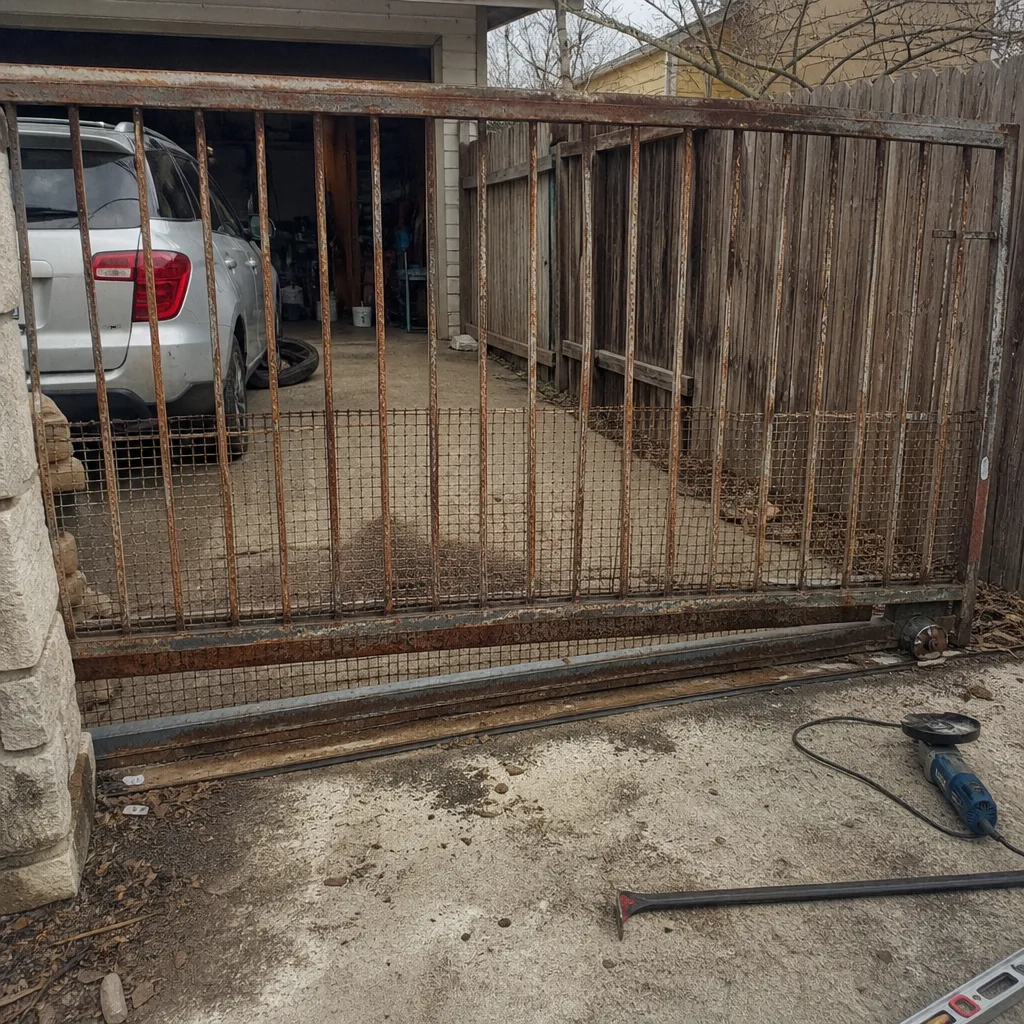
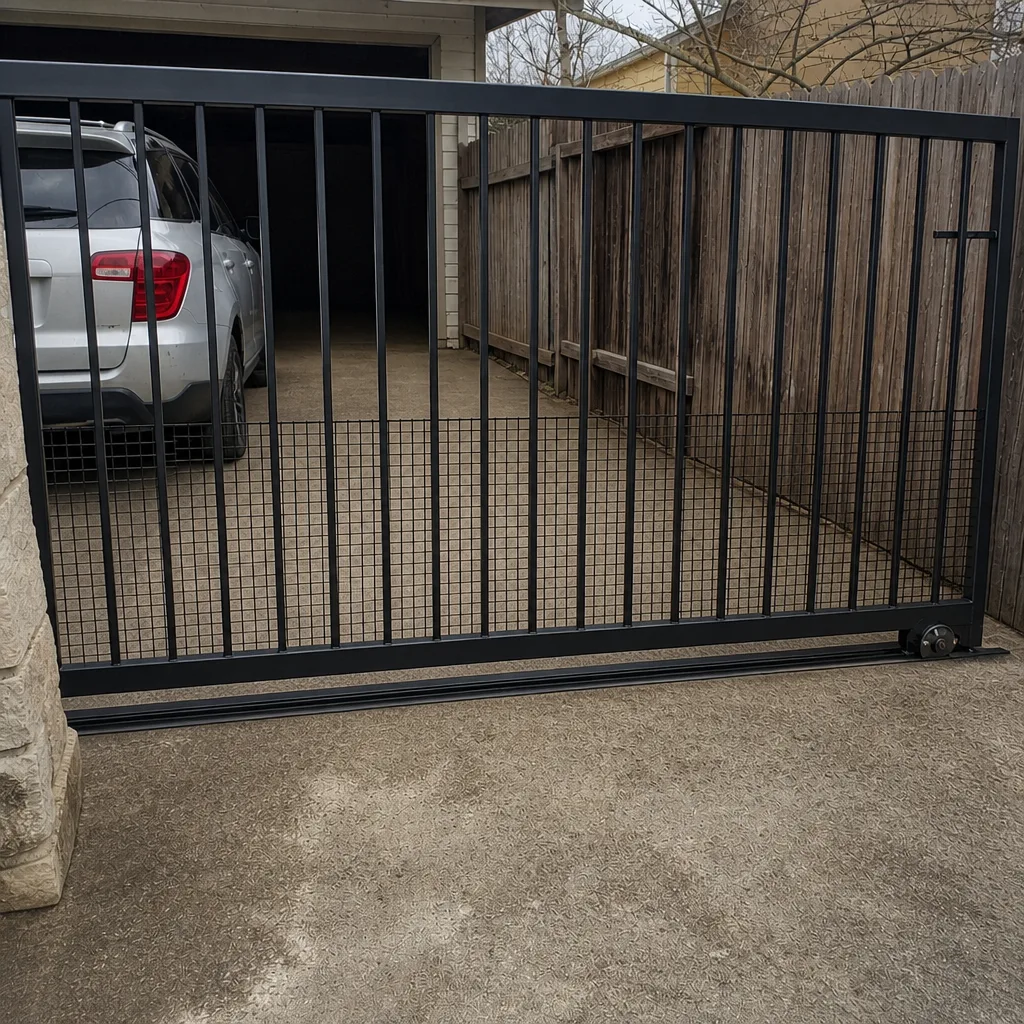
See the difference
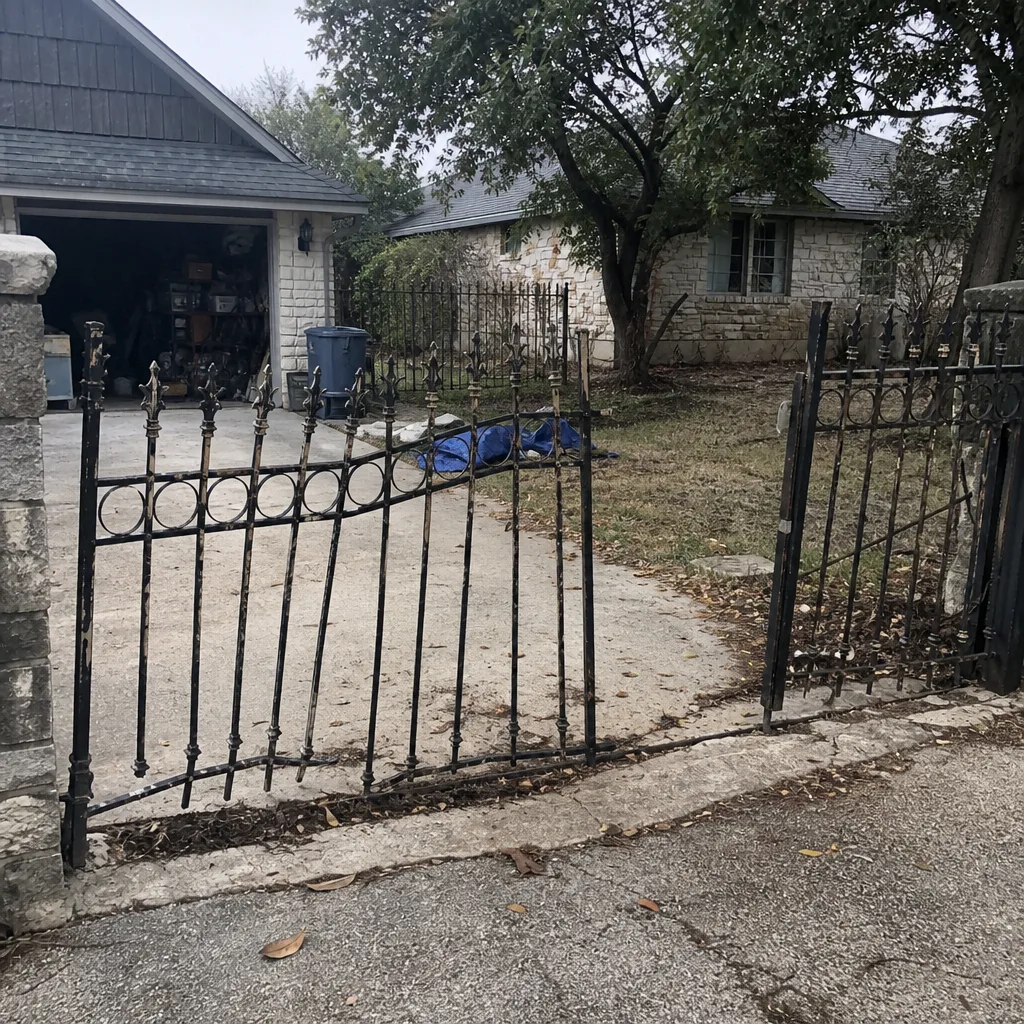 Before
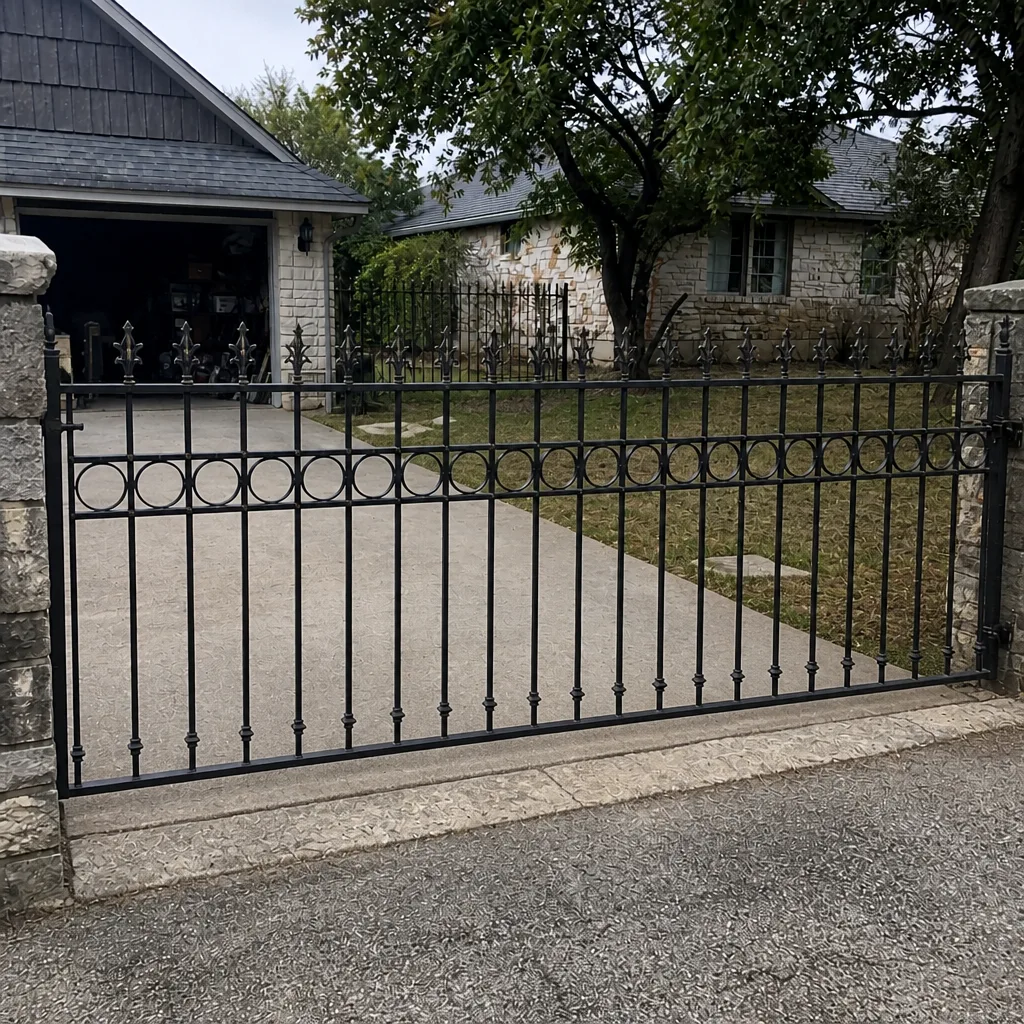 After
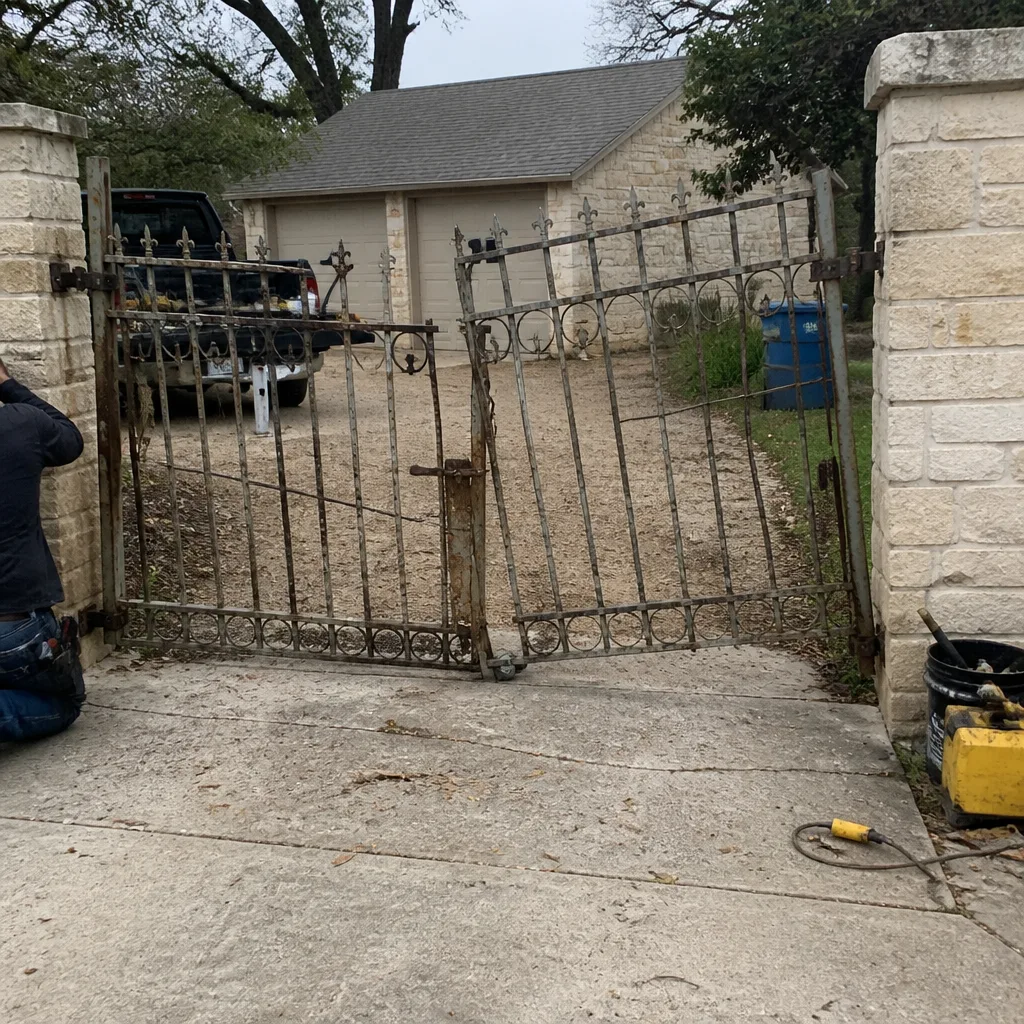 Before
 After
 Before
 After
When to Call a Professional
Call a professional when the gate has no power and the breaker is fine, when a reversing or beeping gate keeps doing it after you’ve cleaned the sensors and reset the limits, when the gate grinds or stutters through travel, or when the problem involves a loop detector, hardwired safety edge, or control board. Those are the jobs where a trained gate technician saves you money rather than costing you more. Our technicians have up to 11 years of experience across residential and commercial systems, from a Mighty Mule driveway operator to a DoorKing access system, and we diagnose the whole gate before we quote the fix. Gate Repair Round Rock offers free estimates in Round Rock. Call (888) 853-0490. We answer 24/7. Fast dispatch from 7am to 7pm, Sunday through Friday.
Frequently Asked Questions
Your gate is almost certainly reading an obstruction, most often from dirty or misaligned safety sensors, a triggered safety edge, or a loop detector that thinks a vehicle is still present. Clean the sensor lenses and check for anything blocking the beam. If it still reverses, the safety circuit needs a technician. Call (888) 853-0490 for an exact quote on the diagnosis; estimates are free.
Gate repair in Round Rock is quoted per job after we see the gate, and the written estimate sets the final price before any work starts. You’ll know the cost before we begin. Call (888) 853-0490 for a free estimate.
Same-day service is often possible for gate repairs when you’re in our dispatch area. We answer 24/7, and fast dispatch runs 7am to 7pm, Sunday through Friday. Call (888) 853-0490 and we’ll book the earliest opening.
You need a gate technician who handles access-control wiring as part of gate work. Loop detectors, safety edges, control boards, and operator power faults sit inside the gate’s electrical system, and a dedicated electric gate repair specialist diagnoses and repairs them as routine work. A general electrician won’t know the operator or the access hardware.
Often, yes. A fresh battery and re-pairing the remote to the receiver solves most of these cases, and the pairing procedure is in your operator’s manual for brands like Ghost Controls and Elite. If re-pairing doesn’t help, the receiver or antenna is the next suspect and needs a technician.
Check the breaker, the operator’s battery backup, and any visible fuse, then note whether the gate moves freely by hand when disengaged and whether you hear the motor at all. Take a photo of the operator housing and a short video of the failure. Those few steps get you a faster, more accurate diagnosis on the first visit.
The Bottom Line
Gate problems fall into five root causes, and the symptom tells you which one you’re in. Reversing and beeping mean the safety system is doing its job. Grinding and stuttering mean the drive is worn. Dead silence means electricity. Round Rock’s pollen, clay soil, and hot summers push certain failures faster, so a quick seasonal inspection saves real money. Reset limits and remotes yourself; call a specialist for loops, safety edges, control boards, and drive failures. The goal is a gate that’s back up and running, fixed once, without guesswork. That’s how a dedicated gate repair approach works: diagnose before the visit, quote before the work. If you’d like that done for a residential driveway gate or a commercial access system in Round Rock, call (888) 853-0490 for a free estimate. We answer 24/7. Fast dispatch from 7am to 7pm, Sunday through Friday. You can learn more about the full scope of what we handle on our Gate Repair Round Rock page.
Written by the team at Gate Repair Round Rock.