
Last updated November 15, 2026
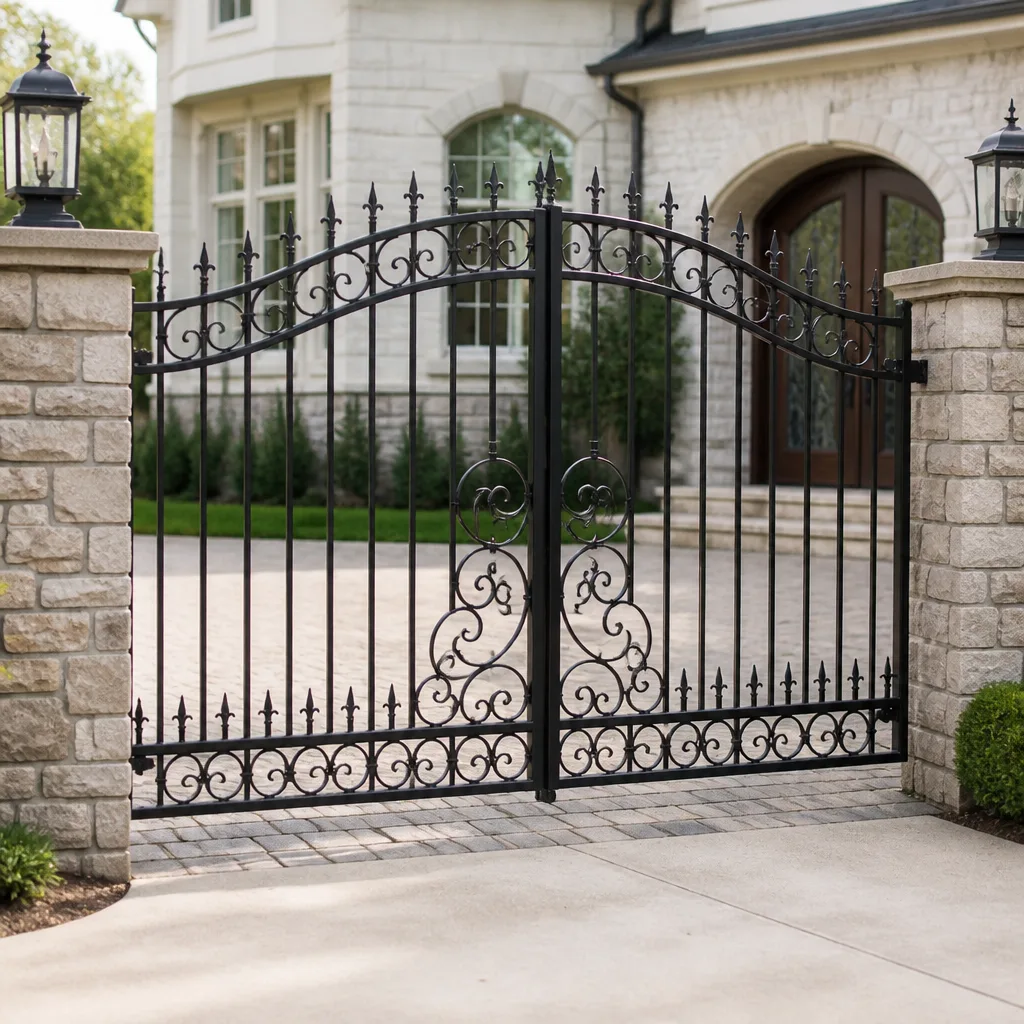 Wrought iron
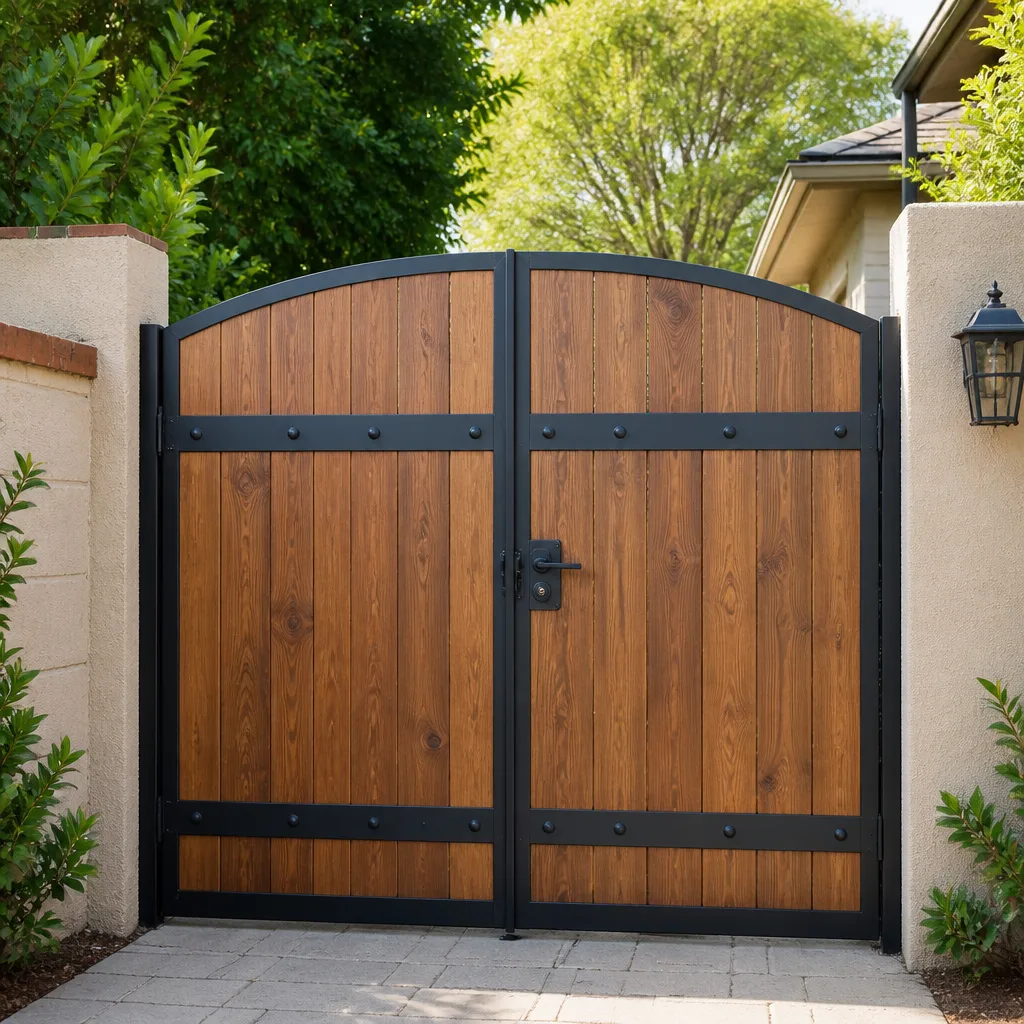 Wood & steel frame
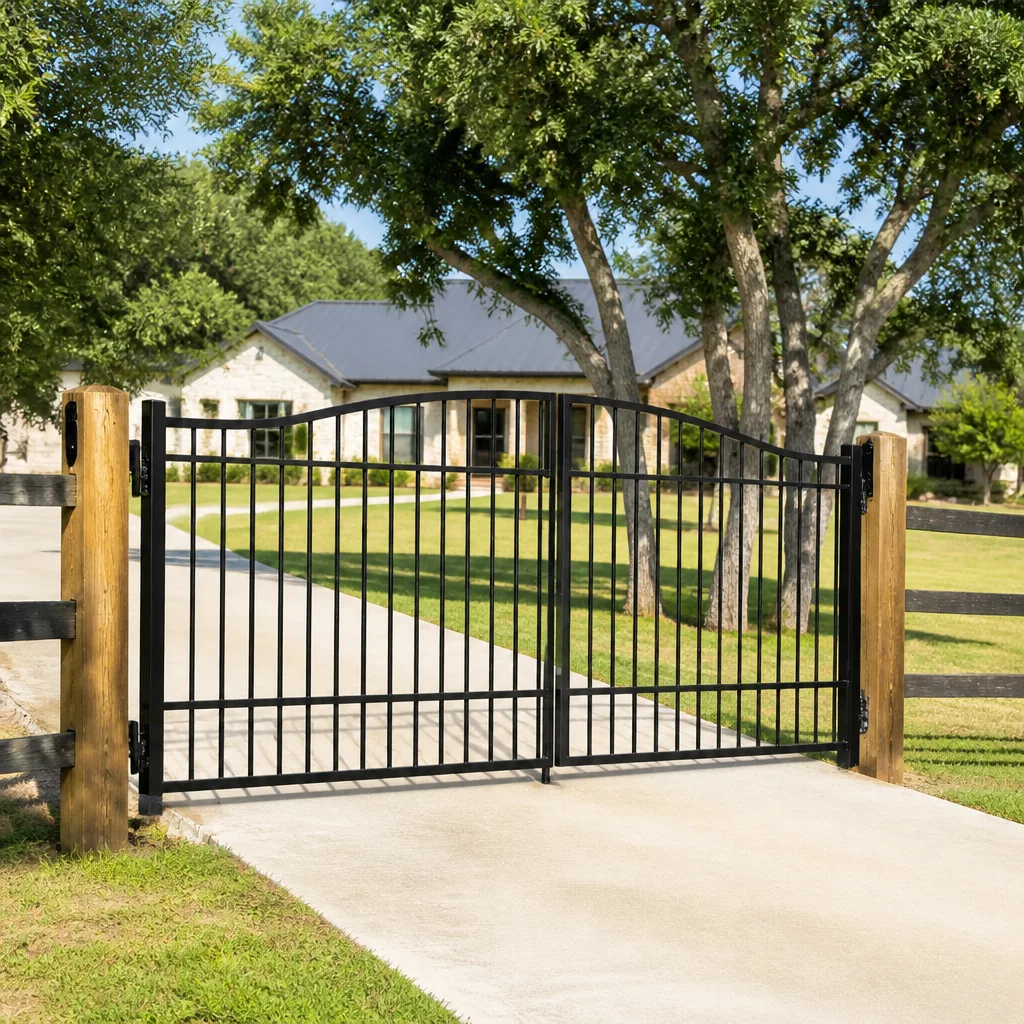 Farm & ranch
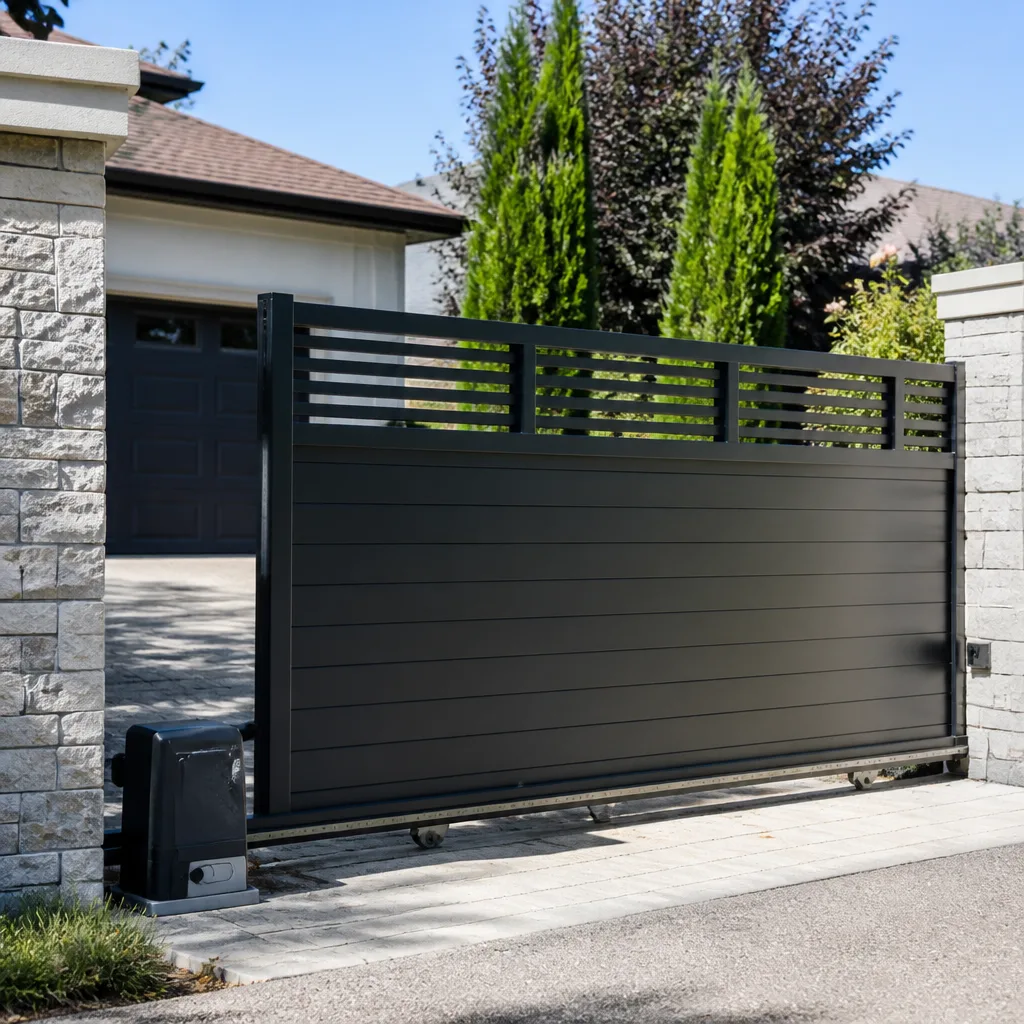 Sliding driveway gates
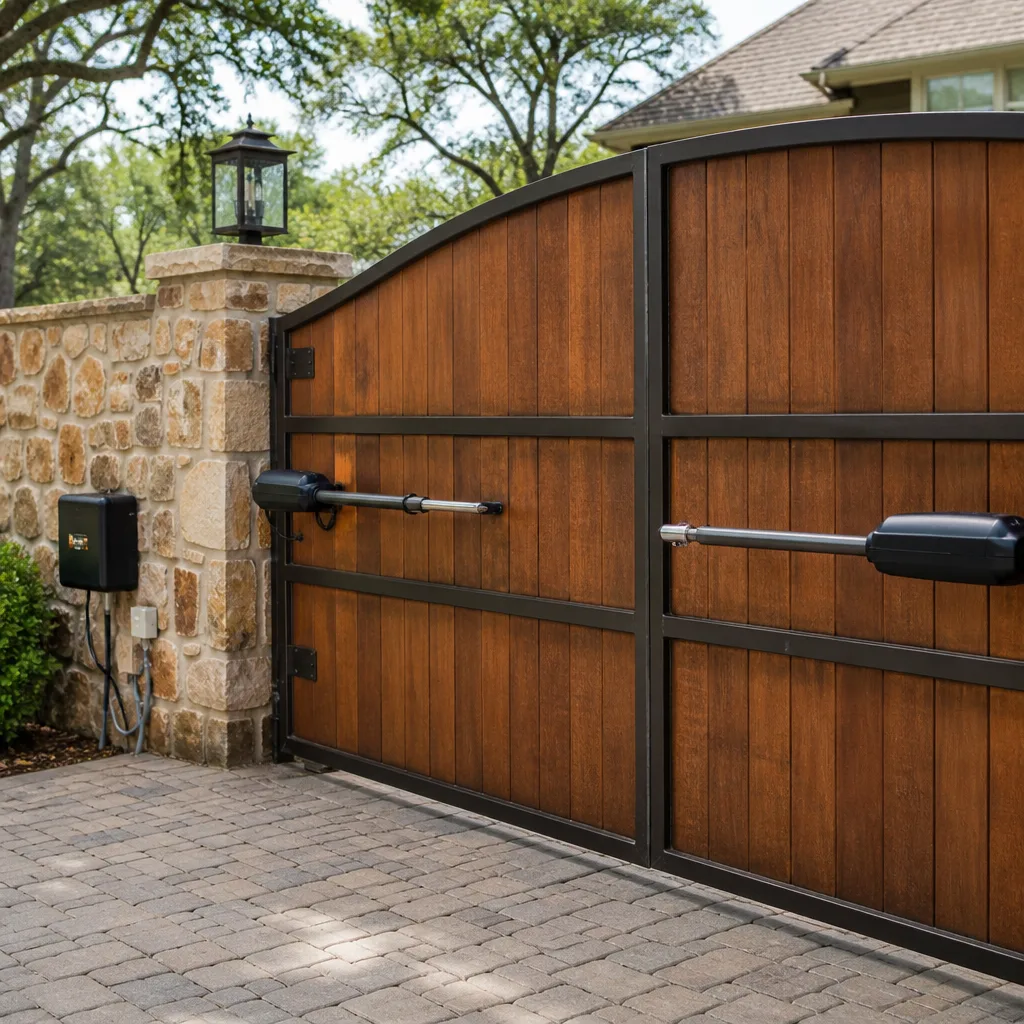 LiftMaster operators
Free on-site gate assessment - hinges, posts, and your LiftMaster or Nice gate operator checked before anything is quoted
The assessment is free and the quote is the invoice.
Get your free estimateSeasonal Gate Repair Care for Round Rock: Year-Round Homeowner’s Guide
The gate problems that fill our September schedule in Round Rock usually aren’t storm damage. They’re heat damage from June, July and August finally announcing itself – control boards that quit, aluminum frames that have warped a quarter inch out of square, motors that ran past their duty cycle one hundred-degree afternoon too many. Most gate maintenance advice is written for a climate with four distinct seasons and a long, hard freeze. Round Rock doesn’t work that way. Our damage calendar runs on sustained heat, spring storm surges, and sharp winter temperature swings that stress metal and threads in ways a homeowner never sees coming. This guide maps the actual seasonal tasks to our actual seasons, so your gate is still opening smoothly next year.
Quick Answer
Gate maintenance in Round Rock should follow the local climate rather than a generic four-season checklist: storm-hardening and battery checks in spring before severe weather, heat management for operators and control boxes through the 100°F+ summer, tightening and rust attention during the mild winter, and a deliberate post-freeze inspection after any hard freeze. The single highest-value habit is inspecting the gate after each major weather event instead of waiting for it to fail – most repairs we see started as a small alignment, battery or corrosion issue that ran for months.
Styles & brands we work with
- Wrought iron
- Wood & steel frame
- Farm & ranch
- Sliding driveway gates
- LiftMaster operators
Table of Contents
- Why Round Rock Needs Its Own Gate Maintenance Calendar
- Spring: Storm Hardening Before Severe Weather Season
- Summer: Heat Management for Operators and Control Boxes
- Winter: Thermal Cycling, Metal Stress and Winter Repairs
- The Post-Freeze Protocol: What to Check After a Hard Freeze
- Operator Brands and What Each One Tells You About Seasonal Wear
- Commercial and Property-Manager Considerations in Round Rock
- Your Year-Round Gate Care Checklist
Why Round Rock Needs Its Own Gate Maintenance Calendar
Most seasonal gate guides are written for places where winter is the enemy. In Round Rock, summer is. A residential driveway gate operator here can sit in direct sun for eight hours a day through weeks of triple-digit heat, and that changes how the whole system ages. Control boards, capacitors and motor windings all degrade faster when the enclosure they live in is baking, and the duty cycles printed in most operator manuals assume a climate far gentler than ours.
The other half of the story is what happens on the other end of the year. Round Rock winters are mild by any standard, but they aren’t flat. We get occasional hard freezes that arrive fast and leave fast, and that rapid swing is harder on metal than a long, steady cold. Ornamental iron expands and contracts, paint films crack, weld stress points fatigue, and hinge threads that were snug in October can be seized by February.
What ties it together is the storm pattern. Late spring in Central Texas brings severe weather, and a gate is a large moving object with wiring attached. Wind loading, flying debris and power surges during storms find every weak point in a gate’s alignment, battery backup and photocell setup.
So the honest maintenance calendar for a gate in Round Rock looks like this:
- Spring: storm hardening – travel stops, battery backup, photocell alignment, hardware tightening.
- Summer: heat defense – shade for control boxes, capacitor and motor wear, duty-cycle awareness.
- Fall: a general inspection pass before the cold arrives; this is when you catch the things summer hid.
- Winter: metal care – moving parts, paint, welds, hinges – plus thermal-cycling awareness.
- Post-freeze: a deliberate inspection after any hard freeze, not a “hope it’s fine.”
Getting the seasonal rhythm right matters because these tasks are cheap to do and expensive to skip. A seized hinge or a failed capacitor is a small fix once you know it’s coming. Left alone through a full annual cycle, they take a motor, a control board or a frame with them. If you’re ever unsure what’s seasonal wear and what’s an actual fault, Gate Repair Round Rock exists for exactly that conversation.
Spring: Storm Hardening Before Severe Weather Season
Spring in Round Rock is about closing doors before the weather opens them. Late spring severe storms are a fact of life here, and a gate that’s been quietly drifting out of adjustment all year gets found out in a single gust or power surge. Storm hardening isn’t complicated – it’s a short list of checks done before the season, not after the damage.
Run through this spring protocol on a residential driveway gate:
- Check the travel stops. Every automatic gate has limits that tell the operator where to stop. If they’ve worked loose over the winter, the gate slams, stalls or overshoots, and that’s the moment a storm gust can push a panel past where it should go. Set them to the manufacturer’s spec, not “wherever it stops now.”
- Verify battery backup actually works. Many operators run on a battery in a power outage, and the only way to know the battery is healthy is to test it. A backup that dies the first storm of the season is a gate stuck open or stuck closed in the rain.
- Inspect photocell alignment. Safety photocells are a beam across the gate’s path. If a bracket has shifted, the gate either refuses to close or – worse – fails to sense an obstruction. Realign, clean the lenses, and confirm the gate reverses on a blocked beam.
- Walk the hardware. Bolts, brackets, hinges and track hardware work loose season to season. Tighten what’s loose and replace anything cracked before wind does it for you.
- Look at the wiring you can see. Exposed wire runs, conduit and junction boxes should be sound. Water intrusion into a junction box is how a spring becomes an electrical fault.
- Test safety edges and reversing. Put an obstruction in the gate’s path and confirm it reverses. This is the check people skip and the one that matters most.
Do this pass once, early, and the same list takes ten minutes the rest of the season. If your gate is electric, the safety and wiring items fall squarely into electric gate repair territory, and it’s worth having a specialist look at anything that isn’t behaving.
Summer: Heat Management for Operators and Control Boxes
This is the season that quietly does the most damage in Round Rock. Through June, July and August, a gate operator can sit in direct sun for weeks of sustained heat above 100°F, and every component inside that enclosure is aging faster than its manual assumes.
The physics are simple. Heat builds inside the control box because it’s a closed box in the sun. Capacitors – the small parts that give the motor its kick – have a lifespan that drops as temperature rises, and a capacitor that fails is one of the most common summer gate failures we see. Motor windings run hotter, and the operator’s thermal protection may start tripping on gates that worked all previous summer. Control boards develop faults that look like gremlins – intermittent opening, a gate that stops halfway, or one that opens and won’t close.
What helps, in practice:
- Shade the control box where you can. A small shade structure, a wall-mounted box instead of a post-mounted one in full sun, or a movable shade panel during the hottest weeks all reduce the heat load. Never seal or enclose the box more tightly than the manufacturer intends – operators need airflow.
- Treat the printed duty cycle as a hot-climate minimum. Most operator specs are written for gentler conditions. A gate that cycles dozens of times a day in the heat needs to run well under its rated limit, and a commercial gate that runs constantly needs far more attention than a residential one.
- Listen for change. A motor that sounds strained, a gate that moves slower, or a control box that’s hot to the touch on a July afternoon are all mild signs. Catching them in July is a capacitor or a board; catching them in September is often a motor.
- Clear the vents. Dust and debris in the summer heat turn a vent into an insulator. A quick clean several times a season is cheap insurance.
This is the heart of why the September spike in Round Rock is heat-driven. The gate doesn’t fail when it’s hottest – it fails when temperatures finally drop and the accumulated wear shows up as a dead control board or a warped aluminum frame. Summer maintenance is how you get ahead of it.
Winter: Thermal Cycling, Metal Stress and Winter Repairs
Round Rock winters are mild, but they’re not steady. We get occasional hard freezes that arrive quickly, drop temperatures hard, and leave just as fast. That up-and-down cycle is genuinely hard on a gate, and it does damage a simple “is it winter” checklist won’t catch.
For ornamental iron and steel, the main winter wear shows up in three places. Paint films crack where the metal moves, and a hairline crack lets moisture in. Welds at stress points fatigue under repeated expansion and contraction. Hinge and pivot threads that were snug in October can seize by February as parts expand and contract at different rates. This is why a gate that looked fine in October can have a seized hinge two months later. The failure isn’t sudden – it’s thermal cycling exposing a weakness that was always there.
The winter repair list, in order:
- Walk the hinges and pivots. Move the gate by hand (with the operator off, following manufacturer guidance) and feel for binding. A hinge that’s starting to seize gets lubricated and freed; one that’s ignored takes the operator with it.
- Inspect paint and welds. Touch up cracked paint at seams and joints – that’s where corrosion starts. Look at weld stress points at hinge brackets and frame corners for anything that looks like a beginning crack.
- Check for seized fasteners. Bolts and brackets that held through the heat can seize through the cold cycle. A small penetrating lubricant applied before they seize is the cheapest maintenance in this guide.
- Look at the foundation. Concrete footings for gate posts don’t crack from frost here, but the seasonal wet-dry cycle can open hairline cracks that let water in. Catch them while they’re small.
For an aluminum-framed residential gate, winter is the time to check frame square and panel alignment. A frame that’s drifted slightly out of square closes unevenly and puts strain on the operator – usually a warm-season problem that got its start in winter metal movement.
The Post-Freeze Protocol: What to Check After a Hard Freeze
After any hard freeze in Round Rock, resist the urge to just hit the remote and see if things work. A freeze can leave hidden damage that forcing the operator makes worse. Run this check before you cycle the gate:
- Look at exterior conduit. Hard freezes can crack PVC conduit and the fittings around it. A cracked conduit is how water – and eventually a fault – gets into the wiring.
- Check exterior GFCIs. Exterior outlets serving the gate should be on ground-fault protection, and a hard freeze or moisture intrusion can trip them. If the gate has no power, check the GFCI before assuming the operator failed.
- Inspect the track and wheels (for sliding gates). A freeze can warp a slide track or push debris into it, and ice can distort a wheel. If the gate is a slider, look before you run it.
- Move it by hand first. With the operator off, following manufacturer guidance, move the gate manually. If it binds or grinds, do not force it – that’s how a bent frame or a stripped gear happens.
- Then cycle the operator and watch it. Listen for strain, watch for a full, clean travel in both directions, and confirm the safety photocells and reversing work.
- Call if anything binds. A gate that won’t move cleanly by hand should not be forced by the operator. That’s the moment to have it looked at.
This protocol is short on purpose. Doing it every freeze is the difference between catching a tripped GFCI and replacing a control board. For anything that doesn’t add up, the gate repair team works through exactly this checklist – probably more times per winter than anyone wants.
Operator Brands and What Each One Tells You About Seasonal Wear
Different operator brands wear in different ways, and knowing your brand tells you where to look first. We work across the whole market, from DIY-friendly residential systems to commercial-grade operators, and the seasonal patterns are consistent per brand family.
Mighty Mule and Ghost Controls are entry-level residential systems, and in Round Rock’s heat their batteries and control boards are the common failure points. If you have one of these on your gate, battery health in spring and control-box shade in summer are your two highest-value habits. Their DIY-friendly nature means owners often push them past their rated cycles in summer, which speeds up that wear.
LiftMaster and Linear sit in the mid-range staple category, and their capacitors and motor protection are what summer heat stress usually hits first. A LiftMaster operator that trips on thermal protection on a hot July day is telling you something – don’t ignore it. Battery backup on these brands is also worth a real test each spring, not just a quick remote press.
FAAC, BFT, DoorKing and Elite are the commercial-grade systems, and on these the seasonal concerns are more about duty cycle and load than heat alone. A commercial gate running dozens of cycles an hour through a Round Rock summer is being cycled far harder than a driveway gate, and maintenance intervals need to reflect that.
Whatever brand you have, the seasonal logic doesn’t change: spring for storm hardening, summer for heat, winter for metal, post-freeze for a careful look. Where it changes is which parts are most likely to give you trouble. If you have Mighty Mule, for example, the brand’s battery and control board are your spring and summer focus. If you have FAAC or BFT on a commercial gate in Round Rock, your focus is duty cycle, alignment and the electrical systems behind the operator.
That’s the practical reason we work across all of them. Recommendations come down to what’s best for your gate, not what a single-brand dealership wants to move.
Commercial and Property-Manager Considerations in Round Rock
If you manage a commercial or multifamily property in Round Rock, the seasonal calendar above still applies, with one big difference: cycle count. A commercial access-control gate on a busy entry runs more cycles in a week than a residential gate does in a month, and heat multiplies the effect.
The two things that matter most for commercial gates here:
- Duty cycle and heat are a double hit. An operator running hard cycles in direct sun is being pushed on both fronts. For commercial systems, shade and enclosure placement, ventilation, and a maintenance rhythm that actually matches the cycle count make a real difference over a year.
- Safety and access hardware wear first. Photocells, safety edges, access-control readers and keypads take a beating at a busy entrance. These are your most frequent failures and the ones most worth inspecting proactively, before a gate stuck open creates an access problem.
For property managers responsible for access control, the schedule should follow the same shape: spring storm hardening, summer heat management, winter metal care, post-freeze checks. The difference is frequency. A commercial system needs the full cycle several times a year, not once. If you’re building a maintenance rhythm for a Round Rock property, the spring, summer and winter sections above are the core of it, and a single failure at a busy entrance tends to cost more than a year of maintenance.
Your Year-Round Gate Care Checklist
Here’s the full calendar in one place. If you only do one thing, do the post-event inspection every time weather is severe or temperatures swing hard – that’s where the small problems get caught before they become repairs.
- Spring (before severe weather): verify travel stops, test battery backup, realign photocells, tighten hardware, inspect exposed wiring and conduit, test safety edges and reversing.
- Summer: shade the control box where possible, clean vents, treat the operator’s duty cycle as a hot-climate minimum, listen for strain and slower operation, watch capacitors and control boards.
- Fall: a full inspection pass – gate alignment, frame square, hardware, paint, and anything summer wear revealed.
- Winter: lubricate and free hinges and pivots, touch up paint and inspect welds at stress points, check fasteners before they seize, inspect footings for hairline cracks.
- After any hard freeze: inspect conduit for cracks, check exterior GFCIs, look at tracks and wheels for sliders, move the gate by hand before powering it, then cycle and watch, and call if anything binds.
This checklist is the difference between a gate that needs a routine seasonal repair and a gate that needs a motor, a frame or an emergency call. The parts that fail early are almost always the ones nobody looked at.
Common Mistakes to Avoid
- Running a gate that binds. Forcing the operator on a gate that doesn’t move cleanly by hand is how a hinge seizure becomes a motor and gear repair. Investigate the bind first, every time.
- Skipping the battery test in spring. The backup battery only matters during a power outage, and if it’s already weak, you’ll find out exactly when you need it. Test it as a habit before storm season.
- Sealing a control box to keep out the heat. Tightly sealed enclosures cook their own electronics. Operators need airflow; a shade panel outside the box does more good than a tight wrap around it.
- Treating the printed duty cycle as fine. Round Rock summers push an operator harder than its spec climate assumes. Running a gate near its cycle limit in July is asking for a capacitor or motor failure.
- Ignoring cracked paint and welds in winter. A hairline crack in a paint film is where corrosion starts next season. Catch and touch up in winter, not when the rust is visible.
- Forcing the gate after a freeze. Ice, warped tracks and seized parts are exactly what the post-freeze protocol exists to catch. Move it by hand before you power it, or you’ll do the damage yourself.
- Waiting for the failure instead of the inspection. The September spike in Round Rock isn’t from autumn – it’s heat damage that accumulated all summer. Done in July, most of it is routine maintenance.
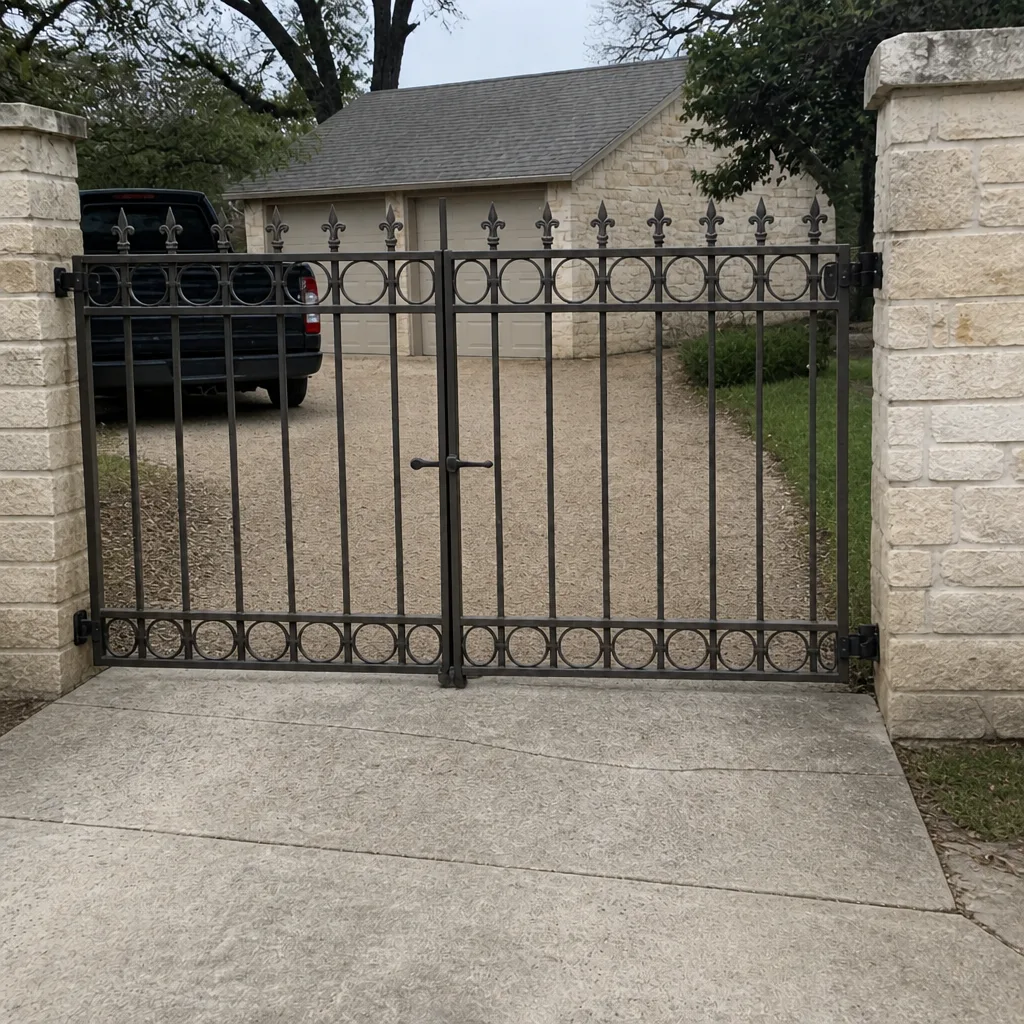
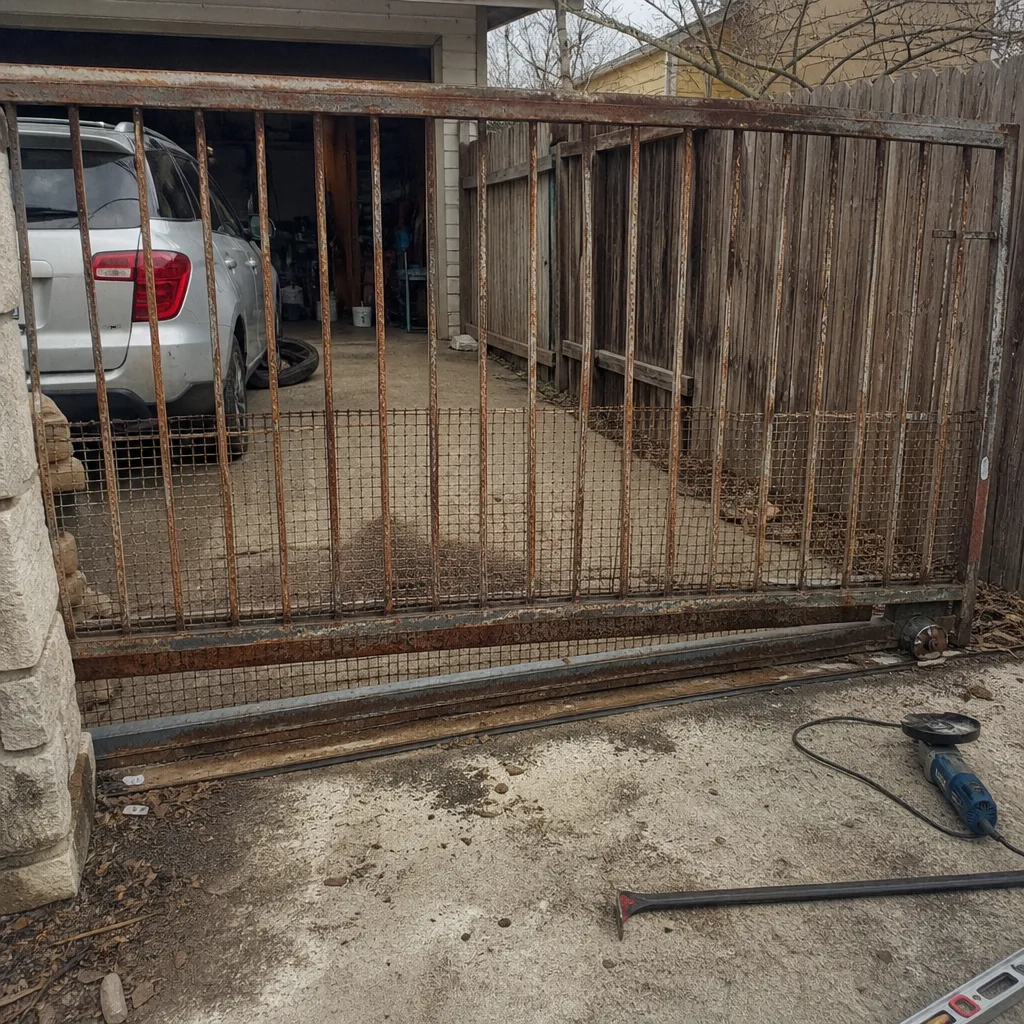
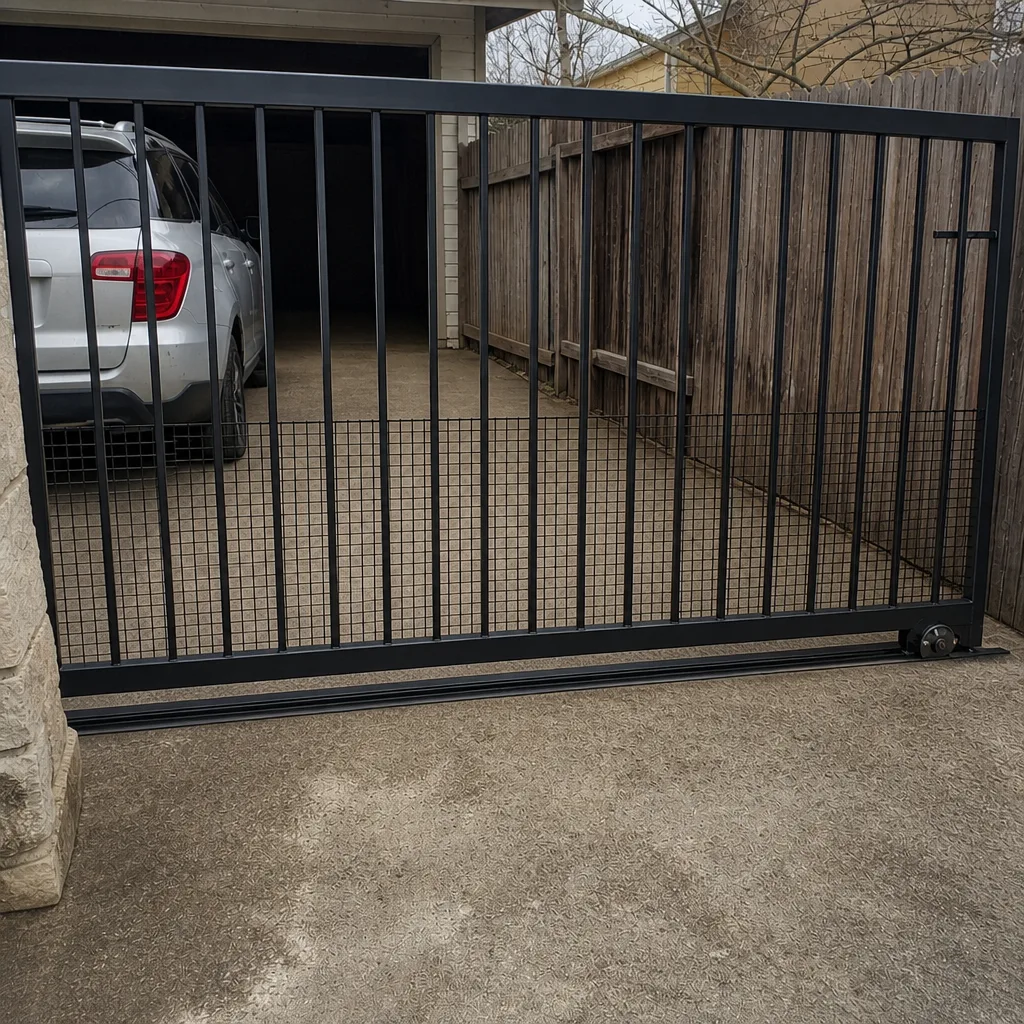
See the difference
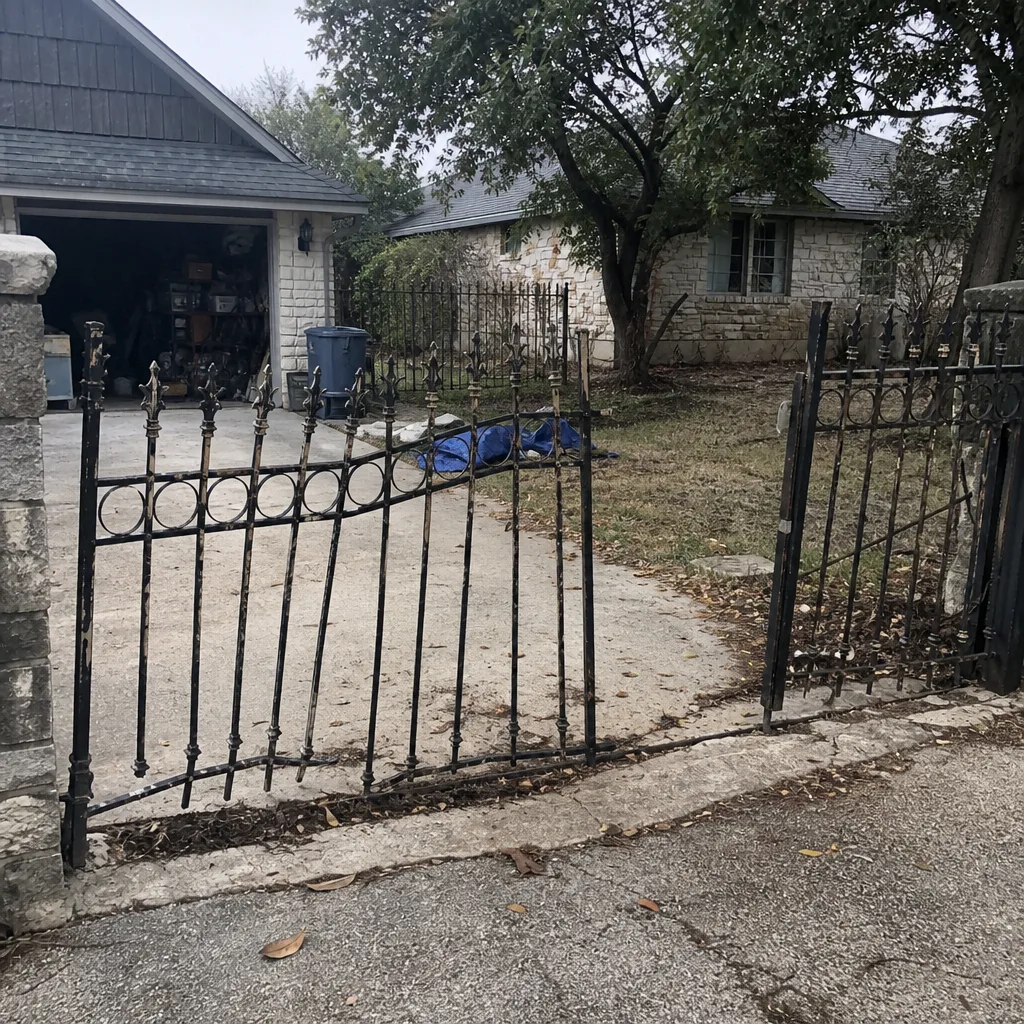 Before
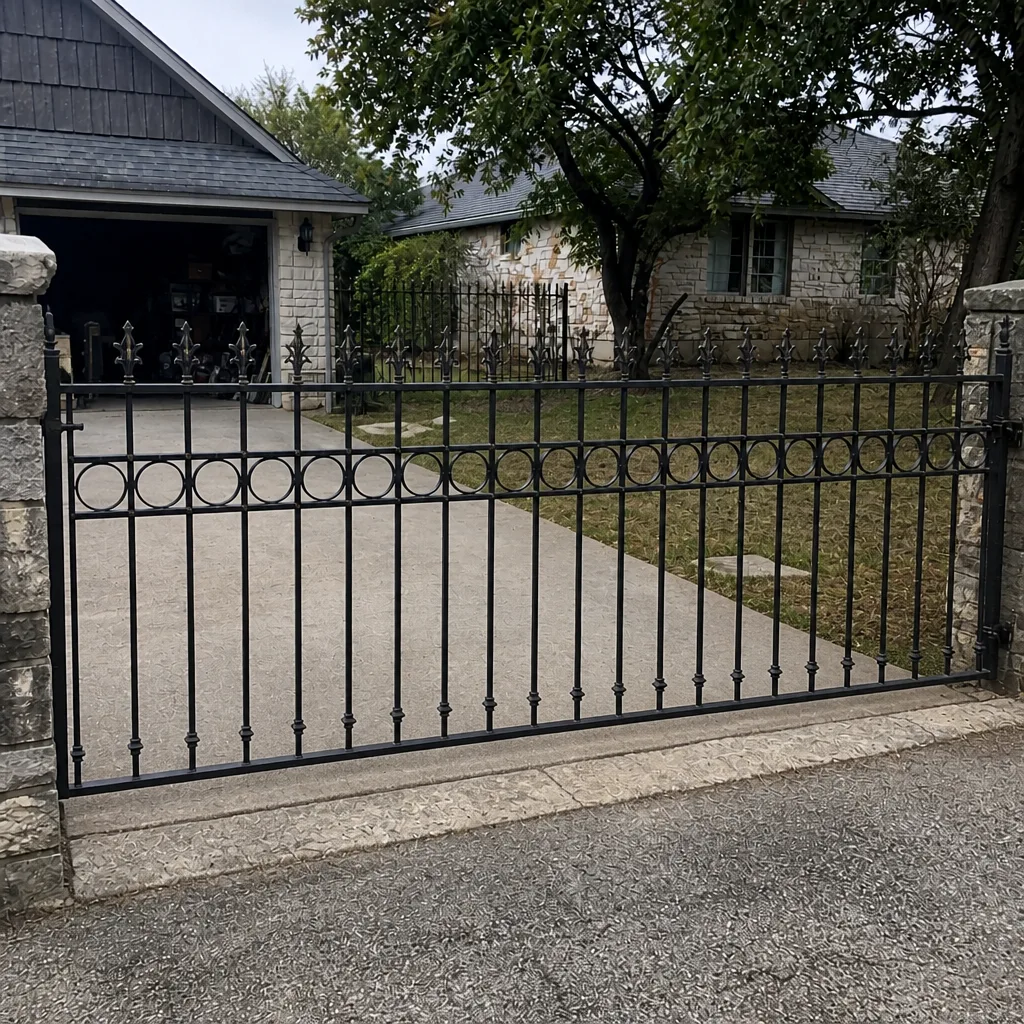 After
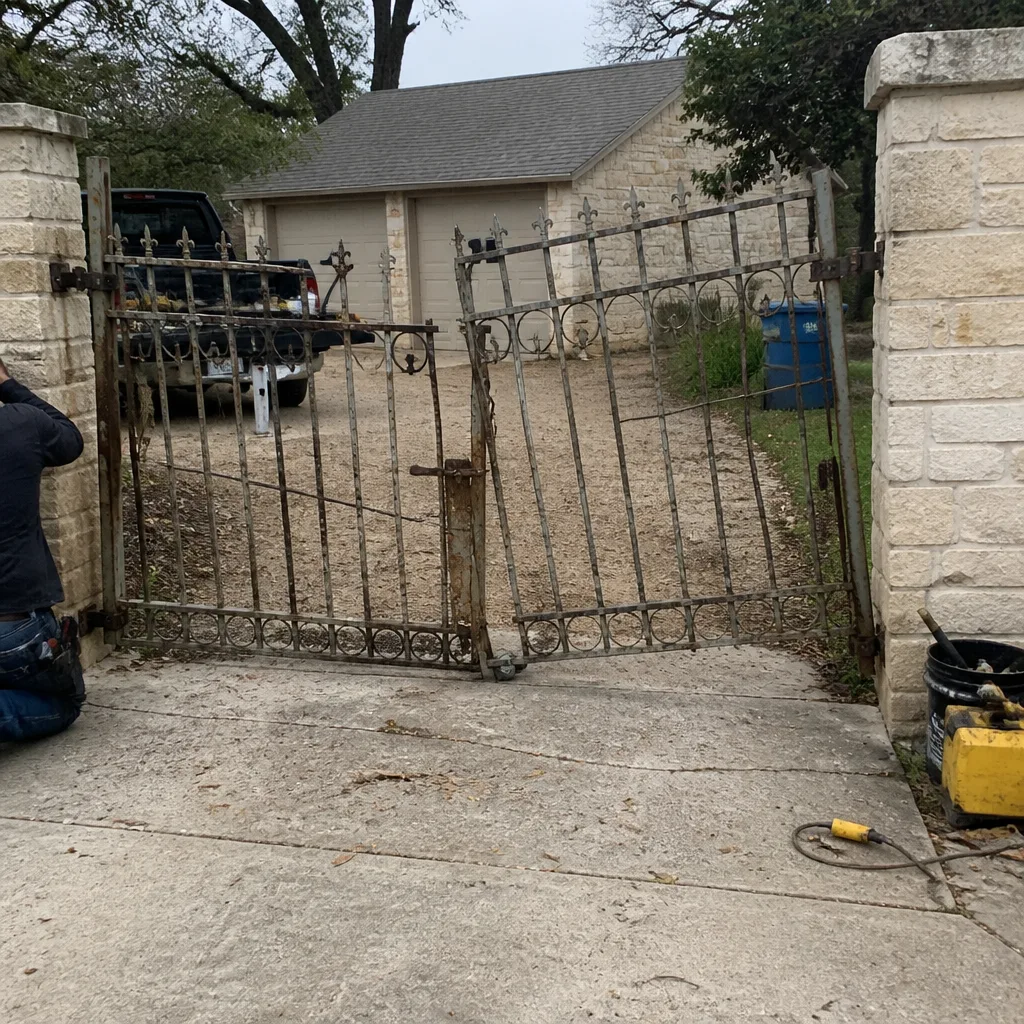 Before
 After
 Before
 After
When to Call a Professional
Call a dedicated gate technician when the gate binds or grinds when moved by hand, when the operator trips thermal protection on hot days, or when a control board acts intermittent. Electrical faults – tripped GFCIs you can’t reset, water in a junction box, exposed wiring – should always go to a professional, never to a quick fix with a screwdriver. The same goes for any safety component: a photocell or reversing edge that doesn’t test correctly is not something to ride out. Gate Repair Round Rock offers free estimates in Round Rock – call (888) 853-0490. We work on Elite, FAAC, LiftMaster and Mighty Mule systems, and our technicians have up to 11 years of experience across the seasonal patterns we’ve laid out here. Whether it’s a residential driveway gate or a commercial access system, the fix starts with a proper diagnosis, not a guess. Written by the team at Gate Repair Round Rock for homeowners and property managers who want to stay ahead of the calendar rather than chase it.
Frequently Asked Questions
Inspect it with the seasons – spring storm hardening, a summer heat check, a fall pass, and a winter metal check – plus after any major weather event or hard freeze. Commercial gates running high cycle counts need the full inspection several times a year. The inspection itself is quick; the cost is in skipping it.
Because June, July and August heat damage accumulates quietly and shows up in September. Control boards, capacitors, motors and aluminum frames all age faster through sustained triple-digit heat, and the failure often appears once temperatures drop. Catch it in July with summer maintenance rather than in September with a repair.
Inspect exterior conduit for cracks, check your exterior GFCIs and reset any that tripped, look at track and wheels if you have a sliding gate, move the gate by hand with the operator off, and then cycle the operator and watch. If anything binds, don’t force it – call a technician.
No. Water and electrical systems don’t mix, and a jet of water into a control box can cause a fault. The right approach is shade and airflow, not water, and anything electrical should be handled by a technician. If it’s hot to the touch, don’t touch it.
Yes – heat is a major factor. Capacitors, control boards and motor windings age faster in sustained high heat, and the operator’s rated duty cycle assumes a gentler climate. Round Rock summers push systems harder than the spec, so treating the duty cycle as a hot-climate minimum is the practical response.
Thermal cycling. Repeated expansion and contraction through the winter soaks up tolerance in the hinge and pivot threads until they bind. Catch it early with winter lubrication and freeing, before it takes the operator or a motor with it.
The Bottom Line
Round Rock’s gate failures follow a climate calendar, not a generic four-season one: heat-accumulated damage in summer that surfaces in September, spring storms that find every weak point, and winter thermal cycling that can seize a hinge on a gate that looked fine in fall. The fix is simple and cheap – storm hardening in spring, shade and duty-cycle care in summer, metal attention in winter, and a deliberate post-freeze check after any hard freeze. Do the checklist regularly and most repairs stay routine. Skip it and the same problems turn into motors, frames and emergency calls. Either way, a gate specialist who works across every brand on the market – from Mighty Mule to FAAC – is on the other end of the phone.
Call (888) 853-0490 for a free estimate. We answer 24/7. Fast dispatch from 7am to 7pm, Sunday through Friday.
Written by the team at Gate Repair Round Rock.