
Last updated November 15, 2026
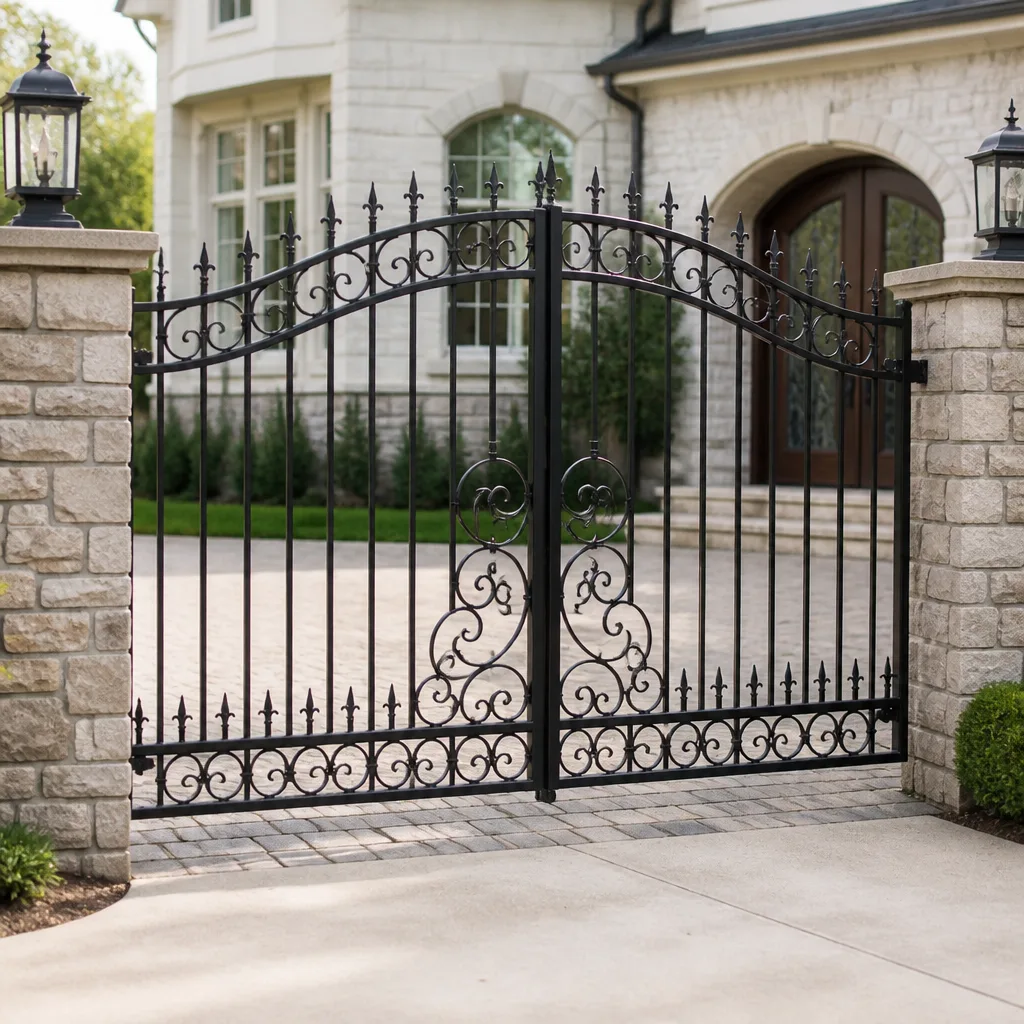 Wrought iron
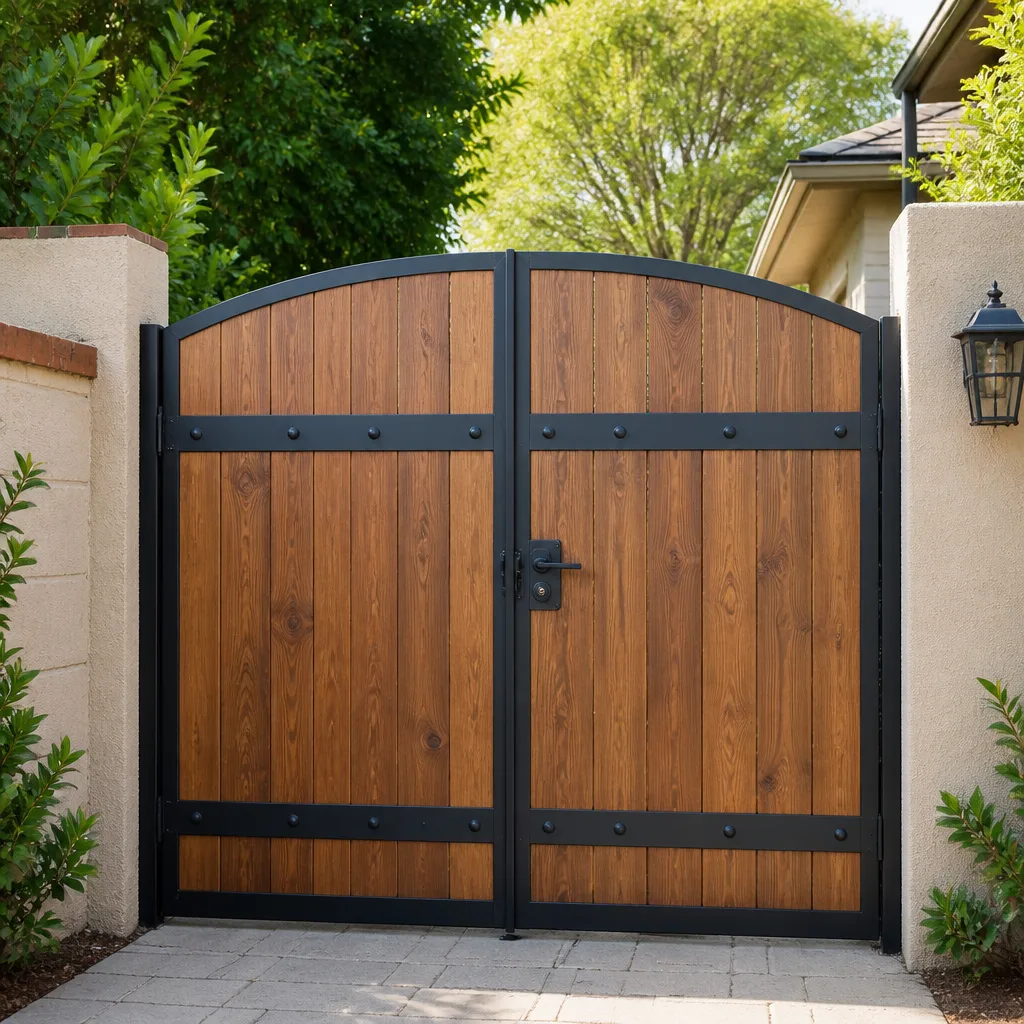 Wood & steel frame
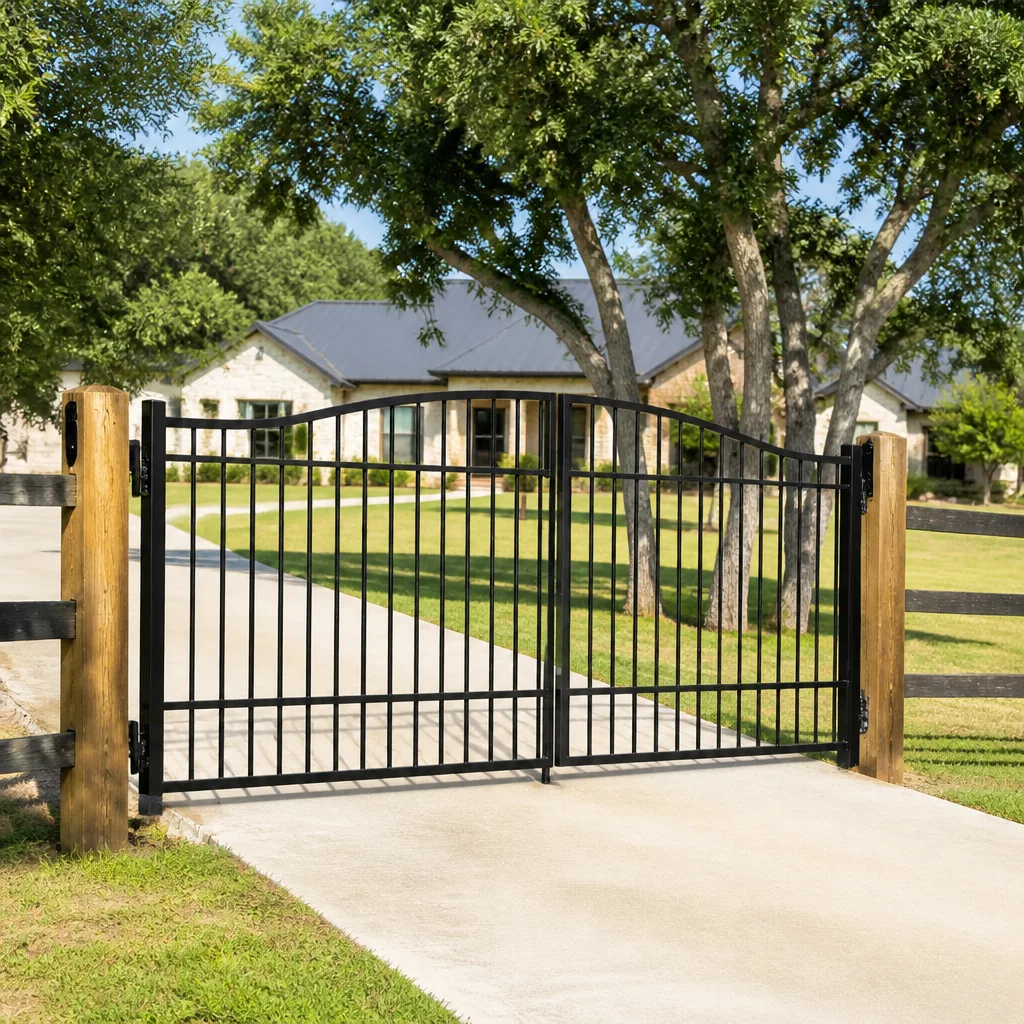 Farm & ranch
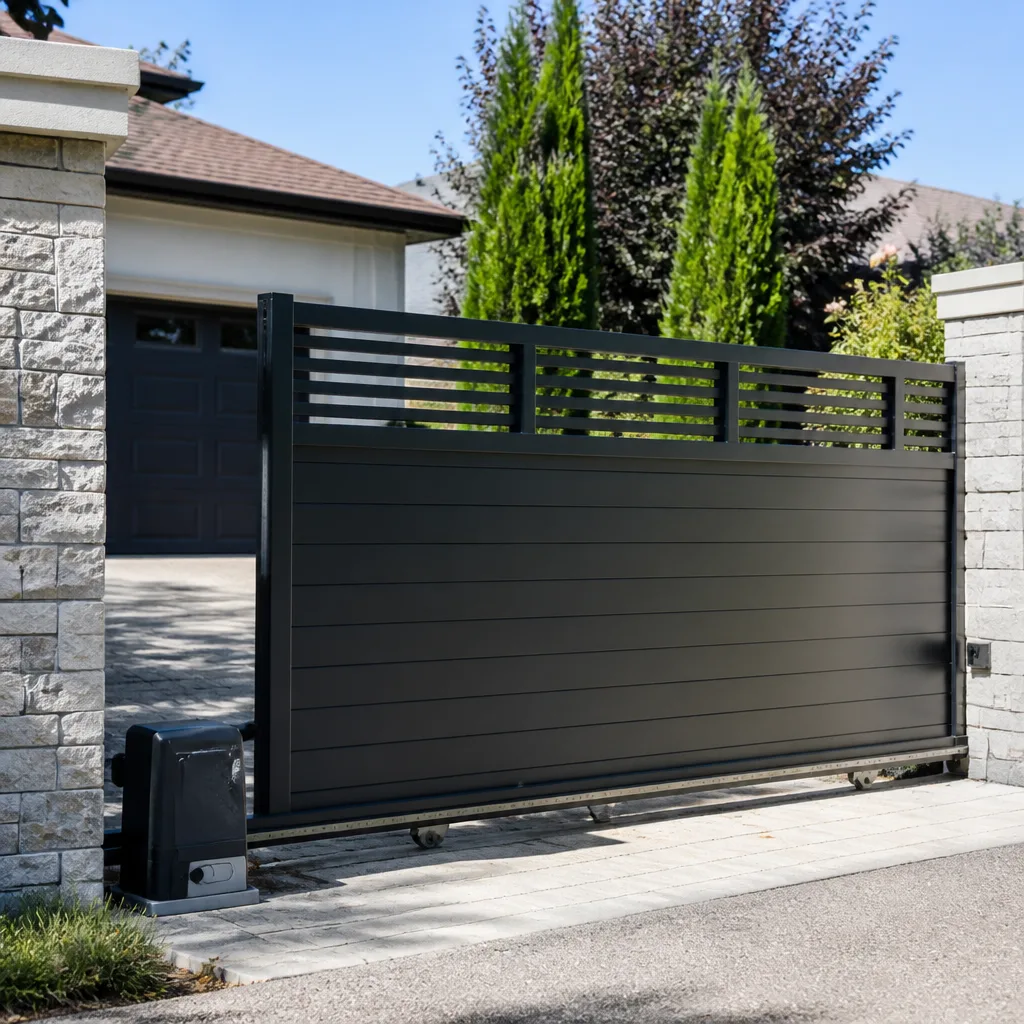 Sliding driveway gates
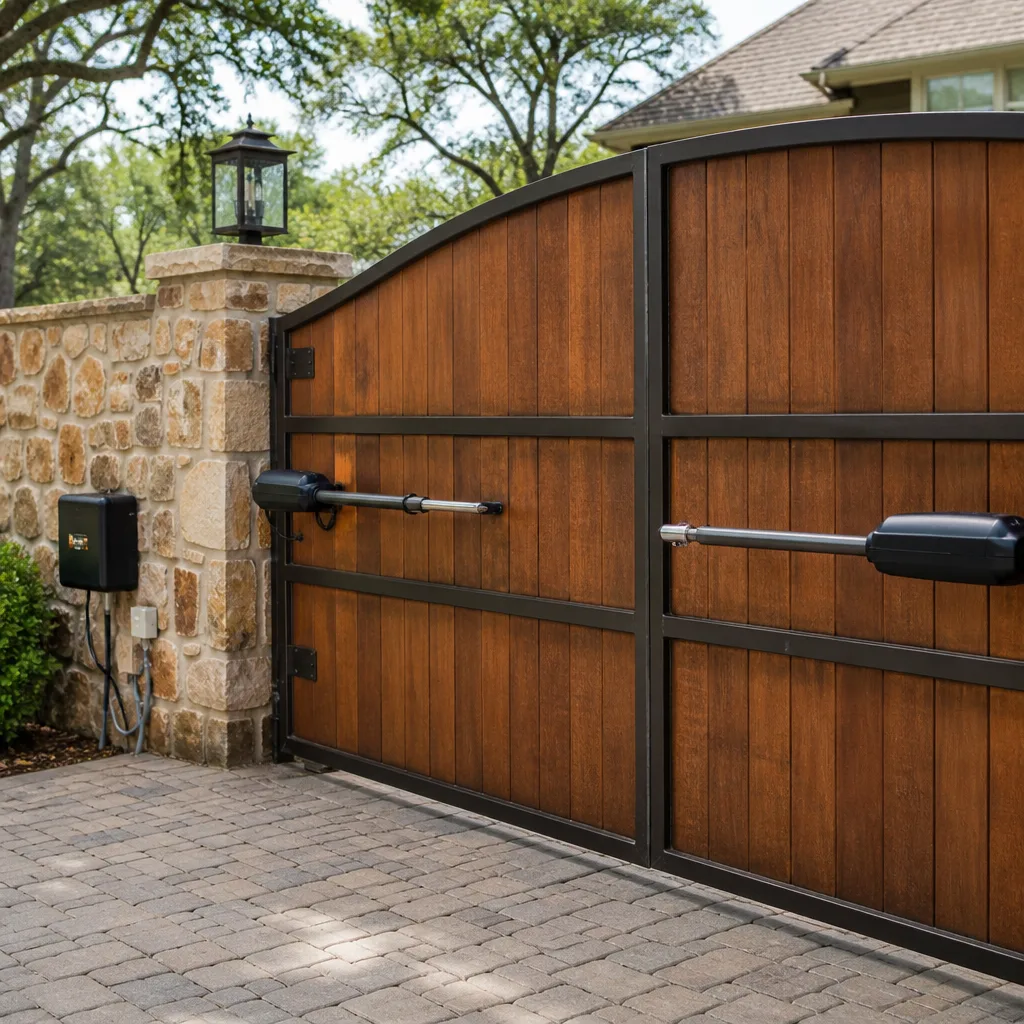 LiftMaster operators
Free on-site gate assessment - hinges, posts, and your LiftMaster or Nice gate operator checked before anything is quoted
The assessment is free and the quote is the invoice.
Get your free estimateChoosing the Right Gate Repair Brand: A Buyer’s Guide for Round Rock
Most buyers assume the brand stamped on the operator is the whole story. It isn’t. Two gates with the same logo can have wildly different futures depending on where you live, who can service them, and whether the manufacturer still supports that platform. A brand that sells well online but has no service network near you is a liability dressed up as a bargain. In this guide we’ll walk through the brands actually installed and serviced around Round Rock, what “factory authorized” really buys you, how access-control integration locks in your choices, and how to judge a brand’s support track record before you spend a dollar.
Quick Answer
The right gate brand for a Round Rock property is the one with parts you can actually get locally, a service network that reaches Central Texas, and a support lifecycle measured in years rather than quarters. For residential driveways that usually means LiftMaster, Ghost Controls, Viking, or Elite; for commercial access it usually means DoorKing or Linear. The logo matters far less than whether a technician can source a control board and get your gate cycling again.
Styles & brands we work with
- Wrought iron
- Wood & steel frame
- Farm & ranch
- Sliding driveway gates
- LiftMaster operators
Table of Contents
- Why the Gate Brand Question Matters More Than You Think
- Residential Swing Operators: What’s Actually on Round Rock Driveways
- Residential Slide Operators and the Repairability Question
- Commercial Gates: Where the Brand Decision Gets Serious
- What “Factory Authorized” Service Actually Means in Practice
- Access Control Integration: The Decision You Can’t Easily Undo
- Discontinued Products and the Orphaned Hardware Problem
- A Decision Framework by Use Case
- Common Mistakes to Avoid
- When to Call a Professional
- Frequently Asked Questions
- The Bottom Line
Why the Gate Brand Question Matters More Than You Think
A gate operator is a mechanical and electronic system that has to survive years of Texas heat, dust, and seasonal storms. Round Rock summers push motors hard, and a unit that runs fine in a cooler climate can cook its control board here if it wasn’t built with margin. That’s why the brand decision isn’t about prestige. It’s about what happens on the day something fails.
Several operator brands sold aggressively through big-box and online retail have no factory-authorized service network in Central Texas. That means a failed control board leaves the homeowner sourcing parts from a gray market, waiting on a shipment, and hoping the board matches the firmware revision already on the unit. We’ve seen this play out repeatedly, and it’s the single biggest reason a “cheap” gate ends up costing more than a mid-range one.
The brand question really comes down to three factors:
- Parts availability. Can a technician in the Round Rock area get the part this week, or is it a four-week backorder from a reseller?
- Local technician authorization. Does the manufacturer have a service network that reaches Central Texas, or is every repair a workaround?
- Long-term support lifecycle. Will this platform still be supported in five years, or is it already on the way out?
Get those three right and the logo almost doesn’t matter. Get them wrong and you’re stranded on a discontinued platform with a gate that won’t open. When a gate needs work, you can start with gate repair and let a specialist tell you honestly whether the unit is worth saving.
Residential Swing Operators: What’s Actually on Round Rock Driveways
Residential swing gates dominate the neighborhoods around Round Rock, from older single-family streets to newer developments with wider driveways and decorative entrances. The operators on those gates tend to fall into a few recognizable families, and each has a different service story.
LiftMaster is one of the most common residential swing operators we see. The LA400 and LA500 series are widely installed, parts are generally obtainable, and the platform is well understood by technicians. If you already have a LiftMaster swing operator, you’re in a good position for repair rather than replacement.
Ghost Controls is the DIY-friendly entry point. It’s sold heavily through retail and online channels, priced for the homeowner who wants to install a gate operator themselves. The tradeoff is that service support is thinner. When a Ghost Controls unit fails, the owner is often on their own to identify the failed component. We work on them, and we can usually get a gate back up and running, but the parts pipeline is less predictable than the professional brands.
Viking sits in a comfortable middle. It’s a professional-grade residential brand with a real service ecosystem, and we see it on plenty of Round Rock properties. Repairability is good, and the units hold up reasonably well in local heat.
Elite is another name that shows up on residential and light commercial swing gates. It’s a solid mid-range option, and parts access is generally workable through professional channels rather than retail.
What ties these together is that a residential swing operator doesn’t cycle fifty times a day. It opens when you come home, when you leave, when a guest arrives. That lower duty cycle means a well-chosen mid-range unit can last a long time, provided you can service it. The brand that fails you is the one nobody nearby can fix.
Residential Slide Operators and the Repairability Question
Slide gates introduce a different set of stresses. The operator has to move a heavier panel along a track, and the whole system depends on rack, rollers, and a motor sized for the weight. In Round Rock, where a slide gate might see months of hard sun and then a stretch of heavy rain, the mechanical side wears faster than the electronics.
Common residential slide brands include Viking, Elite, and US Automatic. Each is a professional-tier brand with a real installation and service base. The important question for a buyer isn’t which one is “best” in the abstract. It’s which one can be diagnosed and repaired locally without a two-month parts chase.
Here’s a practical way to judge slide operator repairability before you commit:
- Ask where parts come from. A brand with a distributor that serves Central Texas is a different animal from one that ships factory-direct only.
- Check the control board’s firmware story. If firmware updates come only through a dealer portal, you need a dealer who can reach it.
- Look at the motor and gearbox design. Serviceable gearboxes with replaceable components outlast sealed units that must be swapped whole.
- Confirm the safety edge and photo-eye system. These are the parts that fail most often and the parts you cannot safely run a gate without.
- Ask a technician, not a salesperson. The person who diagnoses failures knows which platforms are a headache.
Electric slide gates add motors, control boards, and access wiring to the equation, which is why a dedicated electric gate repair service matters. A specialist reads the whole system, not just the hinge.
Commercial Gates: Where the Brand Decision Gets Serious
A commercial driveway gate cycling fifty or more times a day is a different machine from a residential one. It’s not a convenience feature. It’s part of how a property handles vehicle access, deliveries, tenant parking, or security. The brands that dominate that world are DoorKing and Linear, along with commercial-grade operators like FAAC and BFT.
DoorKing is built for exactly this duty. Access control integration, telephone entry, and heavy-cycle operators are its core business. If a Round Rock commercial property is running a DoorKing system, parts and support are generally reachable through professional channels, and the platform is designed to be serviced.
Linear is another commercial staple, often found on gated communities and business parks. It’s widely installed and reasonably serviceable, though like any brand, the experience depends on which generation of the product you have.
FAAC and BFT are European-origin commercial and mid-to-high-end residential brands. They’re technically strong and common on higher-end properties. Parts access in Central Texas is workable but less retail-visible, so they reward a technician who knows the platform rather than a generalist.
Commercial buyers should evaluate brands on a different scorecard than homeowners:
- Duty cycle rating. A unit rated for heavy cycle use will survive a busy property; a residential unit will not.
- Access integration. Card readers, keypads, telephone entry, and loop detectors all have to talk to the operator.
- Service uptime. A commercial gate that’s down disrupts everyone behind it. Response capability matters.
- Warranty and parts at cost. Commercial buyers should care about how warranty parts are handled.
Whether it’s a residential driveway gate or a commercial access system, the same three tests apply: parts, local support, and lifecycle.
What “Factory Authorized” Service Actually Means in Practice
“Factory authorized” is a phrase thrown around loosely. In practice, it refers to a service relationship with the manufacturer that unlocks things a general contractor simply can’t reach. When a brand has an authorized service network in your area, the technician can tap into resources that make a repair faster and more accurate.
Here’s what it actually buys you:
- Firmware updates. Control boards are computers now. If a manufacturer has issued a firmware fix for a known issue, an authorized service channel can get it. A generalist working from a downloaded manual often can’t.
- Warranty parts at cost. If your operator is under warranty, authorized service can often obtain parts at cost rather than retail, which lowers your bill and speeds the repair.
- Technical support lines. Manufacturers maintain support lines for their authorized service network. Those lines exist to resolve problems that aren’t documented in any manual, and general contractors can’t reach them.
- Documentation and service bulletins. Authorized partners get the internal notes about design changes, known failure patterns, and revision history.
- Correct part matching. A board that looks identical can run different firmware. Authorization helps ensure the right revision arrives the first time.
For a Round Rock homeowner, the practical takeaway is this: a brand with a service network near you is a brand that can be repaired properly. A brand without one leaves even a skilled technician working with one hand tied behind his back. When you call a dedicated Gate Repair Round Rock specialist, ask which brands they can service through authorized channels and which they work on through professional distribution. The honest answer tells you a lot.
Access Control Integration: The Decision You Can’t Easily Undo
Ten years ago, a gate operator was a standalone device. Today it’s a node in a network. A residential gate might tie into a smart-home platform or an app-based controller. A commercial gate might sit inside a broader access-control system with card readers, intercoms, and building management software.
That integration changes the brand calculation significantly. When your gate operator talks to a specific access platform, switching brands later may mean replacing the entire access system, not just the motor. The operator’s communication protocol, its input/output architecture, and the vendor’s software support all become part of the decision.
For homeowners, the integration question usually looks like:
- Does the operator support the smart-home ecosystem I already use?
- Can it be controlled by an app, a keypad, a remote, or all three?
- If I change my home automation platform in five years, will the operator still integrate?
For property managers, the stakes are higher:
- Does the operator integrate with our card reader or telephone entry system?
- Can our access-control software read its events and status?
- If we change access platforms, does the operator need replacing too?
The safe move is to decide the integration platform before the operator brand. If the operator has to match the access system, work backward from the access system. That single sequencing choice prevents most of the expensive mistakes we see on Round Rock commercial properties.
Discontinued Products and the Orphaned Hardware Problem
Gate operators don’t last forever, and neither do the companies that make them. Some mid-tier brands have been acquired, rebranded, or exited the market outright, leaving homeowners with orphaned hardware: a gate that works fine mechanically but has an operator nobody can source parts for.
This is the risk that most buyers never think about, and it’s the one that hurts most. An orphaned operator means every minor failure becomes a potential full replacement because a single control board or motor can’t be found.
Before you buy a gate brand, check its support track record. Here’s how:
- Ask about the current product generation. A brand on its first or second generation of a platform is a different risk than one that has supported a platform for a decade.
- Look at the documentation. Manufacturers that publish complete manuals, parts lists, and service bulletins are usually in it for the long haul.
- Check parts availability for older models. If a five-year-old unit already can’t get a board, that’s a warning about the brand’s lifecycle.
- Ask a technician what they’ve seen fail. Service experience is the only reliable signal here.
- Prefer platforms with a professional distribution channel. Brands sold only through retail tend to have shorter support tails.
We work on nine brands: LiftMaster, FAAC, BFT, Linear, Viking, Ghost Controls, DoorKing, Elite, and Mighty Mule. That range matters because it spans the full spectrum, from DIY-friendly residential units to commercial-grade operators. A brand-agnostic service model means recommendations are driven by what’s best for your gate, not by a single-brand dealership incentive. And when a gate is genuinely past saving, because a specialist also handles new installation, you don’t get handed off to a different contractor.
A Decision Framework by Use Case
The right brand depends entirely on what the gate has to do. A rear-entry privacy gate on a residential property has different requirements than a commercial driveway gate cycling fifty-plus times a day. Here’s a simple framework.
Residential rear-entry or privacy gate (low cycle)
- Priorities: quiet operation, weather resistance, app or remote convenience, serviceable parts.
- Good fits: LiftMaster, Viking, Elite.
- Watch out for: retail-only brands with thin local service networks.
Residential main driveway gate (moderate cycle, security-oriented)
- Priorities: durability, smart-home integration, reliable safety edges, parts availability.
- Good fits: LiftMaster, Viking, Elite; entry-level options like Ghost Controls or Mighty Mule if service support is confirmed.
- Watch out for: undersized operators on heavy panels.
Commercial property gate (high cycle)
- Priorities: duty cycle rating, access-control integration, uptime, warranty handling.
- Good fits: DoorKing, Linear, FAAC, BFT.
- Watch out for: residential operators pressed into commercial duty.
Multi-tenant or gated community
- Priorities: telephone entry integration, audit logging, multiple user credentials, service response.
- Good fits: DoorKing, Linear.
- Watch out for: operators that can’t talk to the building’s access software.
Whatever the use case, safe operation depends on the operator’s wiring, the power supply, and the safety edges. Gate panels are heavy enough to crush, and slide gates can come off the track. An operator is not the place for an ambitious DIY experiment. A trained technician should handle the electrical side and confirm the safety devices work before the gate goes back into service.
Common Mistakes to Avoid
- Buying on price alone from a retail channel. A control board failure on a brand with no local service network turns a bargain into a parts hunt. Check the service network before you check the price tag.
- Assuming the logo guarantees repairability. Two operators with the same brand name can have completely different support lives depending on generation and platform. Ask about the specific model, not the brand in general.
- Choosing the operator before the access platform. On commercial gates, deciding the access-control system first prevents replacing the whole system later. Round Rock properties with multi-tenant access should always start there.
- Ignoring the duty cycle rating. Putting a residential-rated operator on a busy commercial driveway is a guaranteed early failure. Match the operator to the cycles it will actually see.
- Overlooking local heat and dust. Round Rock summers are hard on motors and control boards. A unit built with margin for heat is worth more here than a marginally cheaper alternative.
- Skipping the safety edge check. A gate without working safety devices is a liability, not a convenience. Any brand decision should include confirming the safety system is serviceable.
- Not asking who can fix it. The single best question before buying any gate brand: “Who in Round Rock can service this, and can they get parts?” If the salesperson can’t answer clearly, keep shopping.
When to Call a Professional
Some gate work belongs in the hands of a trained technician, and it’s worth being honest about which. If your gate involves electrical wiring, a control board, a motor swap, or safety-edge sensors, call a professional. Gate panels are heavy enough to cause serious injury, and a slide gate that comes off its track can pin someone. The same goes for anything touching the power feed or the operator’s internal wiring. Diagnosing why a gate won’t open, why it reverses mid-travel, or why the remote has stopped responding is usually a job for someone who works on these systems every day. We’re a dedicated gate specialist, electric or manual, and we handle both. Our technicians have up to 11 years of experience. Gate Repair Round Rock offers free estimates in Round Rock. Call (888) 853-0490. We answer 24/7. Fast dispatch from 7am to 7pm, Sunday through Friday.
Frequently Asked Questions
There’s no single best brand, but for residential properties in Round Rock, LiftMaster, Viking, and Elite are reliable choices because parts are obtainable and a service network reaches Central Texas. For commercial gates, DoorKing and Linear are the usual standouts. The right answer depends on your gate’s duty cycle and whether a technician can service the platform locally. Call (888) 853-0490 for an exact quote on your gate; estimates are free.
Avoid any brand with no factory-authorized service network in Central Texas, regardless of price. When a control board fails on a brand with no local support, the repair becomes a parts-hunt. Before buying, confirm who in the Round Rock area can service the unit and whether they can get parts. Call (888) 853-0490 to talk through your options; estimates are free.
In most cases, yes. We work on nine brands: LiftMaster, FAAC, BFT, Linear, Viking, Ghost Controls, DoorKing, Elite, and Mighty Mule. That spans entry-level residential units to commercial-grade operators. If you’re unsure whether your specific model is covered, call and describe it. Call (888) 853-0490 for an exact quote; estimates are free.
Yes, more than on residential gates. Commercial gates cycling fifty or more times a day need a duty-cycle-rated operator like DoorKing or Linear, and the brand choice often has to match your access-control system. Switching later can mean replacing the whole system. Call (888) 853-0490 to discuss a commercial gate; estimates are free.
Factory-authorized service gets you firmware updates, warranty parts at cost, and access to manufacturer technical support lines that general contractors can’t reach. It also means correct part matching, which matters because boards that look identical can run different firmware. Call (888) 853-0490 to ask about your brand; estimates are free.
If a five-year-old unit already can’t get a control board or motor through normal professional channels, that’s the clearest signal the platform is being phased out. Ask a technician who works on your brand rather than a retail seller. Orphaned hardware means every small failure risks a full replacement. Call (888) 853-0490 for an exact quote; estimates are free.
The Bottom Line
The gate brand question is not really about which logo is best. It’s about whether your gate is serviceable five years from now. Parts availability, local technician authorization, and long-term support lifecycle decide that outcome far more than brand prestige does. For residential properties in Round Rock, LiftMaster, Viking, and Elite are dependable picks; for commercial gates, DoorKing and Linear are the standard. Before you buy any brand, ask who nearby can service it and whether they can get parts. A dedicated gate specialist who works across brands will give you an honest answer, because there’s no incentive to steer you toward one badge. Round Rock homeowners and property managers have enough gates to worry about without a parts shortage on top.
Ready for an Answer on Your Gate?
Call (888) 853-0490 for a free estimate. We answer 24/7, and we dispatch Sunday through Friday from 7am to 7pm. Tell us the brand, the model if you have it, and what the gate is doing (or not doing), and we’ll help you decide whether to repair or replace. The written estimate sets the final price, and nothing starts until you’ve agreed to it.
Written by the team at Gate Repair Round Rock.
See the difference
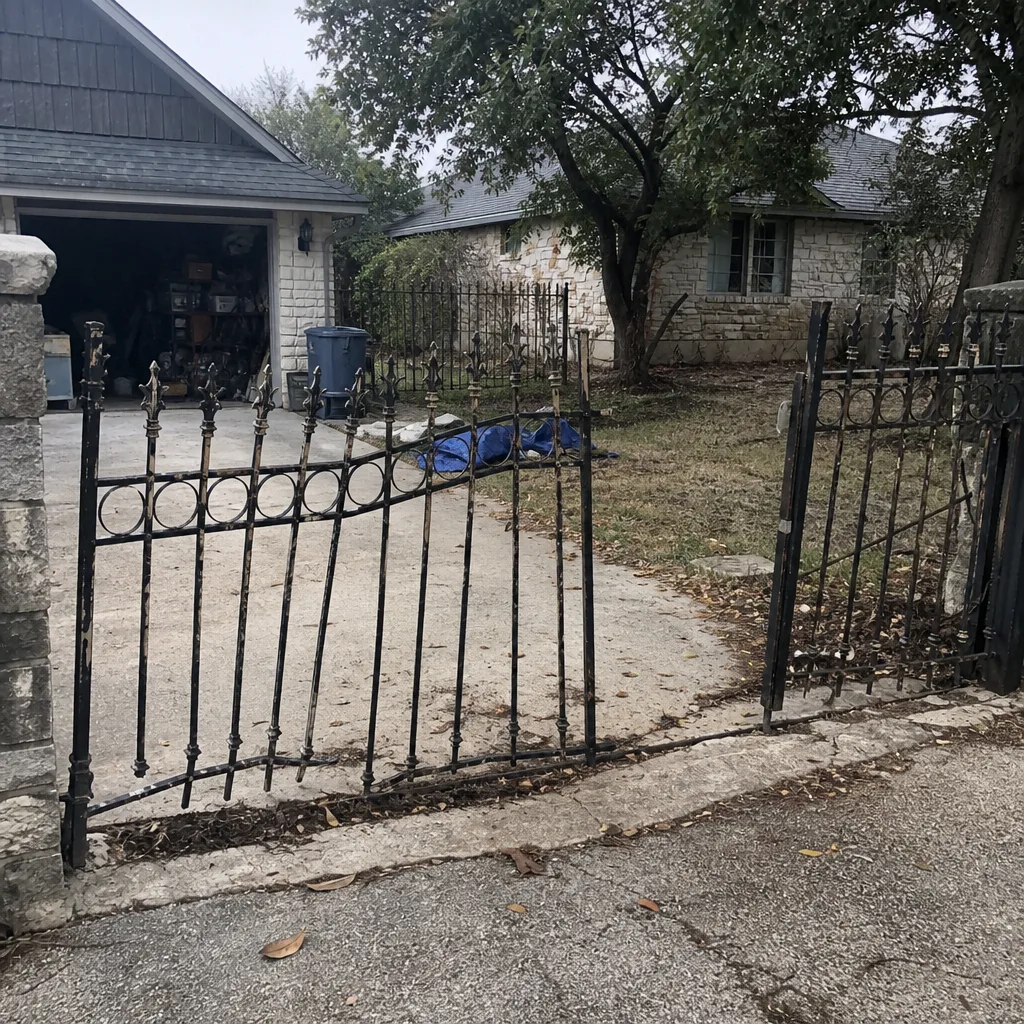 Before
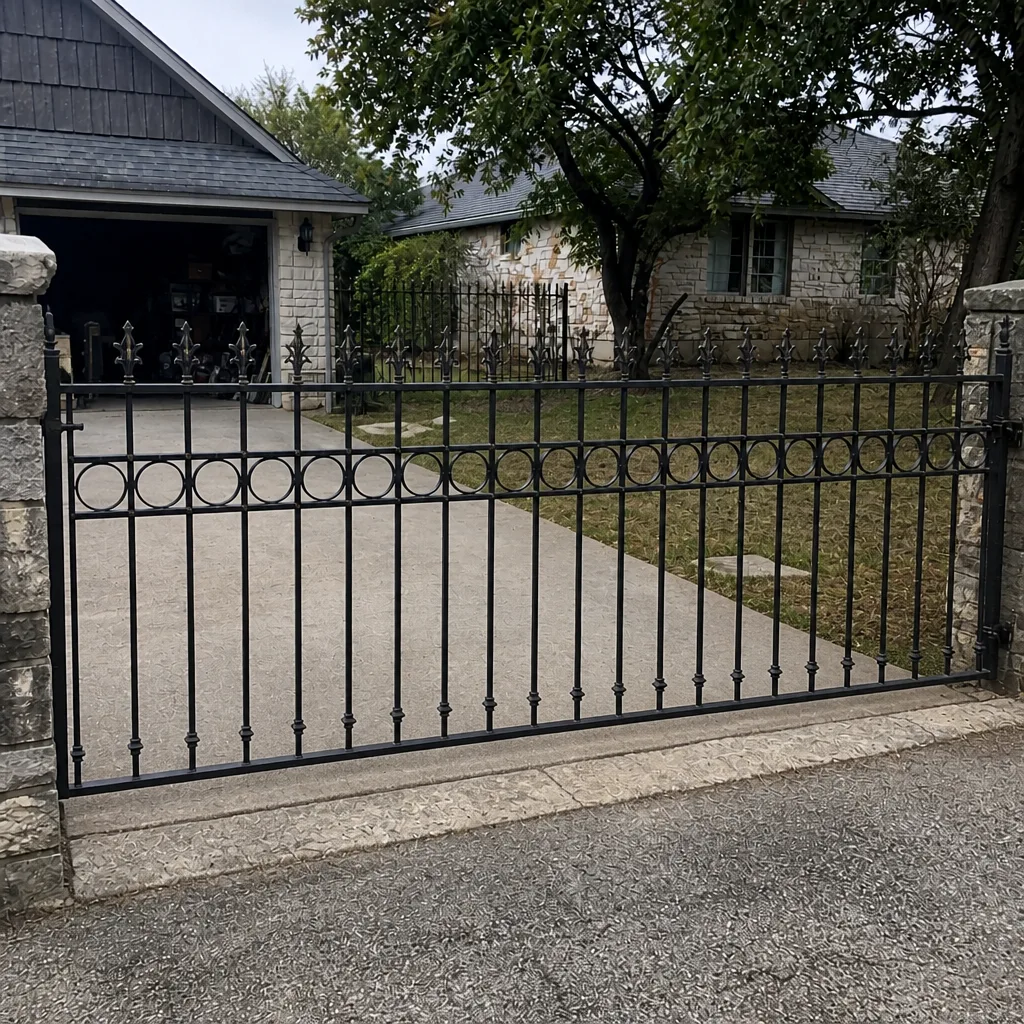 After
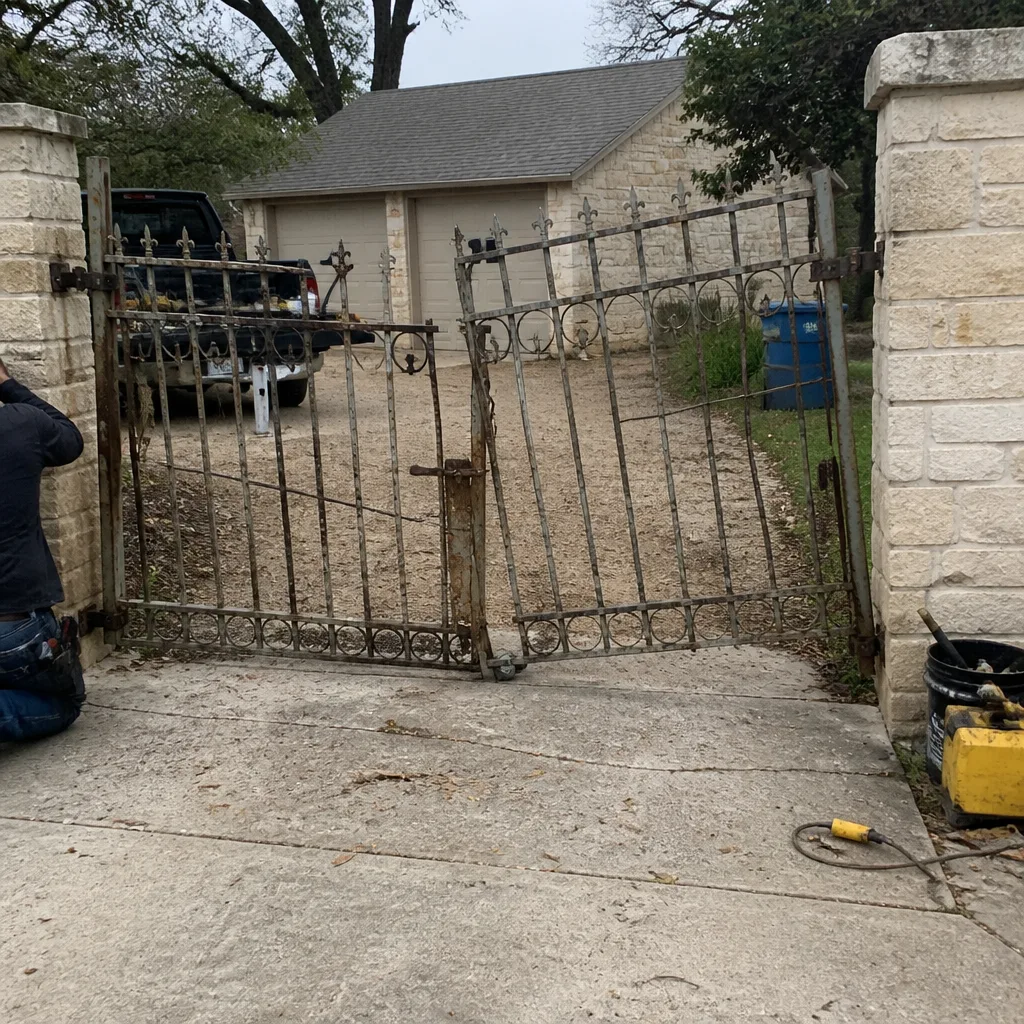 Before
 After
 Before
 After