
Last updated November 15, 2026
 Wrought iron
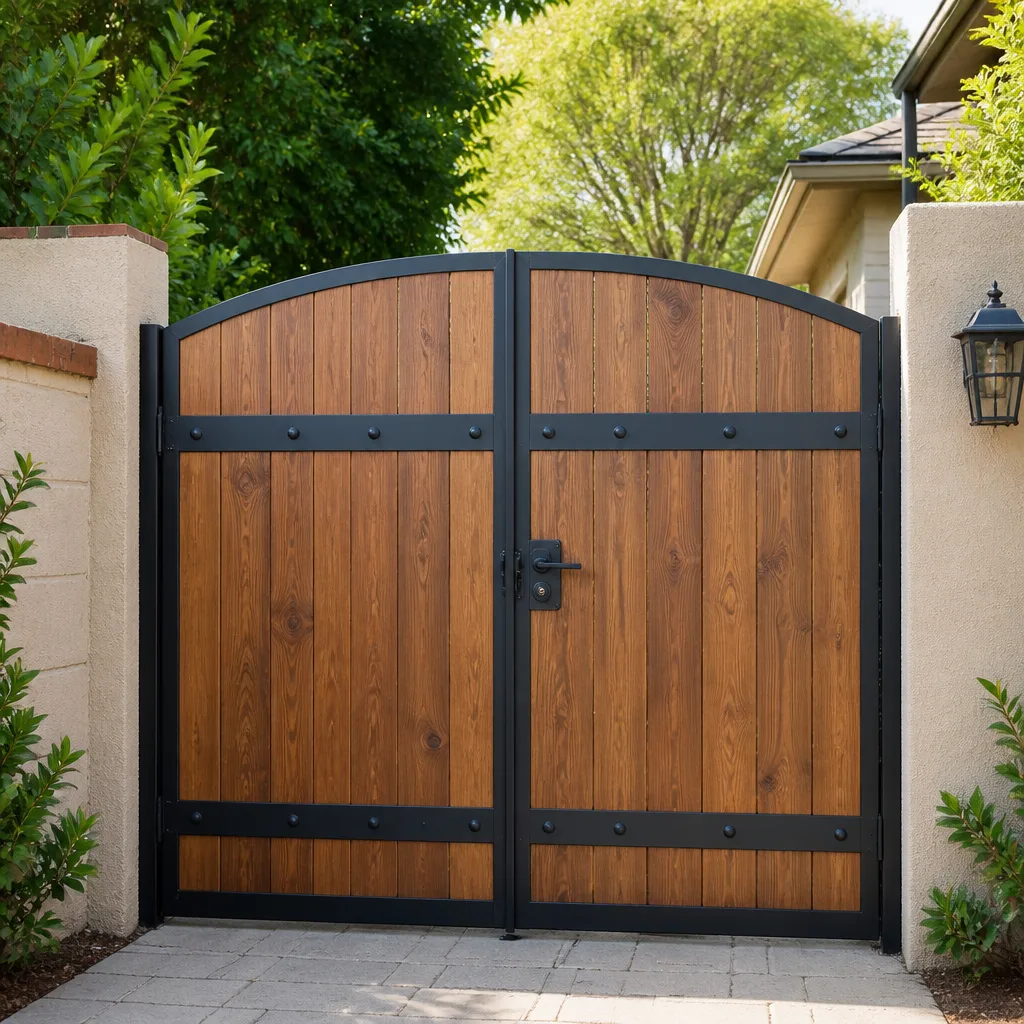 Wood & steel frame
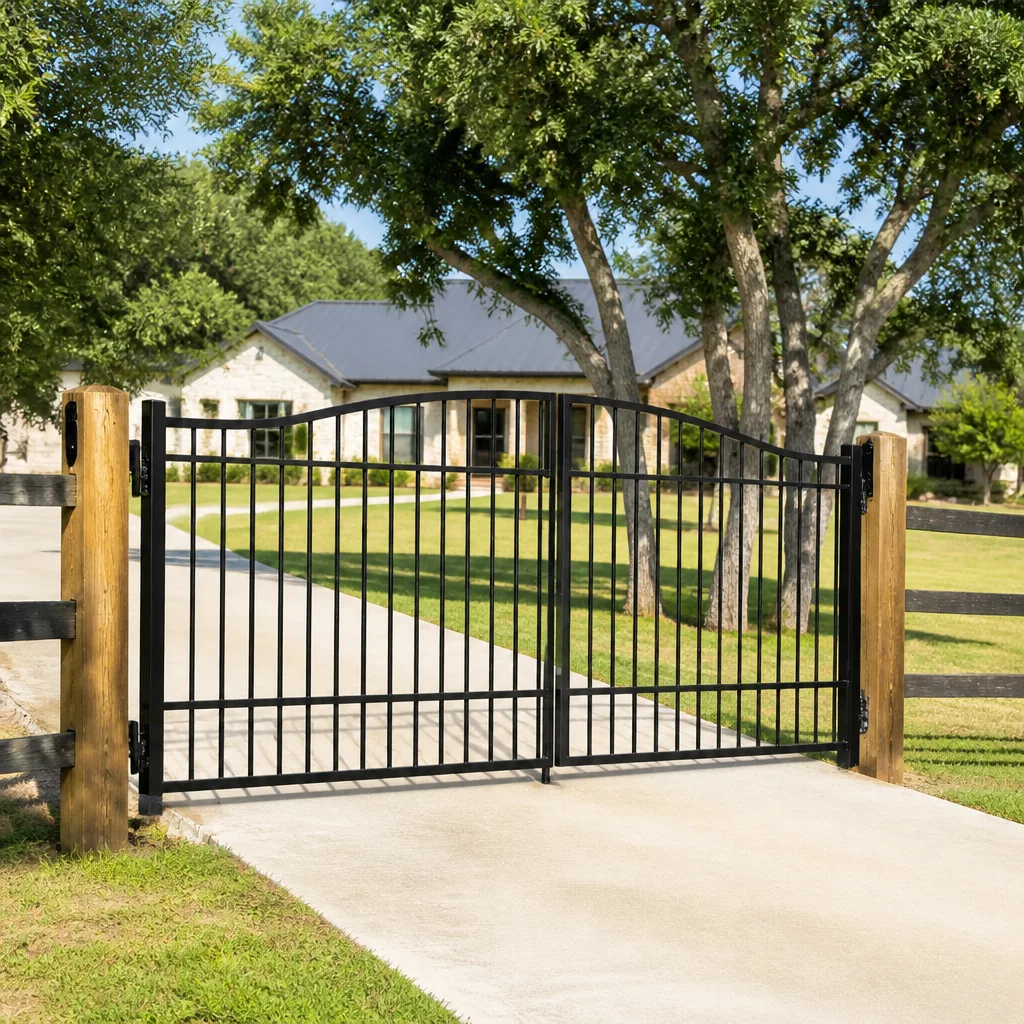 Farm & ranch
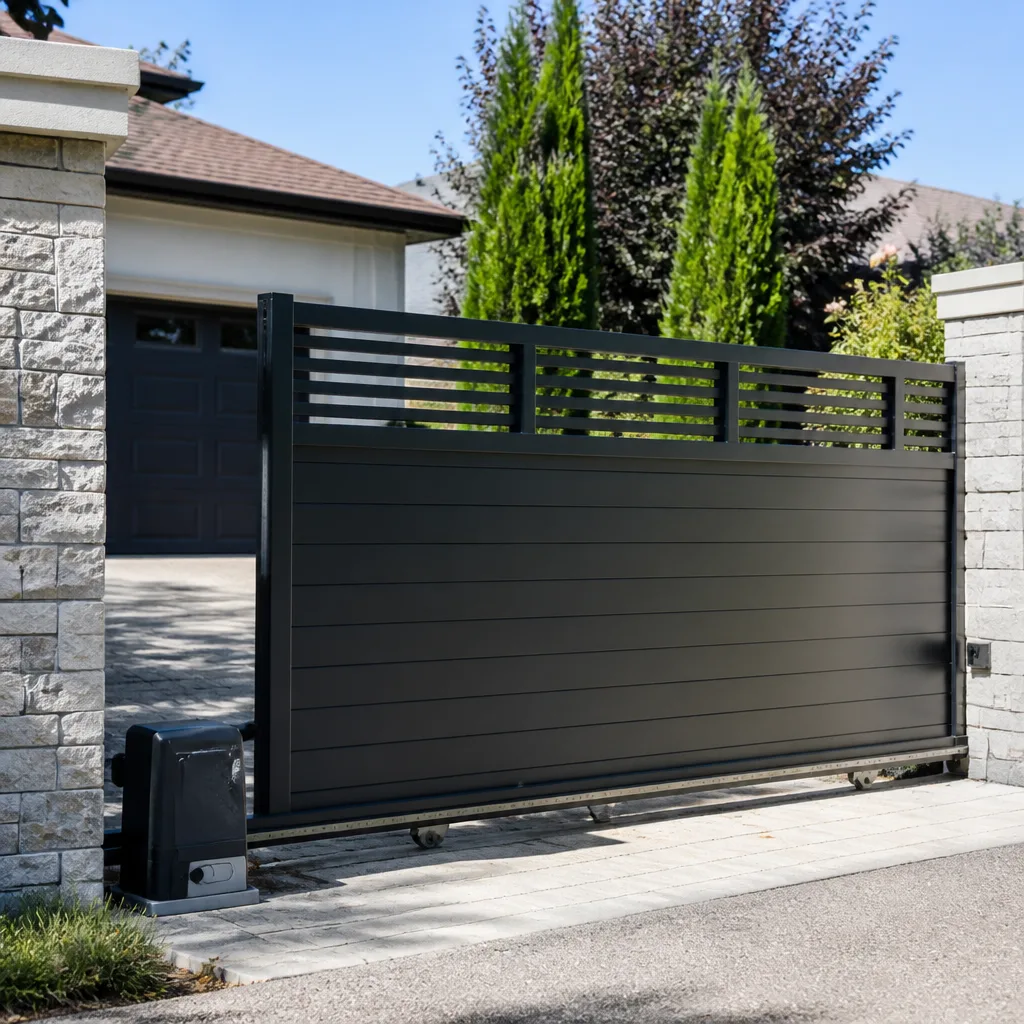 Sliding driveway gates
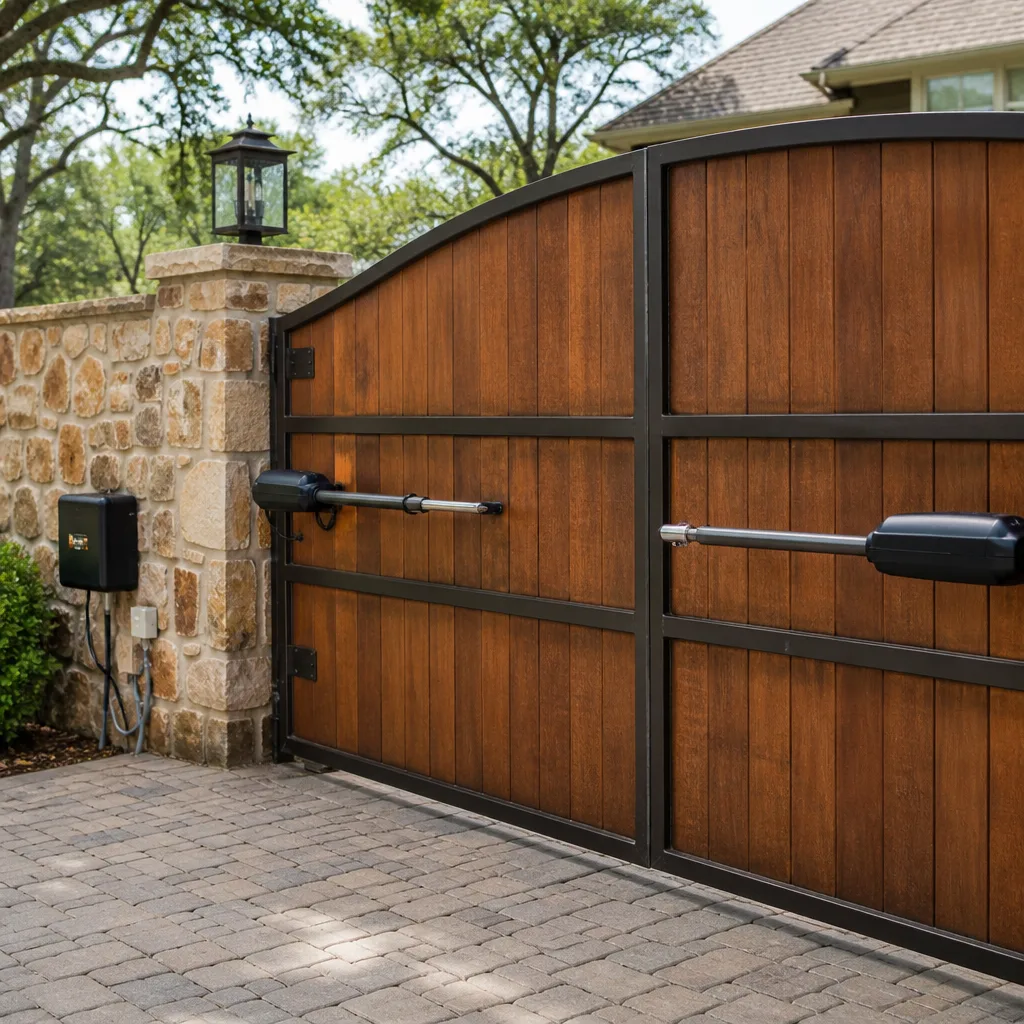 LiftMaster operators
Free on-site gate assessment - hinges, posts, and your LiftMaster or Nice gate operator checked before anything is quoted
The assessment is free and the quote is the invoice.
Get your free estimateHow to Hire a Gate Repair Contractor in Round Rock: A Step-by-Step Guide
Most people hire a gate contractor the same way they hire a plumber: they search, they read reviews, they book the first name that feels decent. That works for a leaky faucet. It does not work for an automated driveway gate. A gate operator ties together a motor, a control board, safety sensors and household power, and in Texas the electrical side of that work usually falls under licensing rules that a general handyman does not meet. The wrong hire can leave you with a gate that fails inspection, a warranty that’s void, or a liability you didn’t know you’d taken on. This guide walks you through how to vet a gate repair contractor in Round Rock, step by step, with the questions that actually separate a specialist from a generalist.
Quick Answer
To hire a gate repair contractor in Round Rock, confirm three things before you book: that the company specializes in gates rather than treating them as a side job, that it can explain how it handles the electrical and permitting side of automated gate work, and that it carries insurance appropriate for heavy gate panels and vehicles on the property. Ask for a site visit before any firm quote, ask which operator brands the technicians actually work on, and get the diagnostic fee and repair pricing in writing.
Styles & brands we work with
- Wrought iron
- Wood & steel frame
- Farm & ranch
- Sliding driveway gates
- LiftMaster operators
Table of Contents
- Gate Fabricator, Operator Installer, Repair Specialist: Know the Difference
- What Texas Licensing Rules Mean for Automated Gate Work
- Questions to Ask Before You Book
- How to Verify Insurance That Actually Covers Gate Work
- Red Flags Unique to the Gate Trade
- What a Proper Diagnosis Looks Like
- Repair or Replace? How to Decide
- Why Round Rock Conditions Shape Gate Maintenance
Gate Fabricator, Operator Installer, Repair Specialist: Know the Difference
The gate industry splits into three distinct trades, and most homeowners don’t realize it until they’re already on the phone with the wrong one. Understanding the split is the single most useful thing you can do before hiring.
A gate fabricator builds and installs the physical gate itself: the steel or aluminum frame, the panels, the hinges, the posts. If your gate is being manufactured from scratch or a damaged panel needs to be welded or refabricated, a fabricator is the right call. Many fabricators, though, hand off the automation to someone else.
A gate operator installer specializes in the motorized side: mounting the operator, running power, setting limits, programming remotes and access hardware. Some of these outfits do excellent work on new installs but don’t run a repair operation. When your existing gate stops opening, they may not be the fastest route to a fix.
A gate repair specialist works on gates that already exist and already have a problem. That means diagnosing whether the fault is mechanical (a bent track, a worn hinge, a sliding gate off its rollers), electrical (a failed control board, damaged wiring, a dead sensor), or a mix of both. This is the category most service situations actually need. A good repair specialist can also tell you when a repair isn’t worth it and a replacement makes more sense, and can handle the installation in that case without handing you to a different company.
For a gate that’s stopped working, a repair specialist is almost always the right first call. For a brand-new gate on a brand-new driveway, an operator installer or a company that does both repair and install is a better fit.
What Texas Licensing Rules Mean for Automated Gate Work
This is where gate work gets more serious than most homeowners expect. Connecting or modifying the wiring that feeds a gate operator is electrical work, and in Texas that generally falls under the state’s electrical licensing rules. That means the person doing it should either hold the appropriate electrical contractor license or be working under one. A “gate guy” who found you on a marketplace app may not volunteer this before he starts, and once the wiring is modified without proper licensing, you own the consequences.
Here’s how to think about the licensing question in practice:
- Line-voltage work (the power feed to the operator, new circuits, panel connections) usually requires a licensed electrical contractor or a contractor operating under one. Ask directly who will do this part of the job and under what license.
- Low-voltage and control wiring (safety sensors, keypads, access-control readers, loop detectors) sometimes falls under exemptions in Texas rules, but the exemption depends on the specifics of the install. Don’t assume it applies; ask the contractor to explain it for your job.
- Permits are usually required for electrical modifications, and they’re issued by the local jurisdiction. Ask whether the contractor pulls permits and whether the work will be inspected.
If a contractor can’t answer the licensing question clearly, that’s your answer. A specialist knows the rules because navigating them is part of the job. If you’re unsure whether your project crosses into licensed territory, our guide to electric gate repair walks through what that side of the work involves.
Questions to Ask Before You Book
A short, well-chosen list of questions will separate the specialists from the generalists faster than any review page. Ask these before you schedule.
- Which operator brands do your technicians actually work on? A specialist should name specific brands without hesitation. We work across nine, from residential systems like Mighty Mule and LiftMaster to commercial-grade operators like FAAC and BFT. A contractor who can’t name the access-control brands they service is likely learning on your gate.
- Do you pull permits for electrical modifications? The answer should be a clear yes, no, or “that part is handled by a licensed electrician.” A vague answer is a warning.
- What’s your diagnostic fee, and how does it apply to the repair cost? Get the number in writing. The diagnostic visit is the site assessment that determines the real repair price, so it should be clear what you’re paying for and how it factors into the final cost.
- Will you quote a firm price after the site visit, before any work starts? The answer must be yes. Phone quotes without seeing the gate are estimates at best and guesses at worst.
- Do you handle repair and installation, or will I need a second contractor if replacement is needed? A single-trade company that does both means no handoff.
- How do you handle the safety sensors and safety edges? Automated gates have crushing and entrapment risks, and the safety devices are not optional. A specialist will explain how they test and set them.
Ask these questions on the phone before you book. The pattern of answers tells you more than any single response. The gate repair service page lists what a typical repair visit covers if you want to compare.
How to Verify Insurance That Actually Covers Gate Work
General liability insurance is standard for any contractor, but gate work raises the stakes in ways a handyman policy may not anticipate. Heavy steel or aluminum panels can swing with real force, and a poorly repaired or improperly adjusted gate can strike a vehicle or a person. If your contractor’s coverage isn’t adequate, a property damage claim can land on you.
When you verify insurance, do three things:
- Ask for a certificate of insurance naming the general liability limits. Don’t accept “we’re insured” as an answer. Ask to see the certificate, and check that the policy is current.
- Confirm the coverage extends to the work being done. A policy that excludes automated or electrical work is not the coverage you need. Ask the contractor directly whether their policy covers gate operator installation and repair, including the electrical portion.
- Understand what a claim looks like. If a gate is improperly repaired and later swings into a parked car, the property damage claim goes against the contractor’s liability policy – but only if the claim is valid and covered. If the contractor is underinsured or uninsured, the claim can fall back on the property owner. Confirm the coverage before work begins, not after.
Workers’ compensation matters too, especially if the contractor will have anyone on site. Ask whether the technicians are covered. A specialist is used to these questions and answers them readily.
Red Flags Unique to the Gate Trade
The gate trade has its own warning signs, and they’re different from what you’d watch for with a plumber or an electrician. In our experience, these are the ones that most often lead to a bad outcome.
- Quoting a firm price over the phone without a site visit. A gate’s fault can be mechanical, electrical, or a combination, and both the diagnosis and the fix depend on what the technician actually sees. A firm number before anyone has looked at the gate is a red flag.
- Recommending full replacement on the first contact. Replacement is sometimes the right call, but it should come after a diagnosis, not as the opening recommendation. A specialist will tell you what’s actually wrong and whether a repair will hold.
- Not being able to name the access-control brands they service. A gate specialist works across brands. If the contractor can’t name the operators they know, they’re not a specialist.
- Avoiding the licensing question. If the contractor can’t explain how the electrical work is handled, or brushes off the question, walk away.
- No written estimate before work starts. The price should be quoted and agreed before any work begins. A contractor who starts work without a written number is a contractor who can hand you an invoice you didn’t expect.
- Treating gates as a side service. A company that also does garage doors, fencing, and general handyman work isn’t a gate specialist. The attention and the brand familiarity simply aren’t the same.
- Vague talk about “the motor” without checking the control board, sensors, or wiring. Gate faults often live in the control electronics, not the motor. A diagnosis that stops at “the motor’s bad” is incomplete.
The right contractor will answer these concerns directly. Our Gate Repair Round Rock home page lays out the services we cover if you want a sense of what a specialist scope looks like.
What a Proper Diagnosis Looks Like
A real diagnosis happens on site, with the gate in front of the technician. It should cover both the mechanical and the electrical side, because the two interact constantly. If the technician only looks at one side, ask for the other.
Here’s the sequence a proper diagnosis generally follows:
- Observe the gate in motion. The technician runs the gate through its open-and-close cycle, watching the panel travel, listening for grinding or strain, and noting where it stops or reverses.
- Check the mechanicals. Hinges, rollers, tracks, and the gate’s alignment get inspected. A binding gate stresses the operator and can mimic an electrical fault.
- Test the operator and controls. The motor, control board, limit settings, and remote or keypad inputs get tested in sequence. Faults in one can masquerade as faults in another.
- Test the safety devices. Safety sensors and edges are checked to confirm they stop and reverse the gate as designed. This matters for both safety and code compliance.
- Inspect the wiring and power. The electrical side gets a look, and the technician should tell you whether any of it crosses into licensed territory.
- Explain the findings and quote a price. You should get a plain-language explanation of what’s wrong and a written price for the repair, agreed before work starts.
A diagnosis that skips steps or jumps straight to a recommendation is not a diagnosis. If you’re in Round Rock and want a second opinion on what’s actually wrong, the Round Rock service area page explains how to reach us.
Repair or Replace? How to Decide
The repair-versus-replace question is the one homeowners agonize over most, and the honest answer is that it depends on what’s actually failed. There is no rule of thumb that applies to every gate, and a contractor who gives you one without looking is guessing.
Repair usually makes sense when the gate’s structure is sound and the fault is in a serviceable component: a worn hinge, a failed control board, a damaged sensor, a slide gate off its rollers. These are the kinds of issues a specialist fixes in a single visit, and the gate goes back to working as designed.
Replacement becomes the better path when the gate’s panels or frame are damaged beyond sensible repair, when repeated failures point to an operator at the end of its service life, or when the automation no longer matches what the property needs. Replacement can be scheduled and planned; it’s not a same-day decision, and it shouldn’t be sold on the first phone call.
The right way to make the call: get a diagnosis, ask what a repair would cost and how long it should hold, and ask what a replacement would involve and what it would cost. Then compare. A specialist will give you both numbers without pressuring you toward the larger one.
Why Round Rock Conditions Shape Gate Maintenance
Round Rock’s weather is not the gate’s enemy in the way it is in harsher climates, but it does have an influence. The summers are hot, and the sun beats on metal panels and operator housings for months. Heat stresses the electronics inside a control box and expands metal parts, which can throw off alignment and limit settings over time. UV exposure fades and cracks plastic sensor housings and ages the wiring insulation. Spring brings pollen and grit that accumulates in tracks and on rollers, and a winter freeze is rare but not impossible.
That means a gate in Round Rock benefits from attention at the change of seasons: a check of the mechanicals before summer heat sets in, a look at the sensors and controls after the first cool snap. The electrical side deserves the same care. If a control board or wiring shows heat damage, that’s a sign to have it looked at sooner rather than later, and it’s a reason to work with a gate specialist rather than a generalist. The residential side of the work is covered in full at our gate repair page.
Common Mistakes to Avoid
- Hiring on price alone. The lowest quote often means the contractor skipped the diagnosis or the permitting. A gate is a safety device, and the work behind it matters more than the number.
- Accepting a firm quote over the phone. Without a site visit, the quote is a guess. Insist on a written estimate after the technician has seen the gate.
- Not asking about the electrical license. In Texas, the wiring side of automated gate work generally falls under electrical licensing rules. If your contractor can’t explain how that’s handled, keep looking.
- Skipping the insurance check. A certificate of insurance and confirmation that the policy covers gate work are basic due diligence. A gate that damages a vehicle is a liability question.
- Letting a generalist talk you into a full replacement on the first visit. Replacement should follow a diagnosis, not replace one. Ask what the repair would cost and get both numbers.
- Assuming every gate company does repairs. Fabricators and pure installers may not run a repair operation. Ask before you book.
- Ignoring safety sensors. A gate that doesn’t reverse on contact is a hazard, and a contractor who doesn’t test the safety devices isn’t doing a complete job.
See the difference
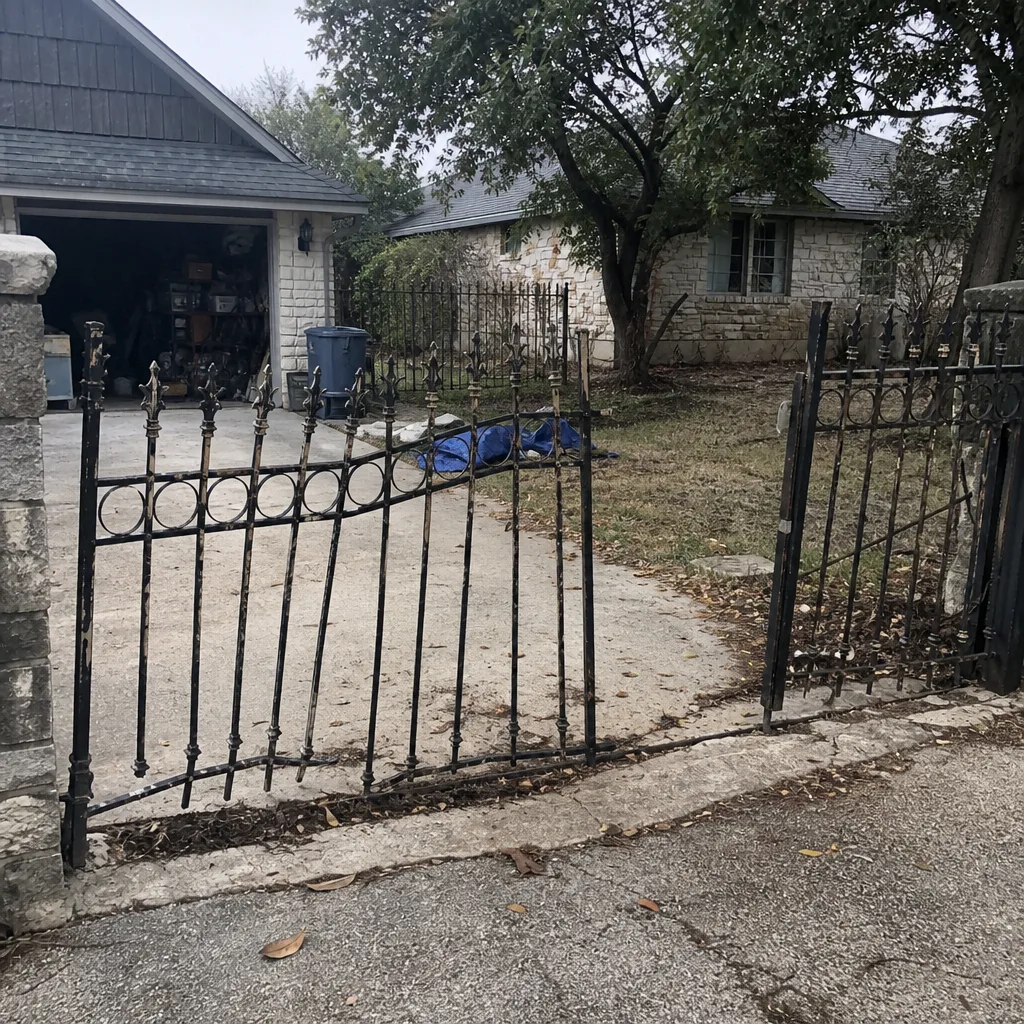 Before
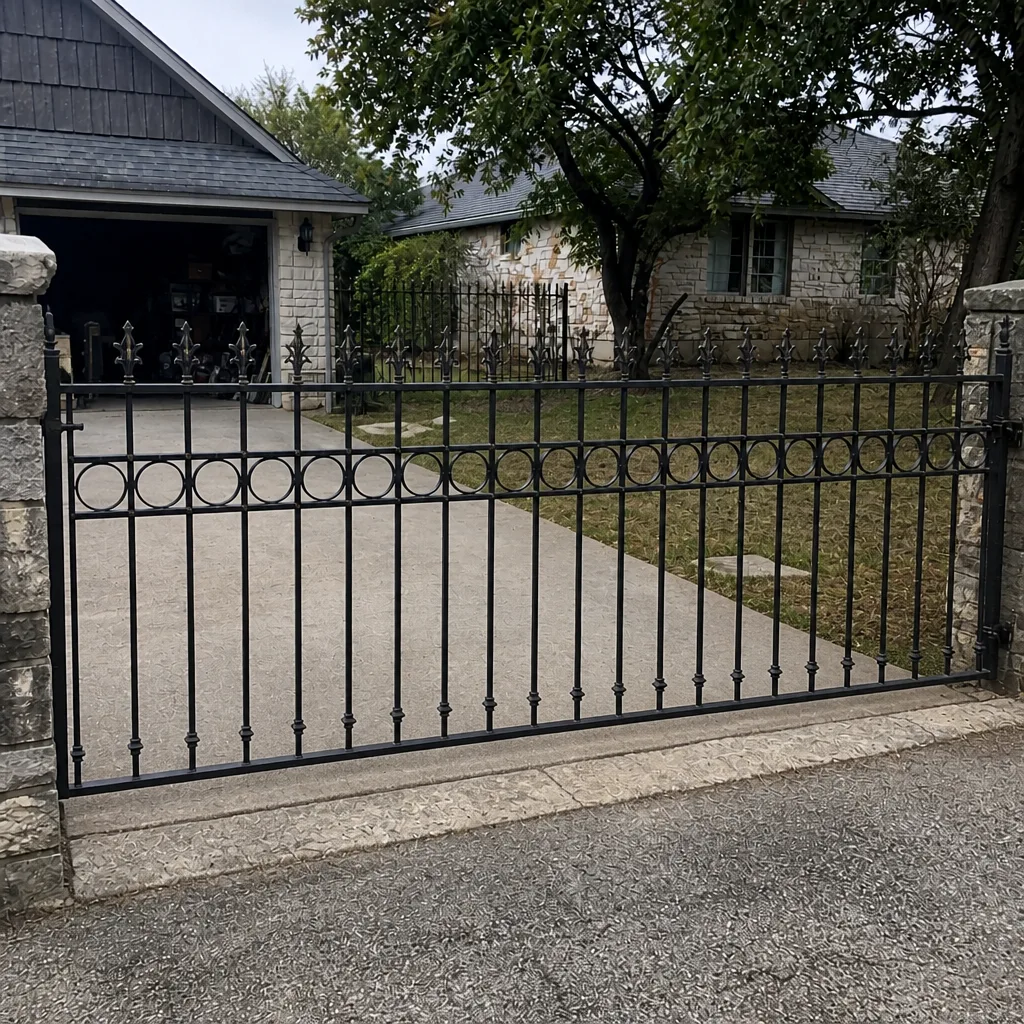 After
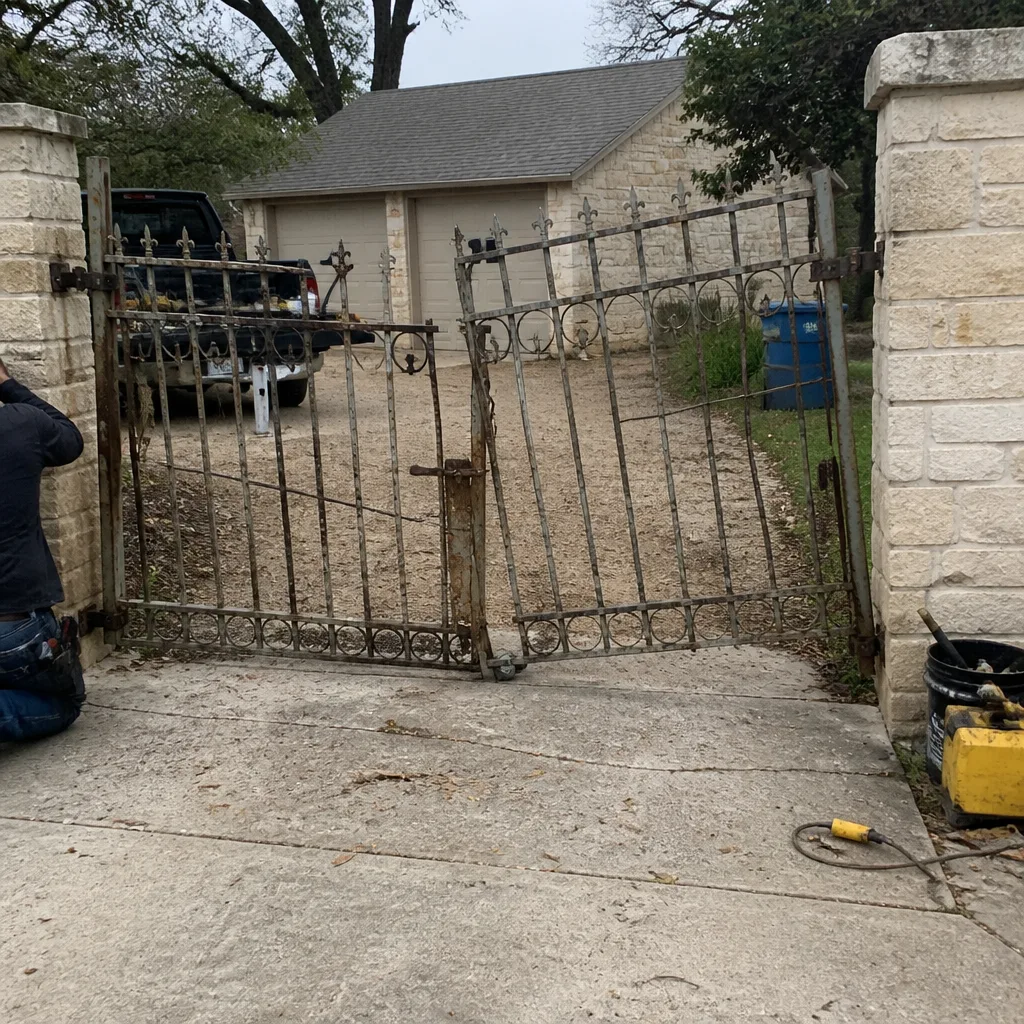 Before
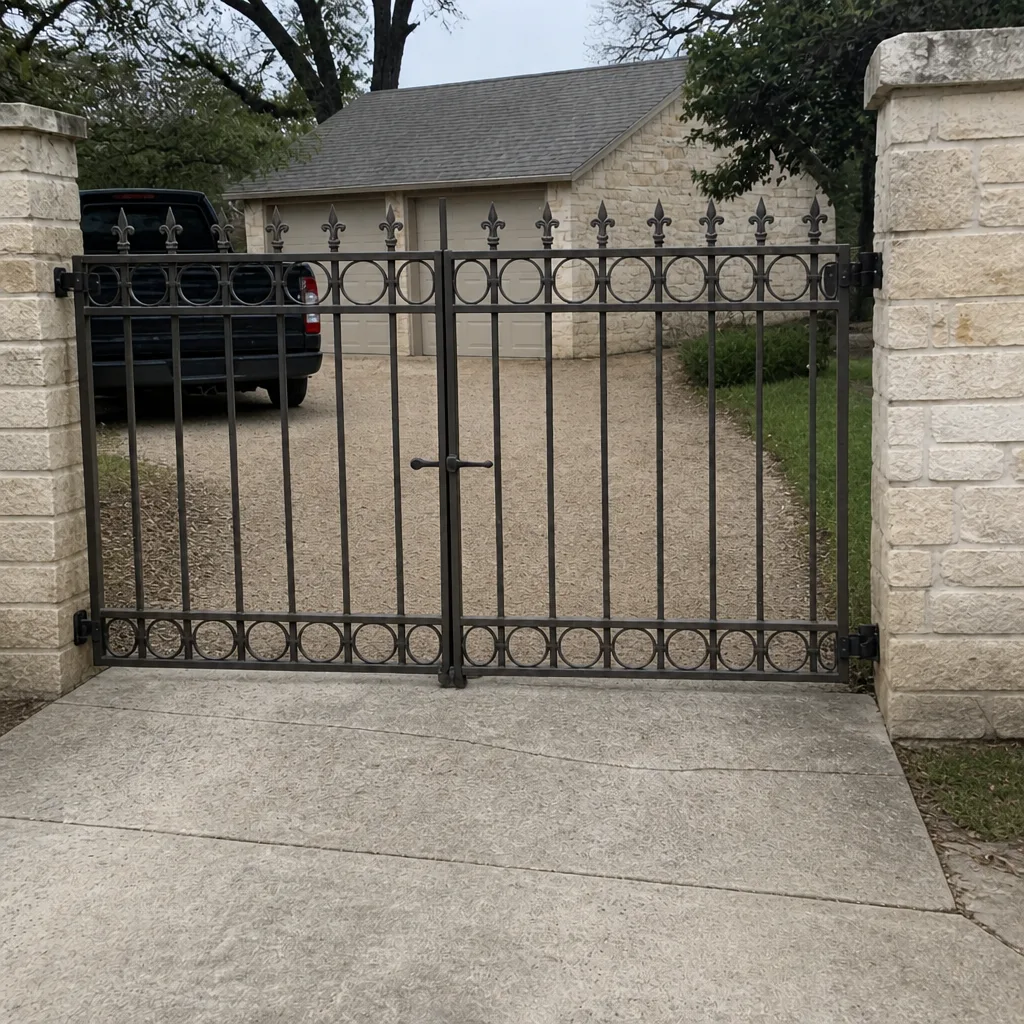 After
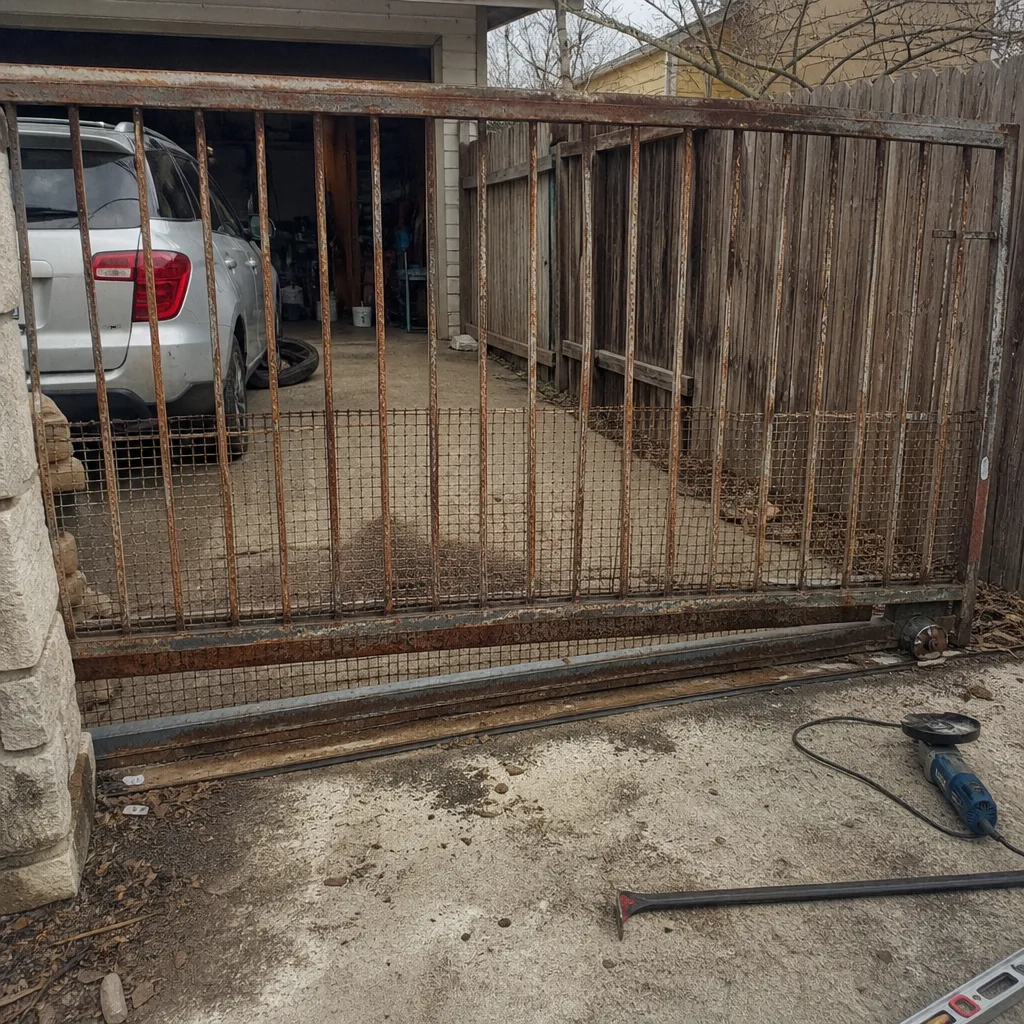 Before
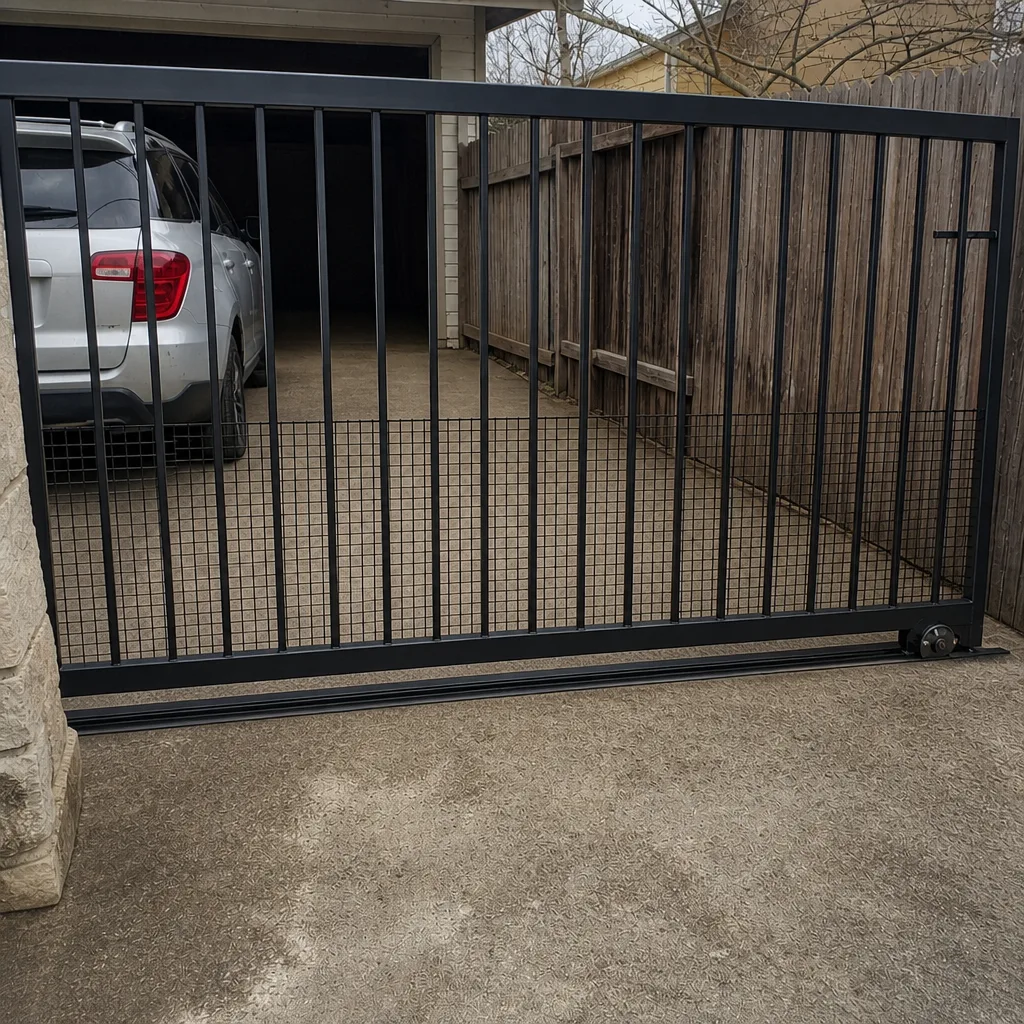 After
When to Call a Professional
Some gate problems are maintenance; some are hazards. Call a professional when the gate fails to reverse on contact, when the operator strains or stalls, when the gate drifts off its track, when the control board shows damage or the gate stops responding to remotes, or when you’ve had repeated failures that point to a deeper fault. Electrical symptoms – tripping breakers, burning smells, damaged wiring – should be treated as urgent and handled by someone who understands both the gate and the electrical rules.
Gate Repair Round Rock offers free estimates in Round Rock. Call (888) 853-0490. We answer 24/7, with fast dispatch from 7am to 7pm.
Frequently Asked Questions
Usually, yes, if the work involves connecting or modifying the line-voltage feed to the operator. In Texas, that side of the job generally falls under electrical licensing rules. Ask your contractor how they handle it and whether they pull permits for the work. If the answer is unclear, call (888) 853-0490 and we’ll walk through what your job likely involves.
The cost depends on what’s actually failed, which is why a site visit comes first. A worn hinge or a sensor fault is a different job from a failed control board or a gate off its track. The price is quoted and agreed before any work starts, and estimates are free. Call (888) 853-0490 for a written estimate.
No, and you shouldn’t accept one. A firm quote requires a technician to see the gate and diagnose the fault, because mechanical and electrical problems can present the same way. Use the phone call to ask the questions in this guide; the number comes after the site visit.
It depends on what’s wrong. Serviceable faults like hinges, sensors, and control boards are usually repair jobs. Structural damage or a worn-out operator points toward replacement. Get a diagnosis and ask for both the repair cost and the replacement cost before deciding. Call (888) 853-0490 for a free estimate.
At minimum, they should be able to name the operators they service without hesitation. We work across nine of them, from residential systems like Mighty Mule and LiftMaster to commercial-grade operators like FAAC and BFT. If a contractor can’t name the brands, they’re not a specialist.
No. The price is set per job by the written estimate, agreed before work starts. Call (888) 853-0490 and we’ll book you in and give you the number up front.
The Bottom Line
Hiring a gate repair contractor in Round Rock comes down to three checks: specialist focus, the electrical and licensing side, and insurance that actually covers the work. A gate is a heavy, moving safety device, and the contractor behind it is part of your liability. Ask the six questions in this guide, insist on a site visit before a firm quote, and get the price in writing before any work starts. The right specialist will answer plainly and quote honestly. The wrong one will dodge the questions. That difference is the whole decision.
Call (888) 853-0490 for a free estimate. We answer 24/7, with fast dispatch from 7am to 7pm, Sunday through Friday.
Written by the team at Gate Repair Round Rock.